
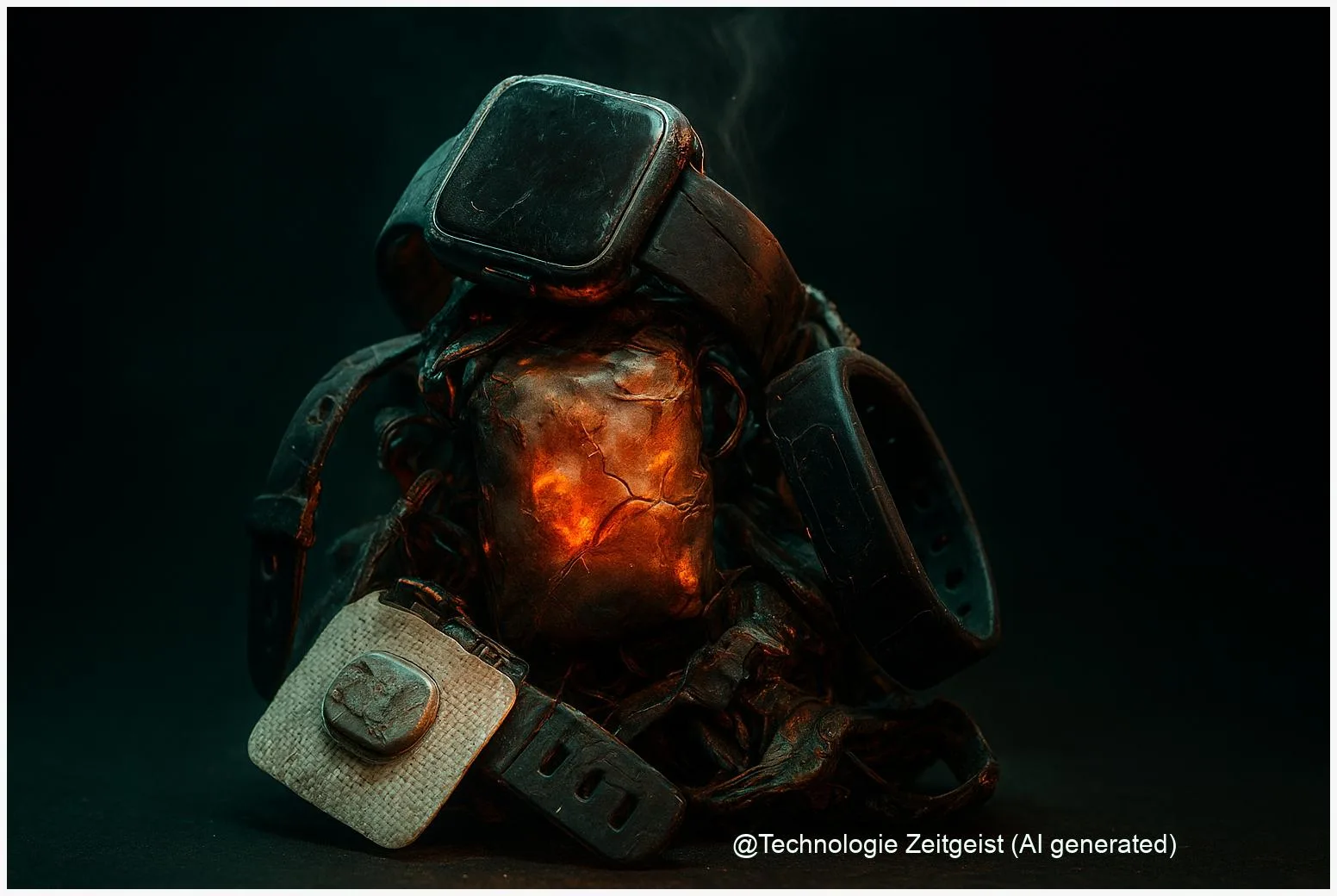
Wearable tech e-waste is increasing as smartwatches, fitness trackers and medical patches become common. Many of these devices are small but numerous, they contain batteries and precious metals, and they often end up outside formal recycling systems. This article describes why wearable health devices contribute to e-waste, what materials and processes make them hard to recover, and which practical policy and design choices can reduce environmental and health risks.
Introduction
The first generation of wearable health gadgets promised unobtrusive monitoring and better personal data about sleep, heart rate and activity. Many users replaced earlier models every two to three years; others stopped using a device after a few months. That pattern matters because the physical device still needs disposal. In 2022 the Global E‑waste Monitor recorded about 62 billion kg of electronic waste worldwide, with only around 22.3 % collected formally. Small devices such as smartwatches and fitness trackers are grouped into broad categories in these statistics, which makes the wearable contribution hard to isolate—but the trend is clear: rising production, short replacement cycles and tiny, hard‑to‑recycle components raise both environmental and health concerns.
Readers who wear a smartwatch or a medical patch rarely see those risks. Batteries degrade, connectors corrode, and entire devices are tossed in household bins or end up in informal collection streams. This article lays out the technical reasons wearable health devices produce disproportionate recovery challenges, gives everyday examples that show how the waste flow works, examines trade‑offs between convenience and circularity, and outlines realistic paths for manufacturers and policymakers to reduce impacts without cutting the medical and social benefits of these gadgets.
Why wearable tech e-waste is a growing problem
Wearables are small by design, but that compactness is exactly what makes them difficult to recycle. A typical smartwatch contains a rechargeable lithium cell, a printed circuit board assembly (PCBA) with microprocessors and sensors, a display, and several plastic and metal housings. These elements are bonded tightly to save space and weight, which complicates disassembly at end of life. Recycling facilities are built to handle larger items such as refrigerators, TVs or phones; miniaturized assemblies require different processes and investable volumes.
Small size increases collection and processing costs per device while reducing the recovered mass that pays for recycling.
Global statistics underline the scale: the Global E‑waste Monitor shows 62 billion kg of e‑waste in 2022 and a formal collection rate of about 22.3 %. Small equipment categories together total tens of billions of kilograms, but wearables are usually recorded within those grouped categories rather than separately. The consequence is a visibility gap: policymakers and recyclers find it harder to prioritise streams they cannot measure precisely.
Two technical points explain why wearables are more than a nuisance. First, many wearable components include small quantities of valuable or critical materials—gold for connector plating, palladium in multilayer capacitors, rare earths in mini‑motors and magnets, and lithium and cobalt in batteries. Although each device contains only milligrams of these materials, billions of units make the potential resource pool significant. Second, the dominant informal recovery routes in some regions — manual dismantling or open‑burning to liberate metals — create toxic emissions and public health hazards when fragile electronics are processed outside regulated facilities.
If numbers matter: small‑device categories were reported at about 20.4 billion kg in the 2024 monitor, which signals that wearables, while a subset, feed into a very large stream. Collecting and treating them properly will require either more efficient sorting and pre‑processing or stronger producer responsibility schemes that keep devices in formal channels.
If a simple table helps clarify the challenge, the one below contrasts common wearable parts with recycling implications.
| Feature | Description | Recycling challenge |
|---|---|---|
| Batteries | Small Li‑ion cells used for long runtime | Safety risks, low per‑unit mass, specialised recovery needed |
| PCBAs & sensors | Microprocessors, MEMS sensors, soldered components | Miniaturisation prevents manual separation; fine sorting required |
How wearables enter the waste stream
Understanding the path from purchase to disposal clarifies where interventions work best. For many users a wearable follows a familiar lifecycle: purchase, daily use, battery degradation or software obsolescence, and replacement. Three disposal routes are typical.
First, a device is returned to the manufacturer or retailer via formal take‑back programmes. These routes keep units in the circular economy when the programmes are accessible and well publicised. Second, items are collected in municipal e‑waste bins and sent to formal recycling plants; this relies on local infrastructure and citizen awareness. Third, devices are discarded with household waste or diverted to informal collectors. The last path is common where collection systems are weak or where small devices are overlooked because they appear to have low material value.
For wearable health devices there is an additional complication: devices that store personal health data raise privacy and medical disposal concerns. Clinics and care providers may treat such devices as medical waste and follow different rules, but private users often do not. Wiping, secure handling and correct classification are therefore part of an effective collection strategy.
Regional differences matter. In Europe, producer responsibility laws and accessible collection points make formal routes more common; Europe’s per‑capita e‑waste was about 17.6 kg per person in 2022. In other regions, devices may be exported under the label of “used electronics” and arrive for informal repair or salvage, where dismantling releases hazardous substances. The Global E‑waste Monitor found roughly 5.1 billion kg of cross‑border e‑waste movements in 2022, and a portion of that flow mixes used equipment with waste.
Finally, the economics of scale shape what happens next. Formal recyclers prefer larger streams with predictable volumes; wearables’ small size and distributed disposal points make collection expensive. This explains why many wearables now have short lifespans in practice: repair is often technically difficult or not profitable, and replacement models are marketed aggressively.
Health gadgets at home: small devices, big consequences
Consider three everyday examples that show how wearable health gadgets add up.
Example 1 — Smartwatch replacement. A user upgrades a smartwatch every three years. The old device may be kept in a drawer, sold second‑hand, or discarded. If it enters municipal waste, the lithium cell and soldered electronics rarely reach specialist recyclers. Multiply that behaviour by millions of users and the lost material becomes significant.
Example 2 — Fitness bands. Many low‑cost fitness bands are designed as sealed units with glued housings. Battery replacement is impossible for most consumers, and a failed battery usually makes the whole device redundant. Low resale value encourages disposal rather than repair.
Example 3 — Clinical wearables and sensors. Medical patches and remote monitoring devices are often single‑use or have short certified lifetimes. Their disposal is complicated by medical‑waste classification and by data protection rules; they are occasionally incinerated for safety, which prevents material recovery but can be necessary for hygiene.
These patterns create practical tensions. On one side, personal health monitoring yields benefits: earlier detection of arrhythmias, better diabetes management and improved physical activity. On the other, a high‑volume consumer market with short replacement cycles increases material throughput and e‑waste. The relevant compromises are technical and policy‑driven rather than moral: better batteries, modular designs and clear return channels tilt the balance toward circularity without eliminating clinical advantages.
Repairability scores and longevity testing can help consumers choose longer‑lasting devices, but those signals must be transparent. Certification that shows expected usable life, replaceable battery options or manufacturer repair policies would make a direct difference. For clinical devices, manufacturers and health systems can extend device life by supporting refurbishment under strict hygiene and data‑protection protocols.
Design and policy options to cut wearable e-waste
Reducing wearable e‑waste is achievable through several complementary measures that keep consumer needs and clinical safety in balance.
Design measures: manufacturers can prioritise modularity, so batteries and displays are replaceable without special tools. Standardised battery formats for wearables would lower the bar for safe consumer replacement and for second‑life reuse. Clear material disclosures—an accessible “bill of materials” for each model—would help recyclers and researchers estimate recovery potential and critical‑material content.
Producer responsibility and extended producer responsibility (EPR) schemes work when they include collection targets for small devices and require manufacturers to finance take‑back. EPR can incentivise designs that ease disassembly and material recovery. Some countries already extend EPR to small electronics, but specific targets and reporting for wearables would improve accuracy and accountability.
Policy instruments also include repair‑for‑medical devices exceptions that allow authorised refurbishment under regulated protocols. For example, certified refurbishment programmes could extend the life of clinical monitors while ensuring hygiene and data security. Public procurement rules can favour devices with higher durability scores or explicit circularity metrics, creating market incentives for longer life.
Lastly, investment in sorting technology and micro‑recycling processes is necessary. Automated fine‑particle separation, targeted chemical recovery for small battery formats, and improved reverse logistics can make small devices economically viable to process at scale. These investments require predictable material flows and reporting from manufacturers—another argument for stronger disclosure rules.
Conclusion
Wearables and health gadgets amplify familiar e‑waste problems in a compact form: small mass per device, concentrated critical materials, and disposal paths that favour informal or low‑value outcomes. The Global E‑waste Monitor’s 2022 totals show the general scale of the challenge—62 billion kg of waste and only about 22.3 % formally collected—while product‑level transparency remains limited. Better measurement, clearer material labelling, easier battery replacement and producer responsibility rules targeted at small devices would reduce environmental and health risks without undermining the user benefits of wearable health technology.
Change requires alignment across manufacturers, recyclers and health providers. Where incentives encourage repair, refurbishment and formal collection, the wearable market can mature into a less wasteful system. For users, choosing devices with replaceable batteries and documented repair policies helps; for policymakers, creating reporting standards and collection targets for small electronics is a practical next step.
Share your experience with wearable devices and their disposal—what worked and what did not.

Leave a Reply