
Insights
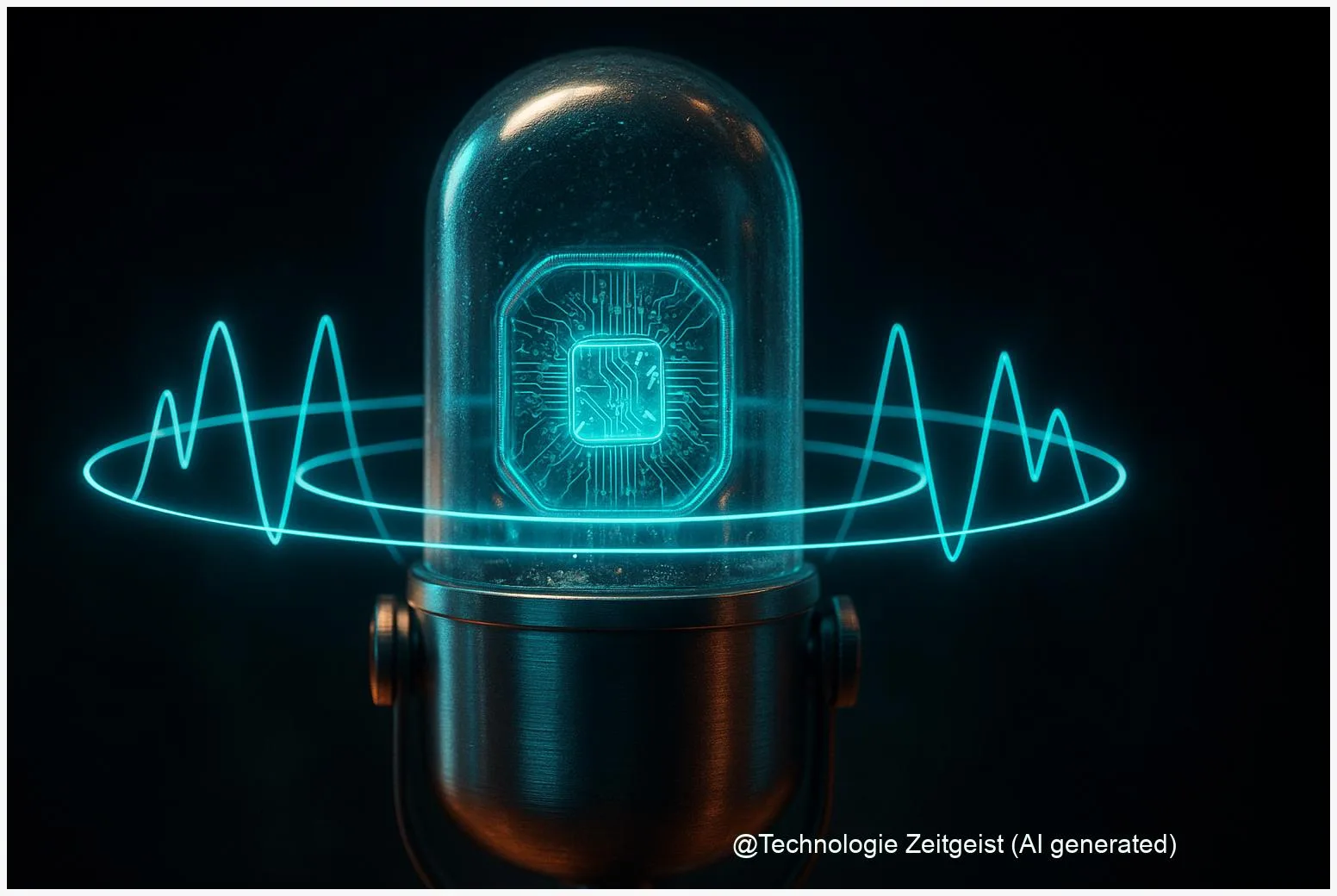
Live transcription is getting faster thanks to model and system changes that cut wait time between speech and text. Engineers call this low-latency transcription — shortening the delay that users notice without losing too much accuracy. Recent vendor reports and academic work point to sub-50 ms server figures in lab setups, with real calls still adding network and client delay.
Key Facts
- Low-latency transcription reduces the delay between spoken words and visible text to improve real‑time use (e.g., captions, voice agents).
- Recent industry releases report single‑digit to sub‑50 ms server latencies in lab pipelines, but real end‑to‑end delays often include client and network overhead.
- Academic methods like emission regularization and delayed knowledge distillation improve token timing and partial‑output quality.
Introduction
Who: researchers and cloud/AI vendors. What: faster live speech-to-text pipelines. When: developments in 2024–2026 accelerated the push. Why it matters: lower delay makes captions, meetings and voice assistants feel immediate. This article explains how low-latency transcription works and why lab numbers can differ from user experience.
What is new
Two trends stand out. First, model design: streaming-capable architectures (so-called transducers) and encoder tweaks have been optimized to emit words earlier. Techniques such as emission regularization (which encourages the model to output tokens sooner) and delayed knowledge distillation (which aligns slow teacher models with fast student models) make partial outputs more accurate with less waiting. Second, system engineering: aggressive quantization, compiler stacks and cache‑aware encoders let servers run many simultaneous streams with far lower per-call compute. Vendors presented lab pipelines in late 2025 and early 2026 showing server-side timings under 50 ms for token emission in ideal setups, but those are vendor measurements and depend on hardware and measurement choices (see sources).
What it means
For users, lower server latency reduces the pause before captions or assistant replies appear, improving clarity and perceived responsiveness. For operators, the trade-off is between latency and accuracy: pushing for extreme speed can raise the word error rate (WER) on noisy or telephone audio. For product teams this means creating realistic benchmarks that measure median and tail latency (for example p90/p99) and incremental WER — the quality of partial, not just final, transcriptions. For regulators and privacy officers, more on-device and quantized inference reduces cloud traffic but requires careful review of licensing and data flows. Overall, faster transcript engines open new features — live subtitles, speedier voice agents — while increasing the need for reproducible, end‑to‑end testing.
What comes next
Expectation: short-term focus on standardizing measurements and public benchmarks that include incremental WER and tail latency. In practice, engineers will run pilot tests of streaming models with multiple chunk sizes to balance delay and accuracy, and will add client+network timing to any server metric. Independently reproduced benchmarks from academic groups or neutral labs are likely to appear in 2026, clarifying vendor claims. Finally, product teams will decide where sub‑100 ms server latency is required and where slightly larger chunks (longer delay) yield better accuracy — a pragmatic mix depending on use case.
Conclusion
Low-latency transcription is advancing through combined model and infrastructure gains. Lab demos show impressive server figures, but real user delay still includes client and network steps that add hundreds of milliseconds in many setups. Teams should measure full end‑to‑end latency and incremental accuracy before adopting extreme low‑latency settings.
Join the conversation: share your low‑latency test results or questions below and pass this article to colleagues testing live transcription.

Leave a Reply