
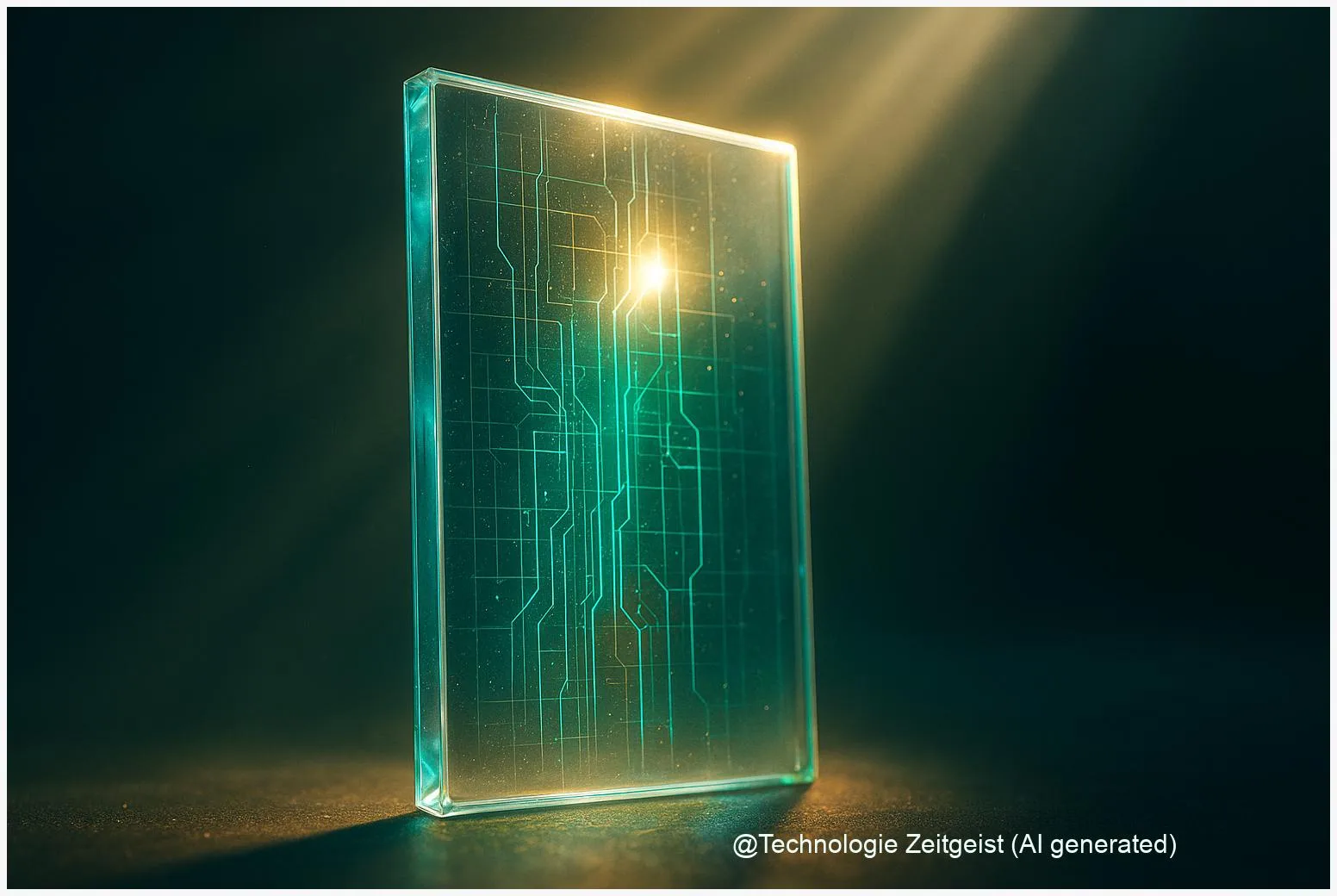
Many building and product designers ask the same question: can a window also be a useful solar generator? Transparent solar panels make that possible by harvesting light outside the visible band while letting the eye see through the glass. Average visible transmittance (AVT) and electrical conversion (PCE) trade off strongly; in practical designs the best compromise often sits near 50 % clarity. This article explains why that number appears again and again, what it means for real installations, and which measurements matter when choosing solar windows.
Introduction
If you are evaluating solar windows for a building facade, the central practical question is clear: how much light can remain visible while the window still produces useful electricity? The answer is not a single law but a recurring trade‑off. The human eye only responds to roughly 400–700 nm wavelengths; transparent photovoltaic concepts exploit this by trying to harvest ultraviolet (UV) and near‑infrared (NIR) photons while letting visible light pass.
Two simple measures sum up the engineering choices: average visible transmittance (AVT) — how much visible light passes through — and power conversion efficiency (PCE) — how much of the harvested light becomes electricity. Higher AVT reduces the pool of harvestable photons and therefore the achievable current. Practical demonstrations, lab models and theoretical upper bounds show that beyond roughly 50 % AVT the energy yield drops quickly compared with the visual benefit. The following sections unpack the physics, typical device architectures, real‑world examples, and what to watch for in performance data and warranties.
Transparent solar panels: the physics that sets a limit
The basic reason for a practical ~50 % clarity limit is spectral accounting. The Sun’s spectrum contains energy across UV, visible and NIR bands. If a device lets a large share of visible light pass, it must collect most of its energy from the UV and NIR regions. That is possible in principle, but two constraints make the yield fall off fast.
First, the number of photons in UV and in the far NIR is smaller than in the visible band. Second, absorption obeys an exponential relation (Lambert‑Beer): reducing absorber thickness or concentration to increase visible transmission also reduces absorption of harvestable wavelengths. In short: every millimetre or nanometre of absorber you remove to improve AVT subtracts more than a linear fraction of usable photons.
Engineers therefore use two linked metrics: AVT (how transparent the glass looks) and PCE (what percent of incident light is converted to electricity). A useful combined figure is LUE = PCE × AVT, which helps compare designs on both fronts.
Technical definitions, briefly:
- Average visible transmittance (AVT): the weighted share of visible light (approximately 400–700 nm) transmitted through the glazing.
- Power conversion efficiency (PCE): the electrical power out divided by incident solar power in standard test conditions; photovoltaic panels typically report this as a percent.
Theoretical analyses formalise the trade‑off. A commonly cited modelling study (Lunt, 2012) computes upper bounds for devices that harvest only UV and NIR; it shows single‑junction transparent designs have significantly lower theoretical maxima than traditional opaque cells. Note: Lunt’s paper is from 2012 and therefore more than two years old, but it remains a useful reference for the spectral‑limit argument. Practical devices reported in literature (organic, perovskite, crystalline Si variants) routinely sit far below the ideal bound because of optical and electrical losses.
If a short table helps clarify typical architectures and their practical numbers, here is a compact comparison:
| Design | Visible AVT | Typical PCE range | Practical note |
|---|---|---|---|
| UV/NIR selective (thin absorbers) | 40–70 % | 1–7 % | Good aesthetics; limited power density |
| Semitransparent stacked/tandem | 20–50 % | 5–15 % | Higher PCE, visible tinting possible |
| Luminescent solar concentrators (LSC) | 50–85 % | 0.5–5 % | Lightweight, routing to edge cells; stability varies |
Across many reports, the pragmatic sweet spot where energy yield, visual comfort and cost intersect often appears around AVT≈40–60 %. Above that range the electricity per square metre falls quickly and the economic case weakens for most building uses.
How transparent solar windows are built and used
Manufacturers pursue several technical routes to make transparent or semitransparent photovoltaics suitable for windows. Each aims to let the visible light through while harvesting out‑of‑band photons, but they differ in materials, production steps and durability.
Common device families you will encounter in product sheets and papers:
- Organic and small‑molecule semiconductors: thin films that absorb in UV/NIR. They can be deposited on glass, are lightweight and colourless at some thicknesses, but they often show limited lifetime outdoors.
- Perovskite semitransparent cells: perovskite layers tuned to avoid visible absorption while capturing some NIR. These can reach higher lab PCEs but long‑term stability under sun and humidity is still under evaluation.
- Semitransparent silicon and crystalline approaches: achieved by making narrow metal fingers or by using microcells and spacing that trade shading vs. transparency. Recent silicon demonstrations reach higher PCEs at lower AVT than organic options.
Manufacturers report AVT using different procedures; to compare products insist on the AVT figure (not just a subjective “see‑through” claim) and on external quantum efficiency (EQE) curves that show which wavelengths the cell actually converts. Also ask for LUE or a similar combined metric.
Real installations are already happening at small scale: display glazing in bus shelters, agrivoltaic greenhouses with tailored spectra, and demonstration facades that supply local lighting and sensor power. For building integration the performance requirement differs: a headquarter atrium may prioritise >60 % AVT for daylighting, while a bus stop screen can accept 30–40 % AVT to get higher yield. That context explains why many commercial demos target AVT in the 40–60 % range — a balance between daylight quality and meaningful energy contribution.
When comparing vendor claims, check for:
- Method of AVT measurement and viewing angle,
- AM1.5G or similar standard test conditions for PCE,
- Independent accelerated weathering and field test data (PID, damp heat, thermal cycling).
Balancing benefits, costs and risks
The practical decision to use solar windows depends on three linked domains: energy economics, daylight and comfort, and reliability over decades. Each domain pushes the AVT choice in a different direction.
Energy economics: transparent solar panels produce less power per square metre than opaque rooftop modules. That is why procurement specialists use LUE = PCE × AVT or simply compare expected kWh per year at the design AVT. If a project needs high energy density per roof area, opaque modules remain the better option. For facades that prioritize daylight and aesthetics, semitransparent modules can add enough local power to justify the cost—but usually only when prices and incentives make sense.
Daylight and comfort: windows must meet building codes for daylight, glare and thermal comfort. A glazing with AVT below ~40 % can start to feel dim in occupied rooms unless supplemented by artificial lighting; above ~60 % it is much harder to secure meaningful energy yield. These human factors help explain the recurring midpoint around 50 % AVT.
Reliability and warranties: some high‑AVT approaches rely on organic dyes or luminescent materials. These may fade under sunlight and humidity; perovskite and organic devices usually need more evidence from multi‑year outdoor testing. Silicon‑based semitransparent variants tend to offer more established durability, but production costs and module integration remain a factor. Insist on IEC‑standard tests and on manufacturer‑backed field data before accepting extended warranties.
For an installer or building owner the practical checklist is short: require AVT and PCE measured by independent labs, ask for predicted annual kWh for your latitude and facade angle, and verify the supplier’s field‑test hours. If you want a quick read: many commercial use‑cases land where AVT and yield intersect near 40–60 %, with ≈50 % often the pragmatic compromise for façades that must stay bright while still contributing energy.
Where the technology may go in the next years
Expect gradual improvement rather than a single breakthrough. Several development paths could shift the sweet spot over the coming years, but each has trade‑offs that keep a practical transparency ceiling in place for many building uses.
Promising directions:
- Spectrally selective materials and tandem cells: improved absorbers that capture NIR and UV more efficiently while remaining colourless in the visible could raise PCE at a given AVT. Theory shows stacked designs can lift theoretical maximums, but real devices still face production and stability challenges.
- Luminescent concentrators routed to edge cells: concentrating out‑of‑band light to small photovoltaic strips reduces active area and preserves transparency. This approach can keep AVT high (above 60 %) but typically trades that for lower absolute power per glass area and questions about long‑term dye stability.
- Improved transparent electrodes and coatings: better transparent conductors reduce shading from busbars and fingers, improving visual quality and electrical performance simultaneously. Innovations in transparent conductors will be important for both aesthetics and LUE.
Policy and procurement will matter too. Certification bodies and standards that require clear AVT/PCE disclosure and accelerated durability results will help buyers compare alternatives and reduce warranty uncertainty. Industry pilots and academic reviews through 2022–2024 show steady progress; manufacturers increasingly publish AVT, EQE and LUE figures rather than just attractive photos.
Finally, integration decisions are contextual: for some public displays, bus shelters and indoor partitions, very high AVT with low energy yield is acceptable. For office façades seeking both daylighting and on‑site generation, the balance will likely remain near 40–60 % AVT for the next few years, keeping ~50 % as a practical guideline in many specifications.
Conclusion
Transparent solar panels are a set of engineering compromises: clearer glass means fewer harvestable photons, and harvesting outside the visible band brings its own material and durability challenges. The spectral balance between visible, UV and NIR — together with exponential absorption laws and current material limits — explains why many practical designs cluster around 40–60 % AVT and why ≈50 % clarity appears repeatedly as a pragmatic limit. For every project, compare AVT, PCE, EQE curves and independent durability data; use a combined metric such as LUE to judge the true value for your facade or device.
Share your experience with solar glazing or ask a question — we welcome your comments and insights.

Leave a Reply