
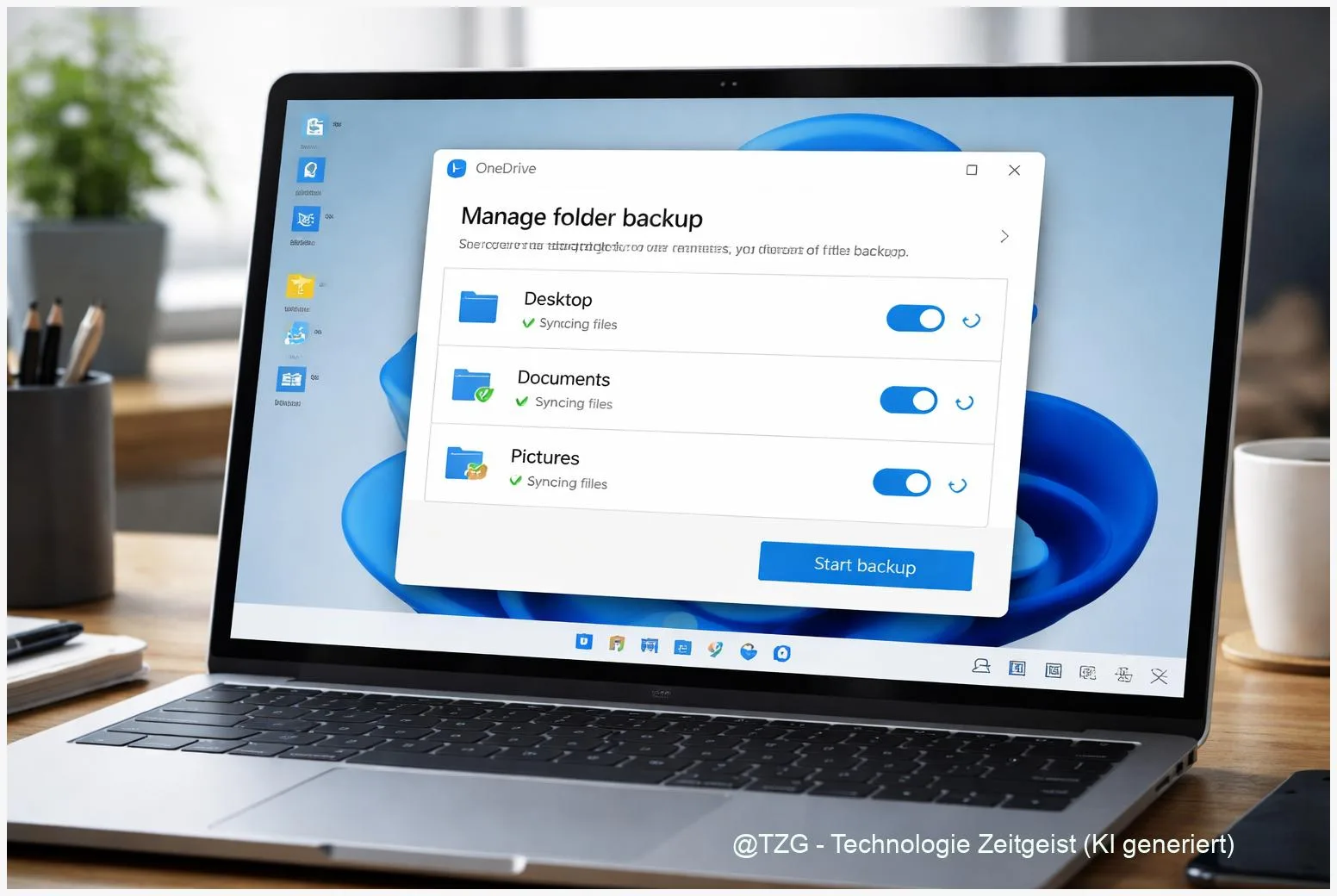
If your Windows 11 PC breaks, gets stolen, or you simply switch to a new device, the folders you use every day can be the first thing you miss: Desktop, Documents, and Pictures. With Windows 11 OneDrive backup, you can sync these folders to OneDrive so your files stay available across devices and are easier to restore. This guide walks you through setup, what to check beforehand, and how to confirm everything is really syncing.
Introduction
Many people keep “important stuff” in the most obvious places: a school folder in Documents, a few work files on the Desktop, and photos in Pictures. It feels natural, but it also means one Windows reinstall, a broken SSD, or a misplaced laptop can turn into a stressful recovery mission.
OneDrive in Windows 11 can take a lot of that pressure away by continuously syncing those key folders to the cloud. That does not only help if something goes wrong. It also makes daily life smoother: your files show up on a second PC, on the OneDrive website, and in the OneDrive mobile app, without emailing them to yourself.
The important part is setting it up intentionally: knowing what gets moved, how to check sync status, and what to do if storage runs out or files appear “missing”.
Basics and Overview
In Windows 11, “OneDrive Backup” usually means backing up (and syncing) your known folders: Desktop, Documents, and Pictures. Microsoft also calls this “folder backup” or “Known Folder Move”. The practical effect is simple: those folders are redirected into your OneDrive folder, and changes are synced online.
In File Explorer you can recognize OneDrive sync status via small icons: a cloud for online-only files, a green checkmark for files available locally, and a solid green circle for files marked “Always keep on this device”. These icons matter because they tell you what will still open when you are offline.
OneDrive folder backup is not a one-time copy. It is an ongoing sync: delete or overwrite something locally, and that change can sync too.
This is why OneDrive’s safety net is a combination of syncing plus recovery features like the OneDrive Recycle Bin and version history. If you also want to save disk space, OneDrive supports “Files On-Demand”, so not every file must live fully on your PC.
| Option or Variant | Description | Suitable for |
|---|---|---|
| Folder backup (Desktop, Documents, Pictures) | Moves these Windows folders into OneDrive and keeps them synced. | Anyone who wants simple protection for everyday files. |
| Selective sync + Files On-Demand | Controls which OneDrive folders sync to a PC and which stay online-only. | Devices with limited storage or very large cloud libraries. |
Preparation and Prerequisites
Before you turn on OneDrive folder backup, take two minutes to avoid the most common surprises: storage limits, duplicate folders, and sync conflicts.
- Microsoft account (or work/school account): OneDrive must be signed in on your Windows 11 PC.
- Enough OneDrive storage: If your Desktop or Pictures folder is large, syncing may stop when storage is full. Consider cleaning up or upgrading if needed.
- Stable internet connection: The first upload can take time, especially for photo libraries.
- Know what “move” means: The folders are redirected into OneDrive. They are not kept as a separate local-only copy automatically.
- Pause big changes for a moment: Avoid renaming thousands of files during the initial setup. Let the first sync finish first.
Optional but helpful: if you already have important files scattered across other folders, collect them into Documents or Pictures before enabling backup. If you need a broader strategy beyond OneDrive, TechZeitGeist has a practical overview on Windows backup basics and what to protect (general reading).
Step-by-Step Instruction
The exact wording can vary slightly between OneDrive app versions, but the path is typically the same. You will use the OneDrive cloud icon in the Windows taskbar area (near the clock).
- Open OneDrive settings: In the taskbar corner, select the OneDrive cloud icon. If you do not see it, open Start and search for OneDrive to launch it. Then select the gear icon (Settings) and choose Settings.
- Go to the Backup section: In the OneDrive settings window, open Sync and backup (or a similarly named section). Look for Back up important PC folders or Manage backup.
- Select folders to back up: You should see toggles for Desktop, Documents, and Pictures. Turn on the folders you want, then confirm with Start backup.
- Wait for the first upload: Keep the PC on and connected. You can open the OneDrive icon again to see sync progress (e.g., “Uploading…”). Large photo folders may take hours depending on upload speed.
- Verify in File Explorer: Open File Explorer and select OneDrive in the left navigation. Open the Desktop, Documents, and Pictures folders and check the status icons. A cloud icon means it is online-only; a green check means it is available locally.
- Verify on the web (extra safety check): Sign in to OneDrive in a browser and confirm that your files appear. This confirms they are not only stored locally.
If everything worked, new files you save to Desktop, Documents, or Pictures will start syncing automatically. A quick test is creating a small text file on your Desktop and checking whether it appears online after a minute or two.
Tips, Troubleshooting, and Variants
If OneDrive backup feels confusing, it is usually because files were moved and the folder path changed. These fixes cover the most common issues without risky tweaks.
Problem: “My Desktop files disappeared.”
Often the Desktop was redirected to OneDrive. In File Explorer, open OneDrive and check the Desktop folder. Also confirm you are signed into the expected Microsoft account (personal vs. work/school).
Problem: OneDrive says “Sync paused” or “Not syncing”.
Open the OneDrive cloud icon and resume sync. If storage is full, free space in OneDrive or move large folders out of the backed-up locations. Microsoft also provides an updated list of known issues and fixes for OneDrive sync.
Tip: Save local disk space with Files On-Demand.
In OneDrive settings, enable Files On-Demand. Then right-click large folders or files and choose whether to keep them offline. This is useful on smaller SSDs.
Variant: Selective sync (per device).
If you have many folders in OneDrive, use Choose folders to decide what syncs to this PC. Unselected folders remain online in OneDrive and do not take local space.
Restoring files:
If you deleted something by mistake, check the OneDrive Recycle Bin first. If you overwrote a document, use version history. For broader recovery (for example after unwanted changes across many files), Microsoft 365 subscriptions may offer a “Restore your OneDrive” option for a limited lookback window. For a deeper safety routine, TechZeitGeist also covers practical steps to reduce file-loss risk on Windows PCs (general reading).
Privacy note: When you enable OneDrive backup, your files are stored in your Microsoft cloud storage and synced between devices. For sensitive documents, consider additional protection such as strong account security and, where available, OneDrive’s Personal Vault feature.
Conclusion
OneDrive folder backup in Windows 11 is a practical way to protect the files that tend to matter most: what sits on your Desktop, what you save in Documents, and the photos in Pictures. Once it is enabled, your everyday folders are no longer tied to a single device, and recovery becomes much easier when something goes wrong. The key is to verify the first sync, understand the status icons, and keep an eye on storage so syncing does not silently stop.
Have you enabled OneDrive backup already, or did you run into a specific syncing issue? Share what you saw on your PC, and compare notes with others before changing advanced settings.

Leave a Reply