
Insights
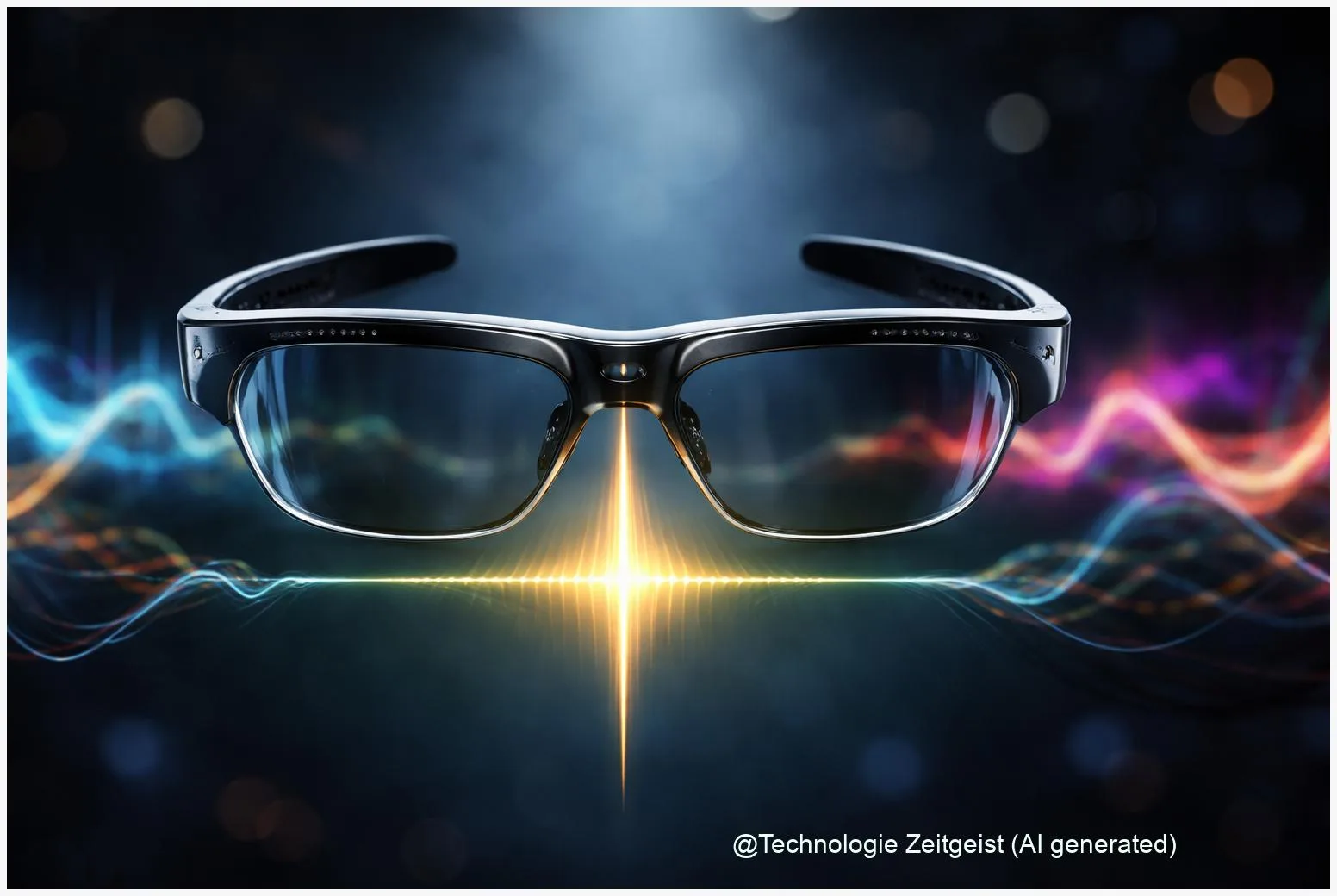
Smart glasses can focus on one speaker in a crowd by combining directional microphone arrays with signal processing. This report explains smart glasses voice isolation in simple terms, shows the main technical building blocks, and outlines what users should expect from current devices and near‑term research.
Key Facts
- Smart glasses use small microphone arrays and directional processing called beamforming to emphasise one voice and reduce others.
- Recent lab studies combine beamforming with neural enhancement and multi‑channel speech recognition to improve understanding in noisy places.
- Hardware limits — tight microphone spacing and limited on‑device computing — make real‑world performance variable across products.
Introduction
Who: device makers and audio researchers. What: methods that let glasses “lock on” to a single speaker. When: technology matured in research through 2023–2024 and is appearing in consumer devices. Why: clearer calls and better voice assistants in public places depend on these techniques.
What is new
At the technical core is beamforming: multiple tiny microphones pick up sound at slightly different times. Software computes directional filters that boost sound from one direction while lowering others. Modern systems add neural enhancement — short machine‑learning models that predict which parts of the signal belong to speech and which are noise. Researchers also train speech recognition directly on multi‑microphone, beamformed audio so transcriptions handle real‑world mixtures better. Lab studies from 2023–2024 show notable recognition gains when these pieces are combined, while earlier acoustic research from 2021 still guides array design and robustness testing.
What it means
For users, that translates into clearer phone calls and more reliable voice control in noisy spaces. However, performance varies: marketing demos often show ideal scenarios, while real crowds and reverberant rooms reduce effectiveness. Products trade off microphone count, placement, and processing power. On the research side, “smart glasses voice isolation” increasingly depends on joint systems that combine classical beamforming with neural masks and multi‑channel speech models. Regulators and privacy advocates will watch how such technology records and processes nearby conversations.
What comes next
In the near term, companies will refine algorithms to run on small chips and improve robustness for different face shapes and microphone layouts. Researchers aim to make beamforming geometry‑agnostic so models trained on many setups generalise to new designs. Independent benchmarks and standard test procedures are likely to appear, helping compare claims. Finally, expect incremental hardware changes — slightly more microphones or paired distributed arrays — that improve directional gain without harming comfort.
Conclusion
Smart glasses isolate voices by combining directional microphone arrays, signal‑processing beamformers, and lightweight neural enhancement. The approach works well in controlled tests but varies in busy, reverberant places due to hardware and real‑world mismatch.
Join the conversation: share your experience with smart glasses audio or tests you would like to see.


Leave a Reply