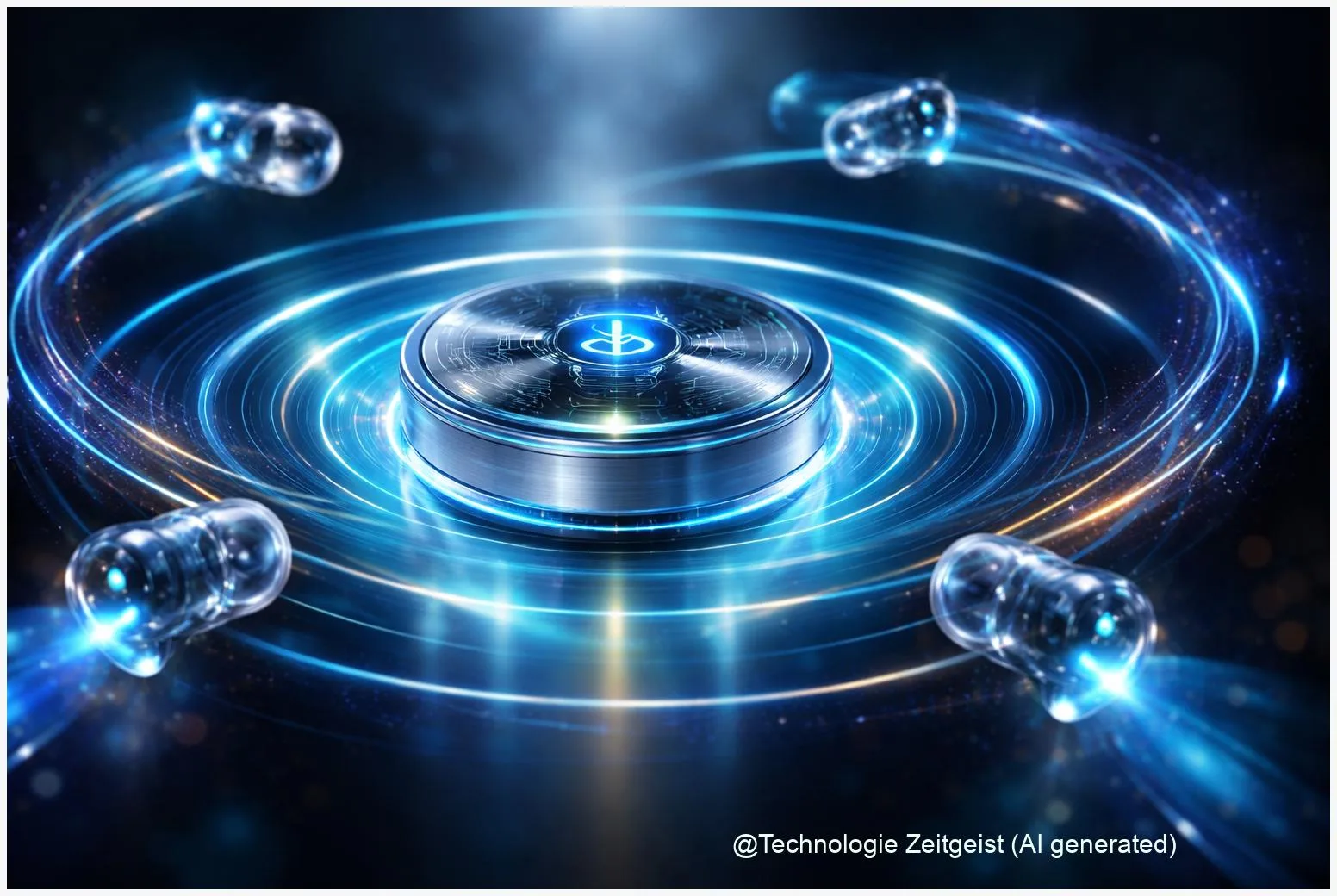
Auracast lets a single Bluetooth transmitter broadcast sound to many listeners at once. It builds on Bluetooth LE Audio and a new low‑power codec to send one or several streams from a venue, a TV, or a device to any compatible receiver. This article describes the practical path to Auracast on iPhone, the current workarounds that make shared audio possible today, and what venues, developers and users should expect in the years ahead.
Introduction
Public spaces increasingly want to send localized audio to visitors: commentary in a museum, assistive sound in a theatre, or announcements at a station. Historically this required an infrared system, FM radio, or an installed induction loop. Bluetooth Auracast is a new option: it enables one transmitter to broadcast to many receivers with modern audio quality and low power use. For iPhone users the question is practical: will my phone be able to act as a listener or a broadcaster, and what can venues do now when native support is not yet certain?
Those answers matter to venue managers, transport operators, accessibility planners and everyday users who expect to join a local audio stream without complicated setup. Below are clear technical basics, concrete examples you might encounter today, the main tensions to watch, and sensible steps organisations and individuals can use while the ecosystem matures.
Auracast basics: how Bluetooth LE Audio broadcasts work
At its core, Auracast is a broadcast extension of Bluetooth LE Audio. LE Audio is a modern Bluetooth feature set that replaces classic Bluetooth audio in many scenarios. It uses the LC3 codec, which delivers similar or better perceived sound quality at lower bit rates, and a redesigned connection model that separates single‑pair audio from broadcast audio.
Broadcast audio means one transmitter can send identical audio streams to many receivers simultaneously. Think of it as a public radio station on short range: devices in earshot can listen without pairing one‑by‑one. The specification includes roles and helpers: broadcasters, receivers, and optionally broadcast assistants that help discovery and handle encrypted streams. Auracast supports both open broadcasts and encrypted broadcasts protected by a Broadcast_Code, which can be shared via QR codes or NFC to limit access.
Why this is different from previous Bluetooth models: classic Bluetooth typically pairs two devices and sends a single stereo stream. Auracast uses a broadcast channel designed for many listeners and adds discovery, grouping and (if required) simple access controls. The Bluetooth SIG has published developer guidance, architecture notes and device profiles that explain how transmitters, hearing aids and earbuds must behave; those documents are the primary reference for implementers.
A modern broadcast model that pairs LE Audio’s LC3 codec with discovery and optional encryption is what allows low‑power, high‑quality multi‑listener audio.
Not every phone or headset needs new silicon. Some recent devices already include Bluetooth controllers capable of LE Audio. The missing piece is often OS‑level support for discovery and user flows. In practice that means a vendor can add Auracast receiver features only if the phone’s operating system exposes the necessary APIs and user interface.
If those APIs are absent on a platform, hardware workarounds exist: external Auracast receivers, venue‑grade transmitters with companion apps, or transceiver dongles that translate a broadcast into a stream a phone can open. These options are practical today while platform integration is still rolling out.
Everyday places where shared Bluetooth audio matters
Imagine entering a cinema and joining an assistive audio track in seconds, or standing beside an exhibit while an audio guide plays directly into your earbuds. Auracast aims to make those scenarios simpler than previous technologies. Operators can broadcast multiple channels at once (for different languages or commentary streams) and let listeners choose. The LC3 codec helps keep battery use low on earbuds and hearing aids, making continuous listening practical.
Practical examples already appearing: some venues and product makers have begun trial deployments and accessories. Venue systems can run dedicated Auracast transmitters to cover seating areas; companies also sell small receivers or adapters that users can carry to gain access. For situations where a phone lacks native receiver support, hardware transceivers announced at trade shows can bridge the gap and pass audio to an iPhone via a wired or Bluetooth connection.
On the device side, many hearing‑aid and earbud manufacturers are prioritising firmware and product plans for LE Audio. Compatibility will depend on both chipsets and vendor updates. For everyday users this means a staged rollout: some Android phones and recently shipped earbuds already support LE Audio broadcasts, while iPhone users may need to rely on external receivers or venue apps until Apple exposes native Auracast receiver APIs.
There are concrete, nearby examples worth noting: accessibility organisations have recommended pilots in public transport hubs and theatres to test user flows and staff training. And for hands‑on tests of directional audio and personal listening, our site has related reporting on wearable audio tech such as smart glasses audio isolation, which shows how directional and multi‑microphone approaches are moving from labs into products. Read more about smart glasses audio isolation.
Opportunities and risks: accessibility, privacy, and fragmentation
Opportunities are straightforward. Auracast can increase access for people with hearing loss, remove the need for dedicated receiver kiosks, and permit multiple language tracks or personalised volume without disturbing others. Because broadcasts can be encrypted with a simple code, venues can offer paid or restricted channels where needed while keeping discovery friction low.
There are also tensions. First, platform fragmentation: different phone operating systems move at different speeds when adding LE Audio APIs. Without a common baseline, venues face complex procurement choices. Second, privacy and consent: broadcast receivers could be misused if systems are set to record by default. The standard supports encrypted streams, but policy and UI design must make privacy controls visible and understandable.
Third, user experience differs between native OS support and adapter‑based workarounds. Native support can present broadcasts in the system UI, remember trusted venues, and handle Broadcast_Code entry via QR or NFC. Adapters work, but add steps—pairing, opening an app, or connecting a dongle—that create friction and additional support needs for staff.
Accessibility bodies have proposed cautious rollouts: run Auracast in parallel with existing induction loops and FM/IR systems until enough users and devices are supported. That protects users who rely on existing systems while testing real‑world discovery, encryption flows and staff procedures.
Looking ahead: timelines, choices and simple preparation
Timelines are partly technical and partly organisational. The Bluetooth SIG has published the technical specifications and guidance; manufacturers and venue integrators can already buy Auracast‑capable transmitters and compatible receiver hardware. Platform vendors decide when to expose discovery and API hooks in the operating system — that step determines when a phone becomes a first‑class Auracast listener.
Organisations planning a rollout can take three practical steps now: (1) run small pilots with Auracast‑capable transmitters while keeping induction loops or FM available; (2) choose hardware from vendors that follow the Bluetooth SIG guidance and offer upgrade paths for firmware; (3) test user flows that handle encrypted streams via QR/NFC codes and document simple on‑site instructions for staff and visitors. Track simple KPIs: percentage of visitors who successfully join a stream, common failure modes, and support time per user.
For iPhone users, the immediate practical options are external receivers or transceivers until Apple publishes formal iOS support. Monitor official Apple developer pages and major OS events for announcements; platform documentation is the reliable signal for native integration. Meanwhile, venues and accessibility teams should prioritise user testing and inclusive fallback options rather than assuming instant system‑wide device compatibility.
Conclusion
Auracast offers a new, standardised way to share audio with many listeners using Bluetooth LE Audio and the efficient LC3 codec. The specification and vendor products exist today, and practical workarounds (adapters, dedicated receivers and venue transmitters) make pilot projects possible even when a phone’s operating system does not yet expose receiver APIs. For public venues and accessibility planners the sensible approach is parallel deployment, careful user tests, and clear fallback options while platform support expands over the next months and years.
Join the discussion: share your experience with venue audio or questions about testing Auracast on your devices.

Leave a Reply