
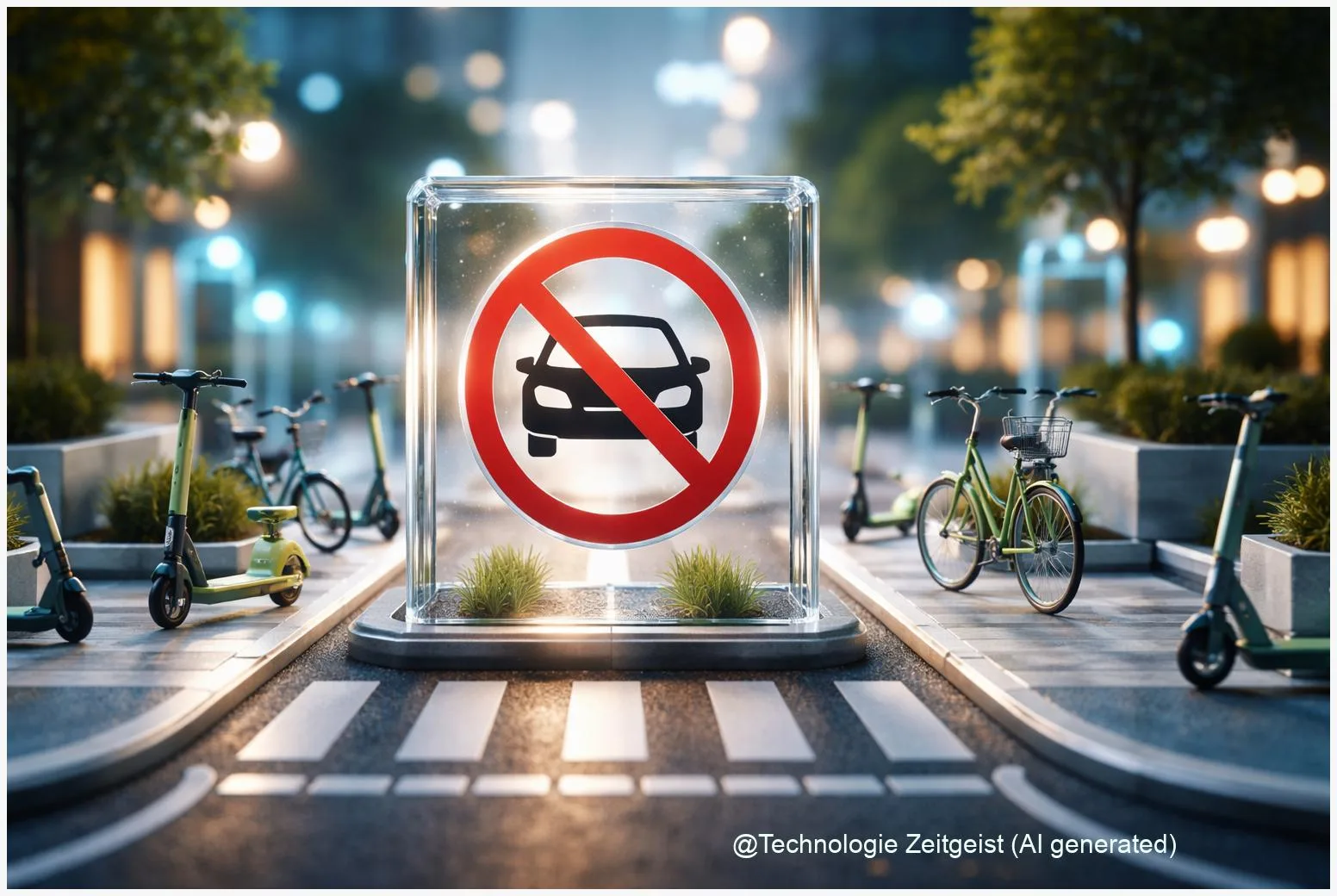
Car-free living is more than a lifestyle choice; it is a design for everyday movement that changes how people use streets, shops and services. This article looks at what a neighborhood without cars delivers for mobility, air quality and daily life, and how residents organise transport without owning a vehicle. The main keyword appears here to guide readers: Car-free living can cut household transport costs, increase walking and cycling, and create public space that serves people rather than parked cars.
Introduction
Many people in European cities face the same practical question: how do you manage everyday life without a private car? The answer depends less on willpower and more on how a neighborhood is designed. In places that intentionally reduce or exclude cars, such as several well-documented districts in Europe, residents shift to walking, cycling, public transport and shared vehicles for the occasional trip. That shift affects travel time, household budgets, street life and clean air.
The typical package that makes car-free living work includes dense, mixed-use streets with shops and services close by; reliable public transport; infrastructure for bicycles and cargo bikes; and systems for shared cars and deliveries. These are not isolated measures: they form a practical bundle that lets people live without a car while keeping access to everything they need.
Car-free living fundamentals
At the core of a car-free neighborhood is an altered travel pattern called the modal split. Modal split describes how trips are distributed among walking, cycling, public transport and private cars. A car-free district aims for a modal split dominated by active travel and transit instead of private cars.
Three urban design levers tend to appear together in successful cases: proximity, regulation and alternatives. Proximity means the everyday destinations — shops, schools, workplaces — sit within short walking or cycling distance. Regulation covers rules about parking and vehicle access that make car ownership less convenient in that specific area. Alternatives are the services that replace owning a car: frequent trams or buses, car-sharing stations, abundant bike parking and cargo-bike delivery.
A well-designed car-free quarter reduces driving not by forbidding cars everywhere, but by changing the default ways people meet their daily needs.
The evidence from European examples shows this as a package effect. Vauban in Freiburg (Germany) is often cited: planners combined limited parking on site, an early tram connection, car-sharing and many housing co-operatives to lower car ownership and use. Independent reviews and case studies report substantially lower car ownership per 1,000 residents than the city average, although precise numbers vary by source and year. Many lessons apply elsewhere, but local legal frameworks and public transport quality remain decisive.
If numbers help, a short comparison is useful:
| Feature | Description | Typical value |
|---|---|---|
| Car ownership density | Private cars per 1,000 residents in low-car districts | ~150–250 cars / 1,000 people |
| Net housing density | Dwellings per hectare in central car-free zones | ~90–100 dwellings / ha |
How daily life rearranges: transport, shops and errands
Practical habits change quickly when walking and cycling become reliable options. Short shopping trips under 2–3 km move from driving to cycling or a cargo bike. For longer journeys, residents rely on quality public transport or on-demand shared cars. Many households report saving on parking fees, insurance and maintenance, while reallocating a small portion of savings to subscriptions for shared mobility and occasional rentals.
In neighborhoods that plan for it, logistics adapt too. Deliveries are consolidated: parcel lockers and scheduled micro-depots reduce the number of small trucks entering residential streets. Local retailers often shift to smaller, more frequent deliveries by electric vans or cargo bikes, which lower noise and emissions at street level.
Shared mobility plays a key bridging role. Car-sharing and ride-hailing services meet rare needs — moving furniture, day trips, or carrying heavy loads. Their effectiveness depends on good digital booking systems and convenient parking points near tram or train stations. When public transport, cycling infrastructure and sharing options combine, most households find a car unnecessary for regular life.
For readers curious about the electric side of this transition, the technology that supports it — from chargers to grid interaction — is discussed in practical terms in our piece about electric mobility and charging infrastructure.
Opportunities and tensions in car-free neighborhoods
Car-free areas bring visible gains: quieter streets, more space for playgrounds and cafés, and local air quality improvements. Evaluations of low-emission districts and large-scale car-reduction measures in Europe report reductions in traffic-related nitrogen dioxide and fewer peak pollution days. Those local gains translate into measurable public-health benefits in hospital admissions for cardiovascular and respiratory conditions when interventions are sustained at scale.
At the same time, there are tensions to manage. One common issue is displacement: when a neighborhood becomes more attractive, housing costs can rise, which risks pricing out lower-income residents. Another challenge is traffic displacement: if car access is only restricted in one pocket, traffic can increase on surrounding streets unless the plan covers a wider area.
Equity matters: measures that restrict cars must be paired with targeted support such as discounted transit passes, accessible shared-vehicle options and social housing measures. Policymakers should also monitor delivery logistics and small businesses closely; for many local firms, predictable loading zones and electrified delivery options are essential.
These tensions do not make car-free planning infeasible; they make it conditional. The available research recommends combining car access rules with investment in public transport, cycling networks and social policies to keep neighborhoods inclusive.
Where this approach may go next
Two trends will shape the next phase of car-free living. One is the spread of multimodal integration: single tickets and apps that combine trains, buses, bike-shares and car-shares into one seamless experience. That integration reduces friction for people who need varied modes for different kinds of trips.
The second trend is logistics transformation. If cities scale micro-depots, cargo-bike fleets and zero-emission vans, deliveries will become less of a constraint for car-free streets. Pilot projects in several European cities already test consolidated delivery points and daytime curfews for large trucks, showing that last-mile logistics can be reorganised without harming local commerce.
For policymakers the practical implication is clear: piecemeal restrictions often fail. Wider-area measures, linked to visible improvements in transit and freight management, lead to lasting modal shifts. For residents the practical implication is also simple: a credible substitute for each function a car provides — commuting, bulk shopping, mobility for elderly household members — is a prerequisite for giving up ownership.
Conclusion
Neighborhoods without cars show that urban life can be reorganised around people rather than parked vehicles. The change depends on a mixture of design choices: dense, mixed-use development; limits on parking; strong public transport; and practical shared and delivery services. Where these measures are combined, walking and cycling rise, air quality improves locally and households often spend less on transport overall. To hold those gains, cities must manage housing affordability and the flow of deliveries, and ensure that alternatives are convenient for everyone. The evidence gathered from European examples suggests the approach is durable when it is comprehensive, not only symbolic.
Join the conversation: share your experience with car-free living and which change would help your neighborhood most.




Leave a Reply