
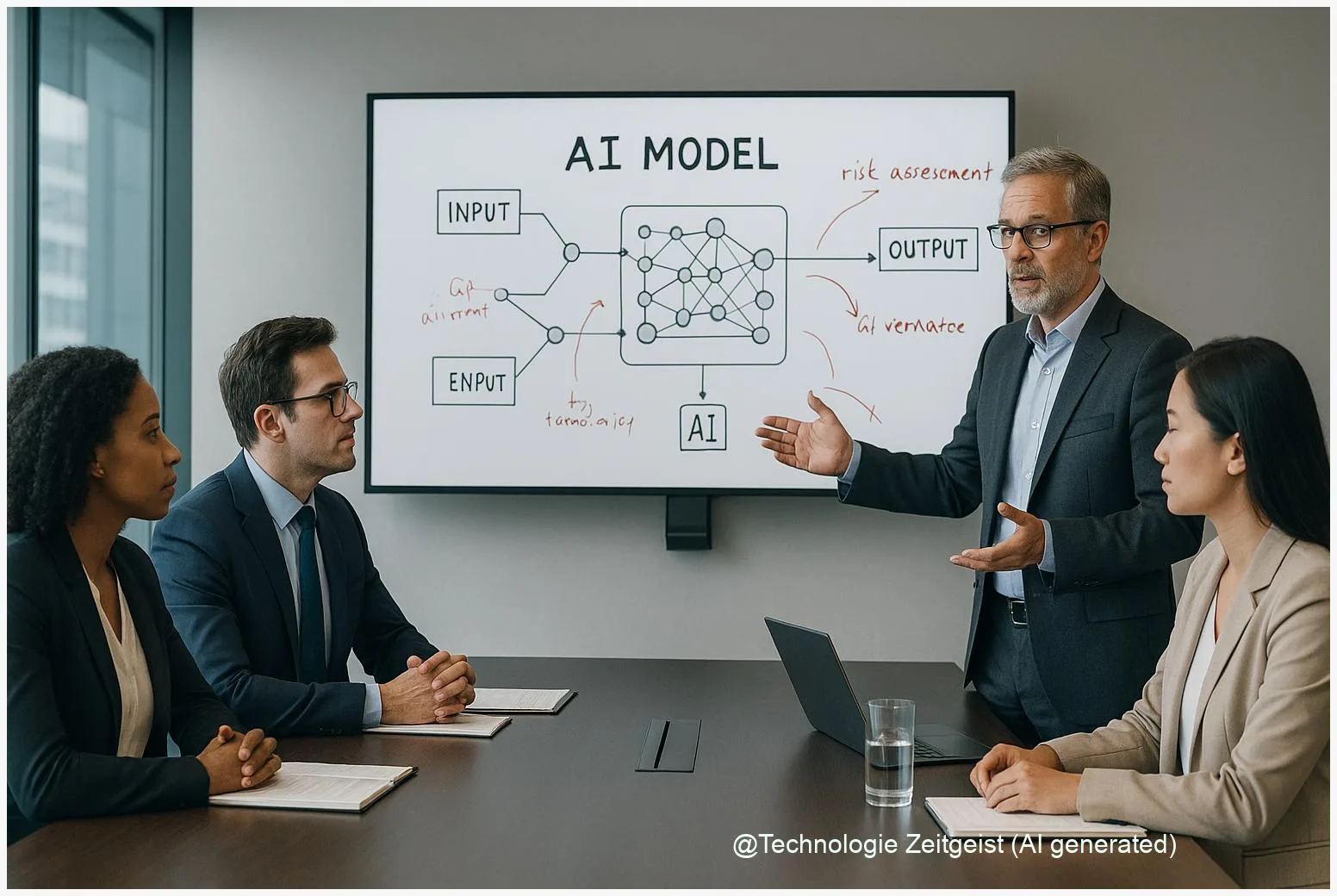
Why tech firms are hiring executives to manage AI risks
Companies are increasingly creating senior posts such as an AI risk officer to coordinate legal compliance, technical safety and business decisions around artificial intelligence. The AI risk officer is a senior role that combines risk assessment, cross-team coordination and regulatory reporting to reduce deployment mistakes and costly fines. This article explains why firms hire such executives, how the role typically works, and what tensions leaders must manage to keep AI both useful and responsible.
Introduction
Every time a company adds an AI feature—an automated resume screener, a recommendation algorithm or an internal chatbot—new decisions are needed about who is accountable when things go wrong. That accountability used to be split between legal, security and product teams. Today, regulators and boards expect a clearer picture: who assessed the risk, who signed off on deployment, and who will monitor outcomes.
For many firms this gap means hiring an executive who can translate legal obligations into technical checks and operational routines. The result is not only a compliance checkbox; it is a new management rhythm that ties model testing, vendor choices and launch gates to measurable responsibilities.
Why companies create the AI risk officer
Two forces pushed the AI risk officer from a niche idea into mainstream corporate hiring. First, legal frameworks introduced explicit duties for organisations that develop or deploy certain AI systems. For example, risk-based regulations require documentation, risk assessments and post-market monitoring for higher-risk systems. Second, investors and customers ask for demonstrable governance. When a model causes biased decisions, a data breach or misleading outputs, the reputational and financial consequences can be significant.
The role typically covers risk assessment, compliance and cross-functional coordination. The officer often ensures that model cards or technical documentation exist, that launch checklists are followed, and that post-deployment monitoring is active.
How the role works in daily practice
An AI risk officer translates broad obligations into checklists and decisions that teams can use before a model goes live: creating deployment gates, specifying test datasets for bias checks, and defining incident thresholds for rollback. They design processes that tell engineers which tests are required and who must sign off.
The role intersects with data protection officers (privacy), security teams and product teams. Its job is to create clear handoffs and to keep a register of high-risk systems so auditors and regulators can find evidence quickly. In some firms the function leads external audits, commissions adversarial testing, and authors post-market monitoring reports.
Opportunities and tensions
Benefits include faster incident responses, clearer evidence for auditors, and a single contact point for regulators. Trade-offs include role ambiguity (advisory without authority) or overreach (veto power that stifles innovation). Talent is another challenge: the required mix of legal, technical and program-management skills is rare, so firms either pay a premium or distribute responsibilities across teams.
Good governance balances compliance with continuous learning so processes address current rules without missing novel harms.
Where this is heading
Expect more standardisation and clearer career paths. Standards bodies and regulators are developing templates for documentation, testing and reporting. Over time a set of common job responsibilities and certification schemes may emerge for senior AI-governance roles, similar to standards for information security.
Organisations should plan budgets for governance: role salaries, external audits and monitoring tooling. Useful skills for practitioners include practical machine learning knowledge, risk assessment methods, and the ability to translate technical findings into board-level briefings.
Conclusion
Firms hire AI risk officers because modern AI systems combine technical complexity with legal and reputational exposure. The role bridges regulation, engineering and business by setting launch rules, organising monitoring, and answering auditor questions. Its effectiveness depends on clear authority, adequate resourcing and a balance between compliance and innovation. As standards and audits become more common, the position is likely to solidify into a recognised career path with clearer expectations for skills and scope.

Leave a Reply