
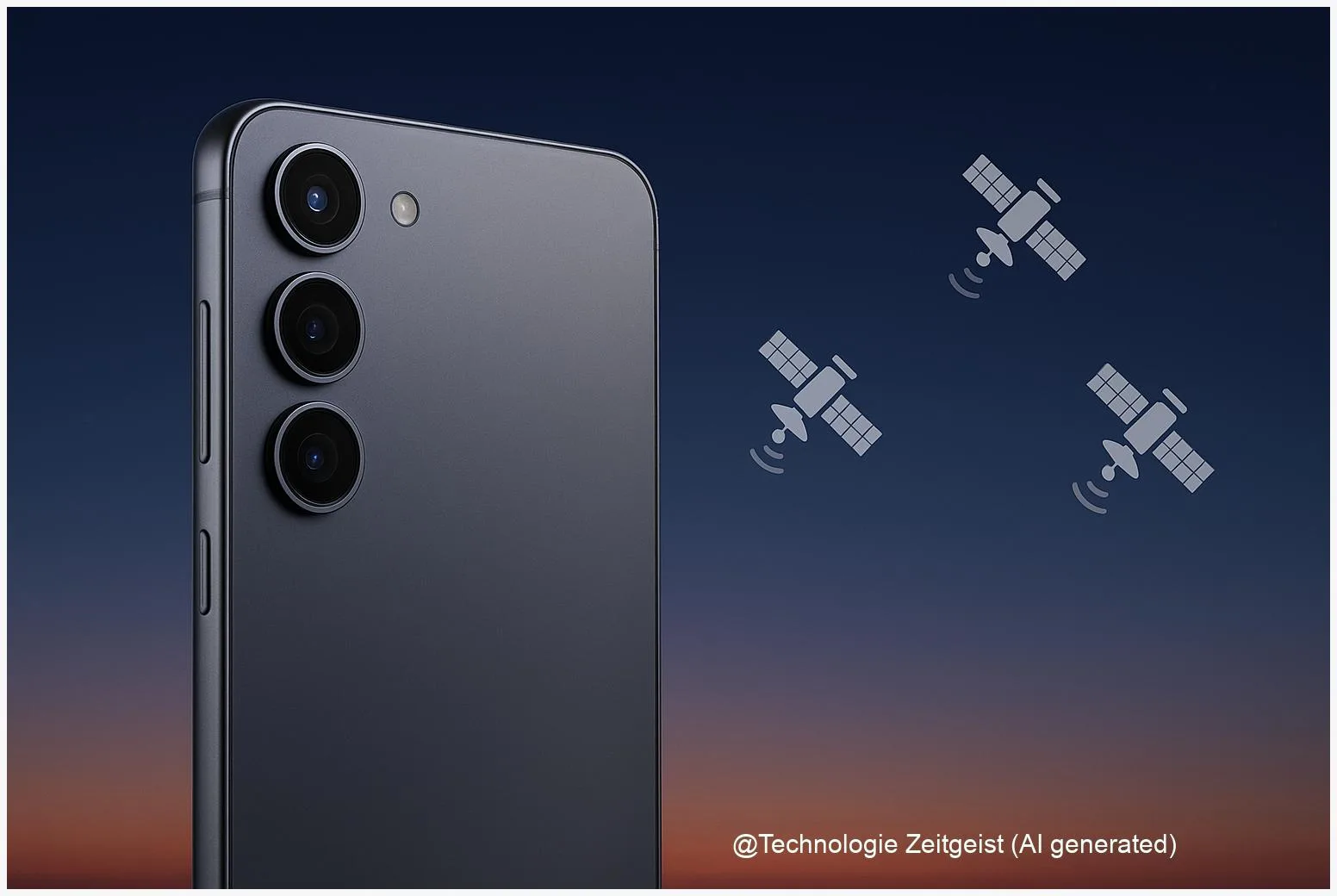
Samsung’s new modem design suggests smartphones could make satellite calls without a separate accessory. The possibility of satellite calls on phones is tied to the Exynos Modem 5410 and standards for non‑terrestrial networks; this article summarizes what that capability means for voice, what hardware and partners are needed, and where limits still remain. It helps you judge whether a Galaxy S26 with satellite calling would be a practical everyday feature or mainly a safety add‑on.
Introduction
Reports in late 2025 pointed to a single component that could enable satellite voice on mainstream phones: the Exynos Modem 5410. That chip is described by Samsung as supporting several Non‑Terrestrial Network (NTN) modes — a technical term for mobile links that use satellites rather than land‑based towers. An NTN connection can carry tiny telemetry messages, machine‑type data and, in some designs, real‑time voice.
For a buyer or curious user the practical question is not only whether the modem can speak to satellites, but whether a finished phone — the Galaxy S26 in this case — would arrive with the necessary antennas, software and commercial partnerships to place regular voice calls over a satellite link. The distinction matters: modem capability is a prerequisite, not proof the phone will offer satellite calling immediately or everywhere.
Below, the technical basics are explained in plain terms, followed by realistic daily examples, the business and regulatory pieces that determine availability, and a grounded look at what a satellite‑call feature on the S26 would mean for you as a user.
How satellite calls on phones work
At its simplest, a satellite voice call links your handset to a satellite, which then relays the call back to a terrestrial network or directly to another satellite‑capable device. Modern proposals for satellite calls on phones rely on standardized radio modes defined by 3GPP — the industry body that sets mobile standards — under the label NTN. NTN covers several approaches: small low‑bandwidth links for IoT sensors, higher‑capacity links closer to regular 4G/5G performance, and direct‑to‑cell styles that mimic cellular connections but via satellite.
Key technical pieces are the modem, the antenna, and software to manage the connection. The modem is the radio brain: it implements the air interface and signal processing. The Exynos Modem 5410, for example, is described by Samsung as supporting three NTN modes: LTE DTC (Direct‑to‑Cell), NB‑IoT NTN (low‑data IoT) and NR‑NTN (higher‑bandwidth 5G NTN). LTE DTC is the most relevant for voice because it is based on cellular voice technologies adapted to work over satellite links. A modem alone does not guarantee performance — antennas, power management and network partners complete the picture.
Standards and a capable modem make satellite voice technically possible; delivering it to users needs antenna design, software integration and operator agreements.
Table: Quick technical summary
| Feature | Description | Importance |
|---|---|---|
| LTE DTC | Direct‑to‑cell style mode for speech and basic data | High |
| NB‑IoT NTN | Low‑speed IoT messages; not built for voice | Low |
| NR‑NTN | Higher bandwidth 5G NTN that can carry richer media | Medium |
Numbers reported for the Exynos Modem 5410 — such as a 4 nm process and high theoretical peak throughput — describe chip‑level capability under ideal lab conditions. Real‑world satellite voice performance is primarily constrained by signal strength, orbital geometry and whether the satellite operator supports low‑latency voice paths. Sources: Samsung product information and independent tech reporting (see Sources).
What a Galaxy S26 would need to make satellite voice calls
A phone needs more than a modem to place satellite calls reliably. Hardware and software must be integrated, and commercial arrangements must be in place. For the Galaxy S26 to support satellite voice: the handset maker must include the compatible modem (or pair it to the main processor), design antennas that can reach satellites, add firmware and apps that manage the special radio link, and agree with a satellite operator or carrier to carry the traffic.
An antenna in a smartphone faces design trade‑offs. Satellite links often need higher transmit power and directional gain than a typical cellular tower link, because the satellite is much farther away. Engineers use techniques such as beamforming (focusing radio energy in a direction) and higher‑sensitivity receivers. Those additions can affect cost, internal layout and sometimes battery life. Where a modem supports satellite modes but the final phone lacks a sufficiently capable antenna, satellite calls will not be available even if the chip exists in the bill of materials.
On the software side, the phone needs a stack that can switch between terrestrial and satellite routing, and codecs suited for limited bandwidth or higher latency. Voice over satellite can feel different: brief pauses may appear when links switch or when the satellite path introduces tens to hundreds of milliseconds of delay. These are engineering issues carriers and vendors manage through codecs and buffering, but they can affect conversational smoothness.
Finally, an agreement with a satellite operator determines commercial availability. Popular satellite operators in recent cellphone partnerships include providers of Low Earth Orbit (LEO) and specialized narrowband satellite services. Without roaming or peering with such an operator, the phone’s satellite capability would remain dormant. That is why reports distinguish a modem’s capability from the actual feature being shipped to consumers.
Everyday use and limits
Satellite calling on a phone is most useful in specific scenarios: out‑of‑coverage emergencies, remote outdoor activities, and sparse regions where terrestrial networks are absent. In many urban and suburban situations, satellite calling would be redundant because regular LTE and 5G provide lower latency and higher capacity. Users should therefore think of satellite voice as a complement rather than a replacement.
Practical constraints include coverage, latency, call setup time and battery impact. Satellite coverage varies: LEO constellations provide better global coverage and lower latency than geostationary satellites, but they still require unobstructed sky views. Buildings, dense tree canopy and indoor environments can block the radio path. Call setup over satellite can take longer than a cell call because the handset must acquire the satellite signal and authenticate with the operator. Battery consumption tends to rise when a phone uses satellite links, because the radio transmits with more power or keeps antennas active longer.
For everyday users a few realistic expectations: calls outdoors in clear sky usually work; indoors they often fail or fall back to terrestrial networks; in emergencies a satellite link may be the only option but might not provide the seamless quality of a cell call. Data‑heavy services such as streaming video remain difficult over satellite phone links on a mainstream handset, at least initially. The value for most people will be reliable voice and short messages when everything else is unavailable.
Opportunities, risks and what to watch
Satellite voice on mainstream phones opens clear opportunities: improved safety for hikers and sailors, better connectivity for remote workers, and a reduced need for separate satellite handsets. For carriers and manufacturers, however, there are business and regulatory hurdles. Satellite operators and mobile carriers must agree on pricing, roaming rules and quality expectations. Regulators may require certifications or set rules on which frequencies are allowed for commercial handset use.
Risks include fractured availability — a feature marketed in one region might not be available in another — and consumer confusion if phones have the hardware but the service is not activated. There is also a potential for higher device cost and modestly reduced battery life when satellite modes are used frequently. From a privacy perspective, satellite calls routed through third‑party operators follow different trust and audit models than domestic carriers; users and regulators will rightly ask how location and metadata are handled.
What to watch next: official Samsung product documents and carrier announcements for concrete roll‑out details; regulatory filings (for example FCC or local certification bodies) that list handset capabilities; and early hands‑on tests from reviewers that measure call setup time, audio quality and battery effect. If you are evaluating a future purchase, note whether the vendor advertises a live partnership with a satellite operator and whether the feature is enabled in your country.
Conclusion
The technical groundwork for satellite voice on phones is in place: standards for Non‑Terrestrial Networks and modems like the Exynos Modem 5410 establish capability. Whether the Galaxy S26 will offer satellite calls to consumers depends on phone‑level antenna design, software integration and commercial agreements with satellite operators and carriers. For most users, the feature will be an emergency and remote‑use benefit rather than a daily replacement for cellular voice. Watch official product pages, carrier statements and certification filings to confirm when and where the capability is actually switched on.
Join the discussion: share your experiences with satellite connectivity or questions about how it might change smartphone use.

Leave a Reply