
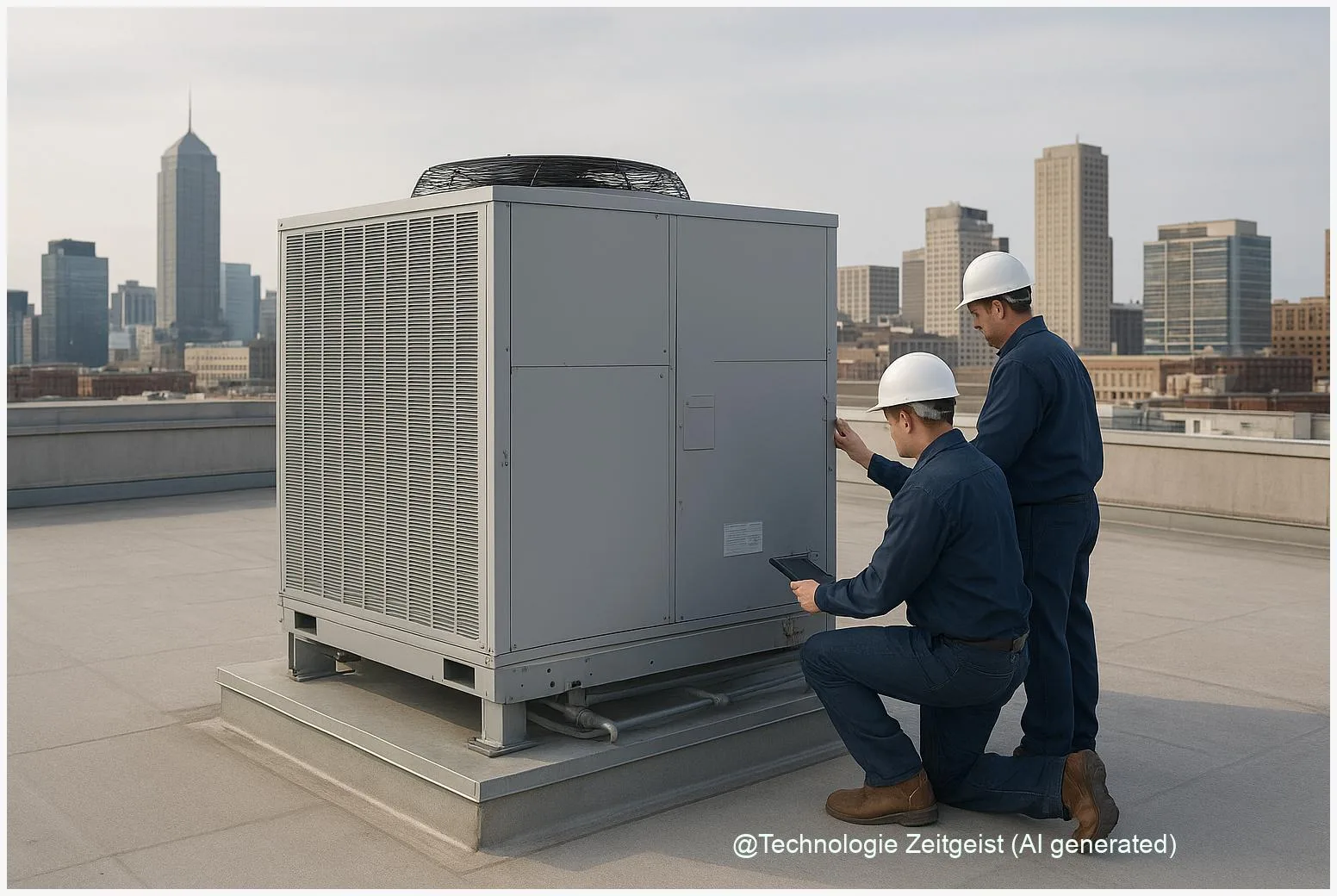
If you manage a large building and are weighing electrification options, a 15 ton rooftop heat pump may be a realistic alternative to a conventional boiler. This article shows what a 15‑ton rooftop heat pump can deliver, where it fits in buildings today, and which technical checks decide whether it can fully replace a boiler. The main keyword 15‑ton rooftop heat pump appears throughout the piece to help you compare capacity, controls and likely operating results.
Introduction
If you manage a school, hotel or office building and ask whether one rooftop unit could replace your boiler plant, the short answer is: sometimes. A single 15 ton rooftop heat pump supplies roughly the same nominal thermal capacity as a medium-sized boiler, but whether it can replace the boiler depends on how the building uses heat, the distribution system and winter outdoor temperatures.
Boilers typically deliver hot water at high temperatures into radiators or a central heating loop. Heat pumps move heat from outside air into the building and work best when the distribution system can accept lower supply temperatures. For many buildings with low-temperature radiators or with fan-coil systems, a single rooftop heat pump can handle a large share of the load; for older buildings with high-temperature radiators or very cold climates, the heat pump often needs a backup or a hybrid arrangement.
How large heat pumps work
A heat pump is a device that moves heat from one place to another using a refrigeration cycle. In rooftop packaged units this cycle is driven by compressors and fans in a single outdoor casing, similar to many air conditioners. The capacity of commercial rooftop units is commonly expressed in tons; 1 ton equals 12,000 BTU/h (≈3.517 kW), so a 15 ton unit equals about 180,000 BTU/h or ≈52.8 kW.
Key performance numbers to watch:
A 15‑ton rooftop unit provides roughly 53 kW of rated cooling capacity; heating output varies with outdoor temperature and the unit’s rated heating coefficient.
Technical terms explained briefly:
- COP (Coefficient of Performance): the ratio of heat delivered to electrical energy consumed; a COP of 3 means 3 kW of heat for 1 kW of electricity.
- IEER (Integrated Energy Efficiency Ratio): a weighted efficiency metric that reflects part‑load operation of commercial units; used in DOE and AHRI ratings.
- Refrigerant: the working fluid. Many older commercial units use R‑410A; newer designs move to lower‑GWP alternatives such as R‑454B or R‑32.
If numbers help, the small table below summarizes typical ranges for a modern 15 ton packaged heat pump.
| Feature | Description | Typical value |
|---|---|---|
| Cooling capacity | Rated at standard AHRI conditions | ≈180,000 BTU/h (≈52.8 kW) |
| Heating COP (moderate temp) | Depends on outdoor temp and defrost cycles | ≈2.5–4.0 (varies) |
| IEER / part‑load | Reflects variable load performance | Typical modern units: IEER ≈14–20 (high‑performance designs higher) |
| Electrical supply | Three‑phase service common for commercial units | 400–480 V AC / 3‑phase typical |
Manufacturers test commercial rooftop heat pumps to AHRI 340/360 or equivalent standards. Those certificates give the measured capacity and efficiency under defined conditions and are the most reliable way to compare models.
Could a 15‑ton rooftop heat pump replace a building boiler?
The decision whether a 15 ton rooftop heat pump can replace a boiler depends on three practical checks: the building’s peak heat load, the distribution system temperature, and local winter conditions. Start with a simple load calculation: if the building’s peak heating need is at or below the heat pump’s rated heating output at the relevant outdoor temperature, the unit could handle the peak. If the peak exceeds the unit’s capability, either a second unit or a supplemental heat source is required.
Boilers commonly provide water at 70–90 °C for older radiators; many heat pumps work most efficiently when distribution temperatures are lower, for example 35–55 °C. That means replacing a boiler often requires hydraulic changes: larger heat emitters (bigger radiators), fan‑coils, or buffer tanks to store heat and smooth demand. Alternatively, a hybrid setup keeps the boiler as backup and lets the heat pump cover base load and part‑load hours.
Practical example: a midsize hotel with moderate glazing and insulation might have a design peak load near 40–60 kW on a cold day. In such a case, a 15 ton rooftop heat pump rated at ≈53 kW of capacity could cover much of the demand at mild outdoor temperatures. But on very cold days the heat pump’s effective COP and capacity fall; a gas or electric backup may be necessary to guarantee comfort.
Key onsite checks before replacing a boiler:
- Detailed heating load calculation across design outdoor temperatures.
- Check radiator or terminal unit sizing and the minimum supply temperature required for comfort.
- Verify roof structural capacity, rooftop curb and lifting access, and anti‑vibration mounts.
- Confirm electrical service capacity and that the building has suitable three‑phase supply or can be upgraded.
Finally, use AHRI certificates and manufacturer datasheets to compare heating output at realistic outdoor temperatures rather than relying on nominal tonnage alone.
Opportunities, risks and policy context
Large rooftop heat pumps can cut fossil fuel use in buildings, but the net benefit depends on the electricity mix and controls. In many trials, high‑efficiency packaged rooftop units delivered sizable energy savings when paired with modern controls. One field evaluation of an RTU Challenge unit showed seasonal EER improvements of roughly 31% compared with an older reference unit and estimated annual electricity savings in a store example at about 16,000 kWh, with a simple payback of roughly 3.8 years for that case.
Regulation and refrigerant policy are also relevant. Ratings and test protocols follow AHRI 340/360; certificate data is the most reliable performance evidence. At the same time, phasedown of high‑GWP refrigerants encourages newer models to use lower‑GWP fluids such as R‑454B or R‑32. Those refrigerants can affect efficiency and service practice and may require technicians with updated certification.
Risks include:
- Lower winter capacity: COP and heating capacity fall at low outdoor temperatures, increasing backup needs.
- Integration failures: economizer, controls and BMS integration problems often reduce realized savings; commissioning and careful BACnet/DDC configuration are essential.
- Roof constraints: weight, vibration and access for maintenance can complicate retrofit projects and add cost.
Opportunities arise where buildings have suitable distribution systems or can be adapted. Programs such as the DOE ‘High Performance Rooftop Unit’ specification set demanding part‑load performance targets (for example IEER thresholds) and helped drive the development of more efficient packaged heat pumps. Financial incentives in some regions can make the economics for electrification far more attractive.
What to expect in operation and costs
Operational performance varies with building use patterns and climate. Typical operating behavior to plan for:
When outdoor temperatures are moderate, a modern 15 ton packaged heat pump often runs with a heating COP in the range of about 3.0–4.0. That means it delivers roughly three to four times as much heat as the electricity it consumes under those conditions. At very cold temperatures the COP can fall to near 1.5–2.0, at which point relying solely on a heat pump becomes costly and a backup becomes prudent.
Costs and payback depend on fuel prices, electricity tariffs, incentive programs and installation complexity. A well‑executed retrofit with controls and proper commissioning can produce payback periods in the single‑digit years for sites that previously used expensive fossil fuels or had inefficient old units. The Publix/PNNL demonstration reported an example payback near 3.8 years; individual projects may be longer or shorter.
For procurement and planning, follow these steps:
- Obtain AHRI certificates and manufacturer datasheets for candidate models and compare heating output at design temperatures.
- Require BACnet/DDC points and testable economizer logic in the specification to enable measurement and verification.
- Plan a 12‑month M&V period after installation to measure seasonal performance and capture true savings.
- Budget for electrical upgrades and possible hydraulic modifications (buffer tanks, mixing valves, or terminal unit resizing).
When these checks are done, a 15 ton rooftop heat pump can be an effective tool to decarbonize heating in many commercial buildings — particularly where distribution systems accept lower supply temperatures or where hybrid arrangements are acceptable.
Conclusion
A single 15 ton rooftop heat pump contains the nominal capacity to replace a medium‑sized boiler, but the practical choice depends on load profiles, distribution temperature and local climate. Check the building’s peak heat demand, the terminal unit temperatures your system needs, roof and electrical constraints, and the manufacturer’s AHRI certificate for heating output at the relevant outdoor temperature. In many retrofit projects a hybrid approach — heat pump for base load plus a small backup boiler or electric heaters for very cold hours — offers the best balance of performance, cost and reliability. For building owners who can adapt distribution systems and prioritize controls and commissioning, rooftop electrification with a 15 ton unit can deliver meaningful emissions reductions and lower operating costs over time.
Join the conversation: share your experience with rooftop heat pump retrofits or ask a question below.



Leave a Reply