
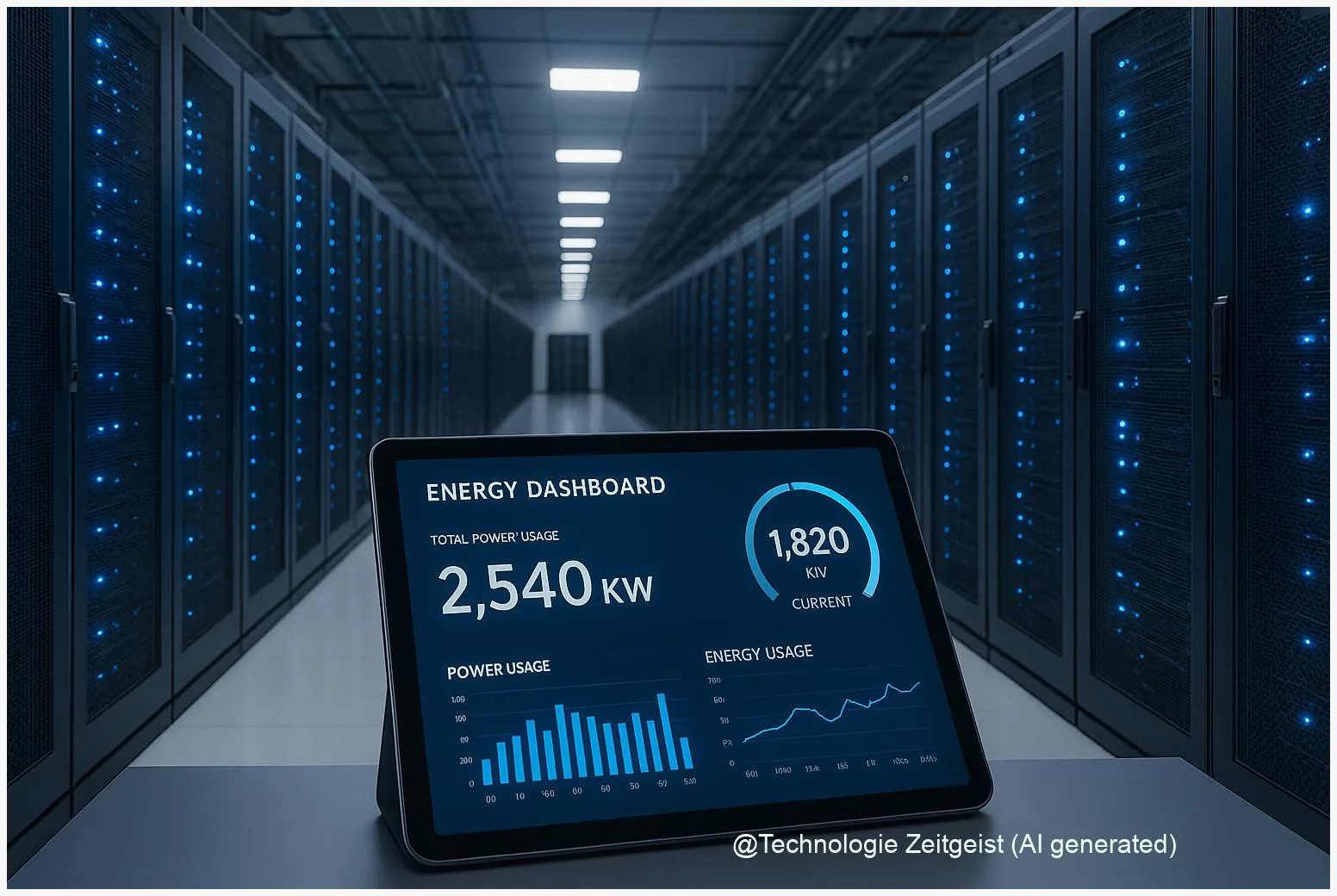
Demand for AI data centers is changing how companies build and power their cloud infrastructure. Large-scale facilities now host specialised processors, take up more space on power grids, and influence where new renewable capacity is planned. This article puts the most important facts and trade-offs together so you can understand why investments of hundreds of millions — and often billions — of dollars now go into data‑center campuses and related grid upgrades.
Introduction
When you use a generative AI service, most of the visible delay is tiny; the larger impacts happen where the model runs: in vast computing halls that plug into the electricity system. Over the past few years, model sizes and the number of AI workloads have risen so fast that builders now plan entire campuses rather than single halls. That shift creates new pressures on local power networks, changes how companies choose locations, and alters the economics of renewable energy procurement.
For readers aged sixteen and up, the practical question is simple: why does an extra teraflop of compute sometimes mean an extra substation, new transmission lines, or a long permitting fight? The answer involves three linked facts: AI workloads require different hardware than ordinary web servers; efficiency gains in cooling and chips matter but do not fully cancel growth; and regional grid capacity and permitting decide how fast projects can proceed. This article uses current industry and policy research to map that landscape in clear terms.
Why AI data centers are expanding
AI data centers are growing because modern machine‑learning workloads ask for specialised, power‑hungry processors and consistent, very large bursts of electricity. Training large language models and running many simultaneous inference tasks use accelerators such as GPUs and TPUs that draw far more power per rack than typical server blades used for websites or email. Investors respond by building larger facilities with denser power distribution and cooling systems to keep the hardware operating reliably.
Putting numbers beside the trend helps. The International Energy Agency estimates global data‑center electricity use at around 415 TWh in 2024, and it identifies AI workloads as the main growth driver in the near term. That 2024 figure is higher than some earlier reviews, because different studies use different boundaries and data sources; independent reviews highlight wide modelling ranges and call for better telemetry. Still, the clear direction is upward: more AI compute typically means more megawatts at a site and greater overall power demand.
Rapid growth in AI workloads shifts demand from many small servers to fewer, denser racks that require new power and cooling strategies.
Where does the extra electricity go? Three places matter most: the compute racks themselves, the cooling and air‑handling infrastructure, and the supporting electrical hardware (transformers, backup generators, uninterrupted power supplies). PUE, or Power Usage Effectiveness, is the ratio of total facility power to the power used by IT equipment; lower PUE means less energy overhead for cooling and support systems. Hyperscale operators report fleet PUEs near 1.1 or lower, but that number depends on what the operator includes in the calculation.
If a small table helps to compare typical features, this one condenses the main categories and values.
| Feature | Description | Typical value |
|---|---|---|
| Compute density | Power draw per rack (kW) | 10–40 kW per rack for AI‑dense setups |
| PUE | Facility overhead vs. IT load | ~1.1 for hyperscale fleets; higher for small sites |
| Backup power | Diesel or battery systems sized for minutes to hours | On‑site UPS + gensets for resilience |
How these facilities actually work
At the technical level, an AI data center looks similar to other modern centers but with key differences in scale and redundancy. Inside a hall, rows of racks hold accelerator boards that run the compute. Those boards are fed by dense power distribution units and cooled by water‑or air‑based heat exchanges. Operators use measures such as liquid cooling or rear‑door heat exchangers to move heat more efficiently than traditional air cooling.
Power arrives at the site through grid connections that often need upgrading for high‑density projects. When a new hyperscale campus is planned, utilities assess the transformer capacity, substation availability and the need for new transmission lines. Delays in grid upgrades are a common cause of multi‑year build slowdowns. To reduce frequency of expensive grid upgrades, some data centers install on‑site batteries or combine generation with long‑term renewable contracts that include firming power.
Several technical terms help make sense of operations:
PUE (Power Usage Effectiveness) — the ratio of total facility energy to the energy used by computing equipment. A PUE of 1.1 indicates 10% overhead for cooling and support.
IT‑load — the electricity consumed directly by servers and accelerators. Operators aim to maximise IT‑load utilisation so fixed overheads are used efficiently.
Hyperscale operators publish fleet averages for PUE and other indicators; however these figures can mask regional differences and smaller, less efficient edge sites. Independent reviews urge standardised definitions so comparisons are fair. For readers curious about the difference between corporate sustainability claims (percentages of matched renewable purchases) and absolute electricity use: matching contracts can reduce reported emissions without reducing gross electricity consumption, which still stresses local grids.
What growth means for cities, grids and companies
When multiple large facilities cluster in a region, local consequences become visible. Grid operators may need to add capacity, regulators must assess land‑use and water impacts, and municipalities confront building, noise and traffic issues. In some regions the arrival of a hyperscale site has prompted long planning battles and conditional permits tied to grid upgrades.
For the electricity system, the consequences are mixed. On one hand, predictable, large industrial loads are easier to plan for than diffuse residential demand. On the other, AI data centers often demand power at a scale that requires significant investment in transmission and distribution. The International Energy Agency projects that global data‑center electricity use could increase substantially by 2030 under some scenarios, with AI as a dominant driver; the scale depends strongly on model adoption rates and efficiency improvements.
Companies benefit from scale economies: larger facilities offer lower marginal costs for compute and often better efficiency metrics. But they also face new risks. Site selection now considers proximity to spare grid capacity, availability of low‑carbon power, and permitting timelines. Firms that rely heavily on cloud services should expect computing costs to reflect not only server prices but also regional energy and grid constraints.
At the policy level, there are trade‑offs between promoting economic investment and protecting local infrastructure. Incentive schemes that attract data‑center investment without requiring commitments to grid upgrades or flexibility can shift costs to other ratepayers. Conversely, policies that encourage demand‑response participation, time‑of‑use tariffs and flexible procurement can reduce peak pressure and help integrate renewables.
Possible paths to 2030
Looking ahead, three plausible scenarios shape how the next five years play out. First, an efficiency‑led path where hardware improvements and better cooling keep energy growth moderate. Second, a demand‑driven path where rapid AI adoption pushes electricity needs higher and forces extensive grid upgrades. Third, a coordinated path where policy, markets and operators align to add flexibility and fast‑track clean generation for data‑center clusters.
Which path materialises depends on actions now. Better, standardised reporting of electricity use and AI‑specific shares would give planners the data they need to balance grids and permits. Financial incentives that reward flexible operation and firm renewable procurement can steer investment toward less disruptive locations. Utilities can pre‑plan corridors for high‑capacity lines in regions likely to attract large tech campuses, smoothing timelines for connection.
For citizens and local governments, the practical options are straightforward: demand clear commitments on grid upgrades and environmental impacts during permitting; insist on data‑sharing agreements that allow regional planners to forecast demand; and require contingency plans so that if a project stalls, the local community does not inherit stranded infrastructure costs. These measures reduce uncertainty and make trade‑offs visible before construction begins.
Conclusion
Billion‑dollar AI data centers are reshaping where and how cloud infrastructure is built because AI workloads demand dense compute, stable power, and often long permitting timelines. Efficiency improvements and corporate renewable purchases help, but they do not erase the need for better grid planning and transparent reporting. For communities, utilities and companies, the priority is to convert uncertainty into verifiable data, align incentives for flexibility, and coordinate investments so new capacity serves both digital growth and wider public needs. Clear rules and shared information make it easier to balance economic opportunity with reliable, low‑carbon electricity.
Share your perspective or questions on how local planning and cloud strategy should interact — thoughtful discussion is welcome.



Leave a Reply