
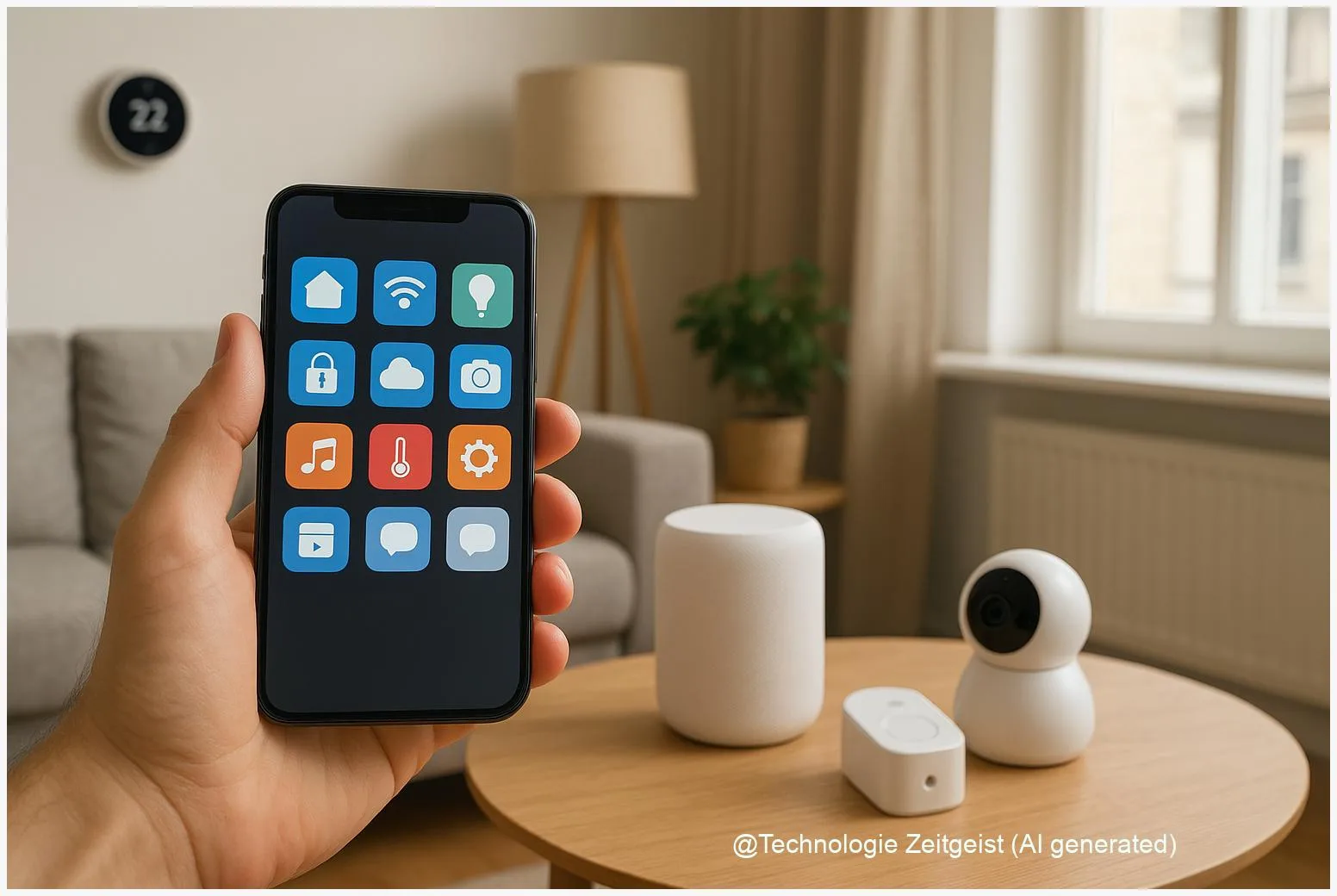
Most people end up with several manufacturer apps on their phone. The question “why do smart home devices need separate apps?” often comes down to mixed wireless standards, different pairing processes, and business choices such as cloud services and branding. This article shows which technical and commercial causes keep apps separate and what realistic changes—like Matter and Thread—mean for homeowners and renters who want fewer apps and a simpler smart home experience.
Introduction
When you buy a smart bulb, a thermostat and a camera from different brands, each product often pushes its own app. That creates friction: multiple logins, different layouts, and repeated permissions. The technical reasons include several wireless stacks in parallel—Zigbee and Z‑Wave are mesh systems that historically used vendor bridges, while many newer devices use IP over Wi‑Fi or Matter, an industry standard. Matter is an interoperability protocol that aims to make devices speak the same language on a basic level, and Thread is a low‑power IP mesh that many Matter devices use. But protocol alignment alone does not erase business choices such as cloud features or branding that keep manufacturer apps alive. This introduction frames both the technical gaps and the commercial incentives that explain why separate apps still exist, and what that means for an everyday user trying to simplify their home setup.
Why do smart home devices need separate apps?
The short technical answer is fragmentation: multiple wireless protocols, different pairing and provisioning routines, and legacy hardware that cannot be updated to a common standard. Zigbee and Z‑Wave are examples of radio stacks that traditionally used proprietary meshes and required vendor‑specific gateways. Wi‑Fi and Bluetooth LE connect directly to home networks but use different setup flows. Matter, finalized in 2022 by the Connectivity Standards Alliance, introduces a common IP‑based model—this lowers protocol friction but only for devices that implement Matter.
Hardware diversity and vendor strategies combine to keep separate apps useful for manufacturers.
Manufacturers often supply an app for three parallel reasons: to handle device setup (pairing and firmware updates), to offer cloud‑based features (remote monitoring, advanced automations) and to preserve brand experience. Even when a device supports a universal standard, the manufacturer may retain an app to access exclusive features or subscription services.
Legacy devices form a large part of the problem. Houses already have installed devices that speak Zigbee or Z‑Wave and cannot be converted overnight. Bridges or hubs translate between these older meshes and modern IP networks, but the translation process often requires the vendor’s app for initial pairing or for enabling the bridge mode.
If a short table clarifies the landscape, it looks like this:
| Technology | Typical role | Why separate apps appear |
|---|---|---|
| Zigbee / Z‑Wave | Low‑power mesh for sensors and bulbs | Pairing and mesh management often need a vendor bridge |
| Wi‑Fi / Bluetooth LE | Direct IP or local control for cameras, speakers | Different setup flows and cloud dependencies |
Each row shows a technical reason, but the persistence of separate apps also has commercial roots: vendors keep apps as a way to deliver paid features and to control the user relationship.
How separate apps appear in daily life
On a normal evening, a household owner might open three apps to dim lights, check a doorbell clip and adjust a smart radiator. That matters because each app may use different terminology for the same concept—”scene”, “routine”, “automation”—and because automations across apps usually need a third‑party hub or a voice assistant as the mediator.
Practical examples show the most common pain points. Buying a smart lock from Brand A and a smart light from Brand B often means two separate pairing sequences: the lock registers cryptographic keys with Brand A’s cloud, while the light uses a local provisioning method. If one of the devices lacks Matter or Thread support, you will often need Brand B’s bridge to allow local control. Bridges add latency and another point of failure; they also keep the manufacturer app relevant because the bridge’s advanced menus are usually available only there.
Another regular scenario is remote access. Many cameras and doorbells require the vendor’s cloud to view historic footage. That creates an ongoing dependency on the manufacturer app even when basic local control could be possible. For users who share device access with family members, multiple apps multiply the burden: multiple usernames, varied permission models and differing notification settings.
Integrators and advanced hobbyists often use local controllers like Home Assistant to unify interfaces. These platforms connect to many brands using local APIs or community‑created integrations, reducing the number of apps for daily control. For mainstream users, voice assistants (Alexa, Google Assistant, Siri via HomeKit) offer partial consolidation but cannot always replace vendor apps for firmware updates or cloud‑only features.
Opportunities, risks and tensions
Matter and Thread create a realistic opportunity to reduce app fragmentation, because Matter defines a common set of device types and commands and Thread provides a low‑power IP mesh for battery devices. That said, adoption is incremental: many devices released before Matter cannot be converted, and certification by the Connectivity Standards Alliance (CSA) takes time. When citing Matter’s release dates, note that core specifications were finalized in 2022 and widespread product certification accelerated in 2023–2024.
Risks and tensions are both technical and commercial. From a technical perspective, translated integrations (bridges) can introduce latency, reduce reliability and complicate debugging. From a commercial angle, manufacturers may intentionally keep apps to monetise services, collect usage data, or retain direct customer relationships. Those practices are not inherently illegal, but they shape choices about privacy and portability.
Security is another tension. On one hand, a single vetted app and a secure standardised provisioning can improve security by reducing weak, ad‑hoc setups. On the other hand, centralisation increases the impact of a single cloud provider outage or misconfiguration. Many vendors try to balance this by offering both local control and optional cloud features; evaluating the balance requires reading privacy and data‑processing terms carefully.
Regulatory trends in Europe encourage interoperability and data portability. Those policies make it more likely that manufacturers will offer local APIs and clearer upgrade commitments in future product cycles, but regulatory change takes time and does not solve legacy fragmentation immediately.
Where integration is actually heading
The medium‑term picture is one of gradual consolidation. Newer devices increasingly ship with Matter and Thread support, and major platform providers publish clear Matter roadmaps. Thread is estimated to appear in around 20 %–40 % of new device designs in early 2025 in certain categories, notably lighting and sensors, though percentages vary by segment and geography.
For consumers the implication is pragmatic. Buying devices that explicitly list Matter or Thread on the box reduces the chance of adding another app. If you already have many legacy devices, a hub or bridge is still the simplest route to unify control. For renters or frequent movers, prioritise devices that support local control and standard protocols so you can reuse them in future homes without vendor lock‑in.
Developers and manufacturers also face incentives to adopt standards. A device that supports Matter can reach multiple ecosystems—voice assistants and smart home platforms—without bespoke cloud integrations. That reduces long‑term maintenance. But companies may still keep apps for advanced features or paid tiers, so the expected outcome is fewer but not zero manufacturer apps.
Practically, households can follow three low‑effort rules: buy Matter‑capable devices where possible, keep one reliable central controller (physical hub or software like Home Assistant), and check update and privacy policies before purchase. These choices limit app count and improve control without requiring technical expertise.
Conclusion
Separate apps exist for technical reasons—different radio stacks, pairing flows and legacy hardware—and for business reasons, such as cloud features and branding. Standards such as Matter and Thread reduce the technical fragmentation but do not eliminate the commercial incentives that keep manufacturer apps alive. Over the next few years, more devices will support common protocols and the number of required apps should decline, but existing devices and paid cloud services mean multiple apps will not disappear overnight. Choosing Matter‑capable products, using a single controller where possible and reviewing cloud policies brings the most immediate benefits for anyone who wants a simpler smart home.
Join the conversation: share practical experiences and tips for reducing app clutter in your home.

Leave a Reply