
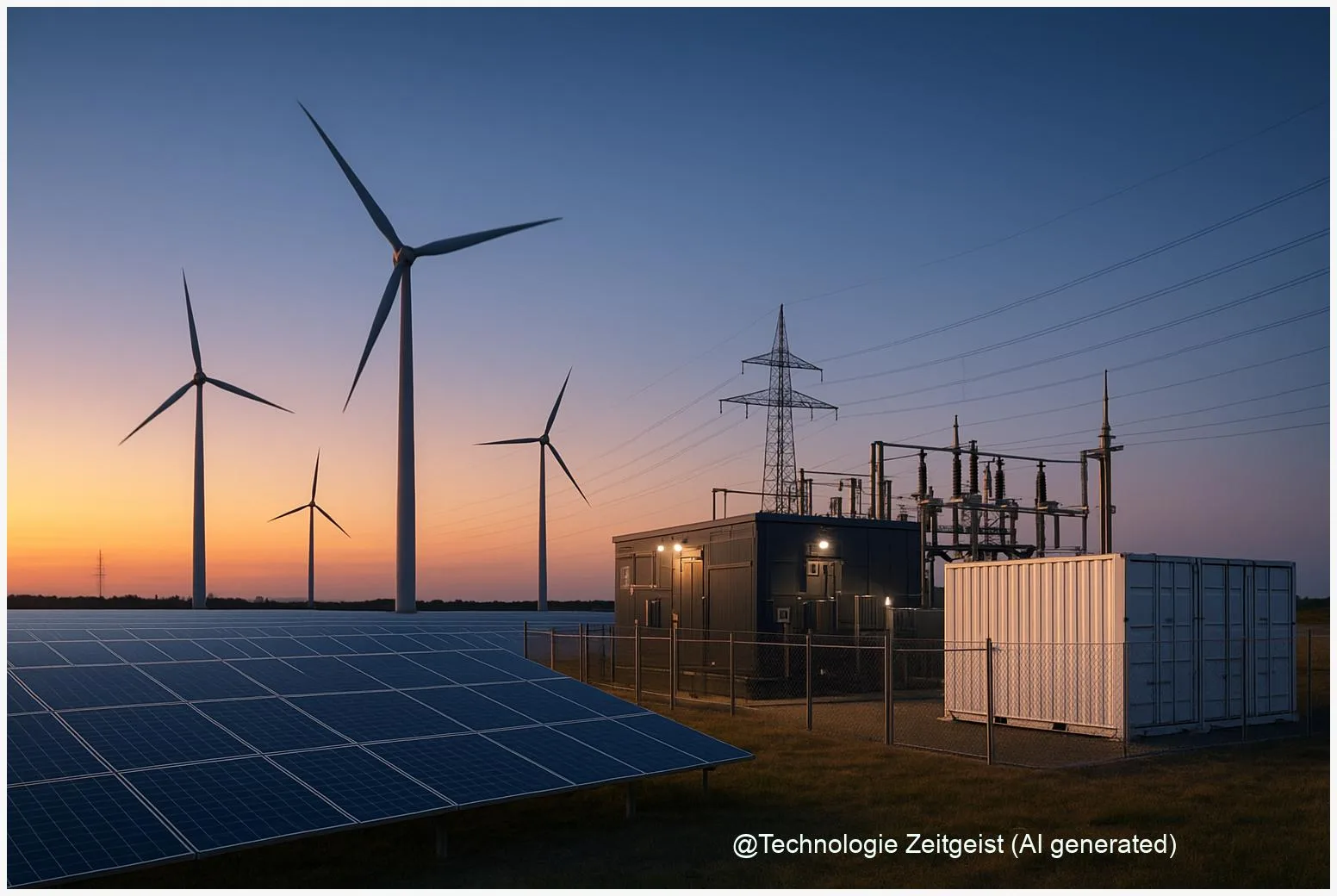
Demand for reliable, low‑carbon power is rising and the technical tools to meet it are improving — this makes renewable energy 2026 a practical turning point rather than a distant hope. Policymakers, grid operators and investors now focus on three things: faster solar and wind deployment, more flexible grids, and cost‑effective storage. The likely result in 2026 is that renewables will supply far larger shares of new power capacity, provided grid upgrades and storage keep pace.
Introduction
Every electricity system balances supply and demand every minute. As more wind and solar come online, that balancing task changes: output can be large but variable. When you charge a phone or ride an electric tram, you do not notice that the power grid is absorbing weather‑driven swings in supply. The practical challenge for 2026 is not whether renewables can produce power — they clearly can — but whether the grid and markets can absorb a much larger share without raising costs or risking blackouts.
This article looks at the concrete shifts that could let renewables lead in 2026: faster deployment of solar and wind, improvements in flexibility (storage, demand response and better lines), and targeted policy and investment choices. It uses recent public analyses from international agencies and sector reports to show which technical and policy changes matter most for everyday life, companies, and regional planners.
Why renewable energy 2026 looks stronger
Installations of solar PV and wind turbine capacity have been the largest contributors to new power build‑out in recent years. Two trends make 2026 notable. First, technology costs have continued to fall: modular manufacturing and larger factory lines reduced per‑unit costs for solar panels and turbines. Second, financing has become more available for large projects as investors accept lower returns for lower operational risk, partly because long‑term power contracts and auction frameworks are now common in many regions.
International datasets and outlooks published through 2024–2025 show a consistent pattern: solar and wind lead new capacity additions, while batteries are the fastest growing flexibility technology in percentage terms from a smaller base. These sources also highlight regional differences. Asia, led by large markets in East and South Asia, will add the largest absolute capacity. Europe and North America add more storage and offshore wind capacity per unit of new generation because of their policy focus on integration and resilience.
Analysts agree on the direction: more renewables in the supply mix, conditional on improved system integration.
When numbers help, they should be used sparingly. Recent agency reports show annual global additions measured in the low hundreds of gigawatts across all renewables; solar and wind together make up the majority of that growth. For planning, the important figure is not a single GW number but the share of new generation that needs matching flexibility and grid capacity.
If a short structured comparison clarifies this, the table below shows the relative roles rather than exact global totals.
| Feature | Description | Value |
|---|---|---|
| Primary drivers | Solar PV and onshore wind provide most new capacity additions | Majority of new builds |
| Flexibility growth | Battery storage expands quickly in percentage terms; long‑duration options emerging | Rapid percentage growth |
How grid flexibility and storage make the difference
Renewables produce electricity when the sun shines or wind blows. Grid flexibility means the system can cope when that production does not match demand. Flexibility has several components: short‑term batteries that smooth minutes to hours, larger storage systems for hours to days, flexible power plants or demand response that can change usage patterns, and transmission lines that move power across regions.
A battery behind a home inverter is the easiest example: it stores excess rooftop solar at midday and delivers it in the evening. Grid‑scale batteries do the same on a larger scale and provide instantaneous services that historically came from gas turbines. Longer‑duration storage — including pumped hydro, thermal systems, or chemical fuels like hydrogen — helps bridge longer low‑generation periods. Each option has trade‑offs: batteries are efficient and fast, pumped hydro needs geography, and hydrogen is more demanding and currently pricier to cycle back to power.
Beyond hardware, market rules matter. If electricity prices sharply drop to near zero during sunny hours, investors in storage need ways to recover costs, for example through capacity payments, ancillary service markets, or multi‑year contracts. Better forecasting of wind and solar output also reduces the need for reserve capacity; operators can plan dispatch more cheaply when weather‑driven generation is predictable a day ahead.
For 2026, the effect is practical: regions that increase storage and grid links alongside renewables see lower curtailment (wasted renewable output) and more stable wholesale prices. That combination lowers the effective cost of renewables for consumers and firms, making larger renewable shares both affordable and reliable.
What this means for cities, homes and industry
The changes toward 2026 are visible at street level. Cities that coordinate rooftop PV, district heating, storage and electrified transport can reduce peak grid stress and lower local emissions. A municipal bus depot that pairs daytime bus charging with local solar and a battery can avoid expensive grid upgrades while keeping services reliable.
Homes will see more options. Households with rooftop panels plus a battery can use more self‑generated power and shift consumption to cheaper hours. For renters and people without roofs, community solar and virtual power plants — systems that aggregate many small resources and control them centrally — are becoming real choices. Industry, especially in sectors with high, regular power needs, benefits from fixed long‑term power purchase agreements that hedge future prices and enable investment in on‑site renewables and storage.
Practical examples matter because they show where policy and markets should focus investment. In many regions, the least costly route to higher renewable shares is not only building more wind and solar but coordinating where and when power is used. Time‑of‑use tariffs, streamlined permitting for rooftop installations, and incentives for flexible industrial demand can all increase the share of renewables consumed locally and reduce transmission bottlenecks.
Consumers will notice indirect benefits: more daytime charging capacity for electric vehicles, steadier retail electricity prices over the year (less exposure to fossil‑fuel price spikes), and cleaner local air where heating and transport shift to electricity supplied increasingly by renewables.
Risks, bottlenecks and policy tensions
Even with strong deployment, several bottlenecks can prevent renewables from taking the lead in 2026. First, permitting and grid connection delays still slow projects. Large‑scale wind and solar need land or seabed approvals and access to transmission; slow administrative processes push projects into later years. Second, supply chains and commodity prices matter. Critical minerals and specialized equipment can face shortages or price swings that increase project costs and slow construction.
Third, financing and policy stability are essential. Investors require predictable frameworks: sudden subsidy cuts, retroactive tariffs, or unclear grid‑use charges raise risk premia and delay final investment decisions. Governments face tension between rapid deployment and protecting local interests, for instance reconciling new transmission lines with community concerns about land use or landscape impact.
Finally, there is a technical‑operational risk: insufficient attention to flexibility. Building renewables without matching investments in storage and grid upgrades raises curtailment and can increase short‑term balancing costs, sometimes offsetting the benefits of low‑cost generation. That is why many analysts emphasize integrated planning: assess generation, storage and transmission as a package rather than separate items.
Addressing these bottlenecks requires a mix of measures: streamlined permitting with clear environmental standards, investment in domestic supply chains and recycling, contractual reforms that make revenue streams predictable for storage projects, and regional co‑ordination to share excess renewables across larger balancing areas.
Conclusion
Renewables are well placed to supply an increasing share of new power capacity in 2026, driven by lower technology costs and growing project pipelines. The decisive factor for whether they truly lead will be system integration: smarter markets, more storage, and targeted grid expansion. Where those pieces come together, households and businesses see tangible benefits — lower exposure to fossil‑fuel price swings, more local clean energy, and new opportunities for electrification.
Conversely, without policy coherence and timely grid upgrades, higher renewable deployment can create waste and delays that slow the clean‑energy transition. The practical path forward is therefore not a single technology but coordinated planning: build more renewables, and at the same time build the flexibility and market rules that allow them to serve consumers reliably and affordably.
Join the discussion: share your region’s experience with renewables and grid upgrades, or post questions to continue the conversation.


Leave a Reply