
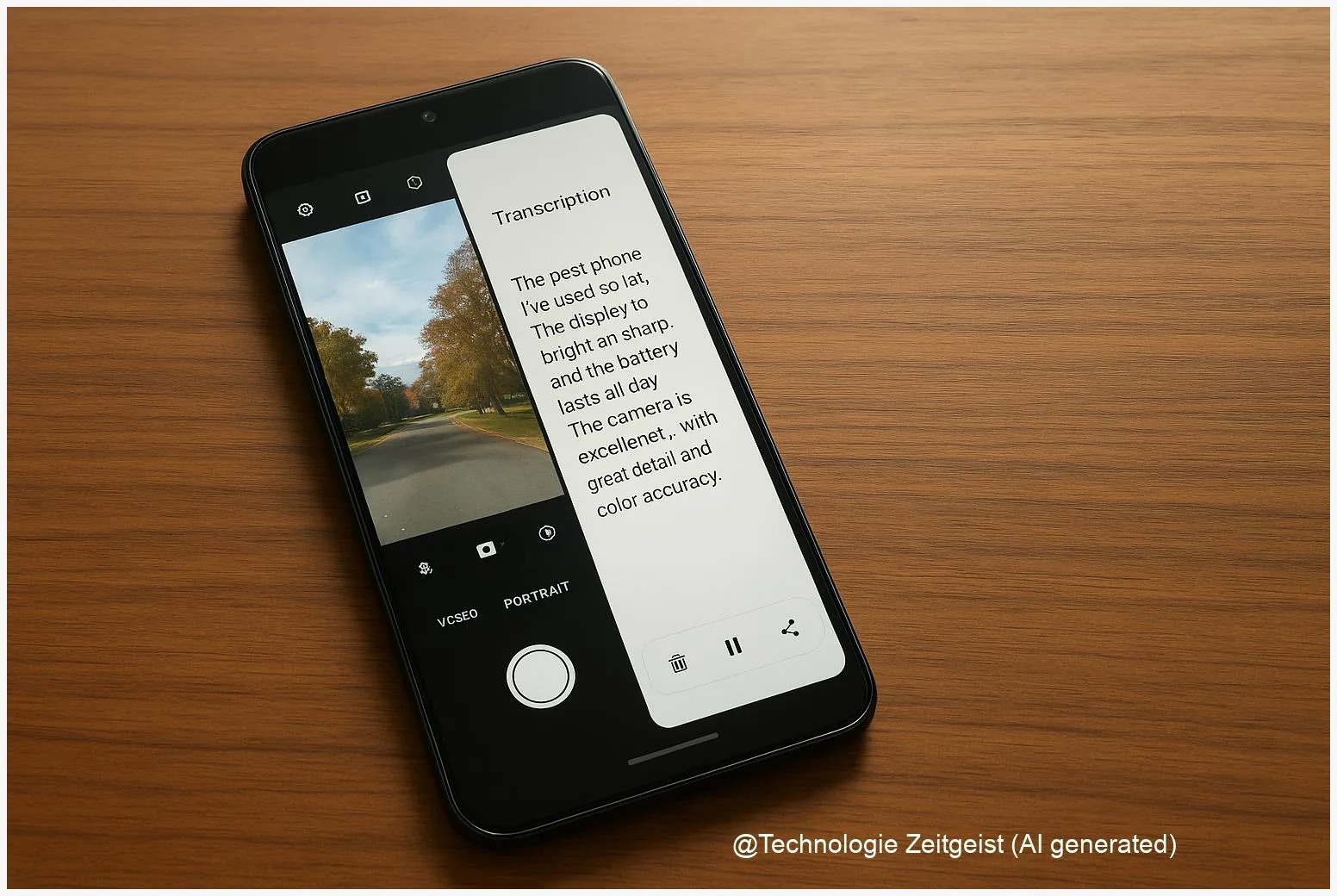
By 2026 many users will expect more from their devices than faster screens. Android phones 2026 must combine efficient on‑device AI, longer real‑world battery life, smarter charging, reliable software updates and better durability to stay useful for years. This article outlines seven concrete features buyers and makers should prioritise, with practical examples and clear trade‑offs for daily use.
Introduction
Smartphones have stopped being single‑purpose gadgets. They act as personal assistants, cameras, wallets and health trackers. That creates a new problem: many useful features demand more computing power and more energy, yet users still expect all‑day battery life and a phone that remains useful for several years.
Manufacturers are responding by adding dedicated neural processing units (NPUs), faster charging standards and more aggressive software features. Those technical advances are promising, but they introduce trade‑offs: more local AI can increase energy use; higher charging power risks faster battery wear unless thermal and battery management are improved. This article lays out seven concrete priorities that address those tensions. Each focus area links technology to what people actually do with phones: messaging, photos, navigation and everyday productivity.
On‑device AI and efficient NPUs
Built‑in AI is no longer a novelty. An NPU (neural processing unit) is a chip component specialised for the math behind machine learning, and it runs many AI tasks more efficiently than a CPU or GPU. For everyday users this means features such as real‑time transcription, smarter camera processing, or language assistance that works without a constant network connection.
Why NPUs matter in practice: running a speech transcription locally avoids delays and reduces data sent to cloud servers. The trade‑off is energy. Single AI inferences are often cheaper on an NPU, but frequent or continuous use—such as live language translation or background sensor analysis—adds up. That makes energy efficiency (expressed as TOPS/W, i.e., tera‑operations per second per watt) a more useful metric than raw TOPS alone.
Prioritise efficiency metrics and real‑world AI benchmarks rather than headline TOPS figures.
How manufacturers and buyers should respond: device makers should publish TOPS/W or comparable energy metrics and realistic workloads. Buyers should look for concrete examples: how many minutes of continuous dictation at normal volume does the phone support, and how much does a photo‑editing AI session reduce battery percentage?
If numbers help, consider typical manufacturer claims: modern mobile NPUs are commonly marketed in ranges such as 50–100 TOPS for high‑end chips; the important detail is how many TOPS are delivered per watt. Benchmarks from independent labs are still sparse, so expect variability between devices.
If the comparison works better in a compact view, the table below summarises what to check when evaluating on‑device AI hardware.
| Feature | Description | Practical check |
|---|---|---|
| NPU efficiency | Compute per watt for AI tasks | Ask for TOPS/W or minutes of continuous inference |
| Local model updates | Signed model upgrades without cloud transfer | Check update cadence and rollback support |
Opportunities and risks: local AI improves privacy and responsiveness, and it lowers network dependency. The risk lies in overpromised battery life when many AI features are enabled simultaneously. Balancing aggressive features with clear performance guidance will be essential for useful devices in 2026.
Battery stamina and smarter charging
Battery technology itself advances slowly. Most phones still use lithium‑ion cells. Progress therefore comes from better energy management, faster but safer charging, and software that adapts to real use. The USB‑IF Power Delivery 3.1 specification allows an extended power range up to 240 W, which is technically possible but not automatically desirable for every phone. Higher charging power shortens charge time but can increase heat and long‑term battery wear.
What users need are sensible compromises: adaptive charging that learns daily routines, thermal throttling to protect batteries during rapid charging, and clear settings that let users prioritise charging speed or battery longevity. Phones should default to preservation settings—slower charging overnight and limited peak power unless the user explicitly requests it.
Example in daily life: if you plug in a phone before bed, an adaptive charging routine that finishes the last 20 % of charge late in the night can reduce time at high voltage, which helps battery longevity. Conversely, a short top‑up before leaving the house should allow high power for quick recovery.
Industry status and numbers: the PD 3.1 spec dates from 2021 and allows EPR up to 240 W; many manufacturers remain cautious because the limiting factors are thermal management and battery cycle wear rather than the connector standard itself. Adoption among mainstream Android models is uneven; market surveys in 2024–25 suggest only a minority of phones expose the highest available power profiles to users.
Risks and trade‑offs: faster charging without matching cooling and battery management can shorten usable battery life. Regulators and consumer groups may push for clearer labels on charging modes and long‑term battery effects. For buyers, choosing phones with explicit battery health features and user controls for charging behaviour will matter more than peak wattage on the box.
Software longevity, updates and privacy
Software support is a core quality for longevity. Useful phones in 2026 will be those that keep receiving security patches, privacy‑conscious AI model updates and app compatibility. An important technical term: a signed update is a software package cryptographically verified so the phone accepts only authentic releases; that reduces the risk of tampered models or malicious code.
Practical questions to ask: How many years of Android version updates and security patches does the manufacturer promise? How are local AI models updated—via full downloads, incremental patches, or server‑assisted verification? Devices that allow selective disabling of cloud sync or on‑device logging give users more control over what stays on their phones.
Daily example: a translation assistant that stores recent phrases locally should provide an option to clear that history and to avoid sending the data to a server unless the user consents. For many people the perceived privacy benefit of on‑device AI comes from reduced data transfer; to keep that benefit, vendors must document what stays local and what is uploaded.
Risks are organizational as much as technical. Companies may stop updating older models, leaving users without patches. Public policy in Europe increasingly requires clear support timelines and data‑protection guarantees; buying decisions should weigh promised update lengths and independent reviews of a vendor’s past behaviour.
For readers: prefer phones from makers that publish update timelines and offer signed, auditable model updates. That combination keeps devices useful and safer for a longer time.
Design: repairability, foldables and sustainability
Form factors are no longer just about thinness. Durability, repairability and new shapes such as foldables influence long‑term value. A phone that is easy to open, has replaceable batteries or widely available spare parts, and receives software updates tends to stay relevant longer and creates less waste.
Foldables illustrate both the opportunity and the challenge. They offer larger screens in a compact body but introduce new mechanical stress points and often higher repair costs. For buyers who use heavy multitasking or creative apps, a foldable can replace a tablet for some tasks. For those who value low total cost of ownership, a compact, repairable slab might be preferable.
Practical indicators to check: official spare‑part availability, battery replacement policy, and independent repair scores when available. Sustainability-minded features include repair ecosystems, modular components, and clear recycling programs. Regulators in several regions encourage or require clearer product longevity information; this will likely expand over the next two years.
Future scenarios: manufacturers that combine durable hardware, long software support and transparent battery policies will reduce consumer replacement cycles. That benefits users who prefer stable, familiar devices and also aligns with environmental goals by lowering e‑waste.
Conclusion
By 2026 the most useful Android phones will be those that balance smarter local computing with practical energy management and long‑term support. On‑device AI must be efficient and announced with realistic energy metrics; charging should be fast but governed by adaptive battery care; software updates and signed model delivery will preserve privacy and security; and design choices should favour maintainability and sustainability.
For buyers this means shifting attention from single headline specs—maximum TOPS, peak charging wattage or sheer megapixels—to how these features behave in daily life: battery life under real workloads, transparency about updates, and whether repair parts are available. Devices that make those trade‑offs explicit will be more useful and less costly over time.
Share your experiences with device longevity and helpful features—comments and tips are welcome.

Leave a Reply