
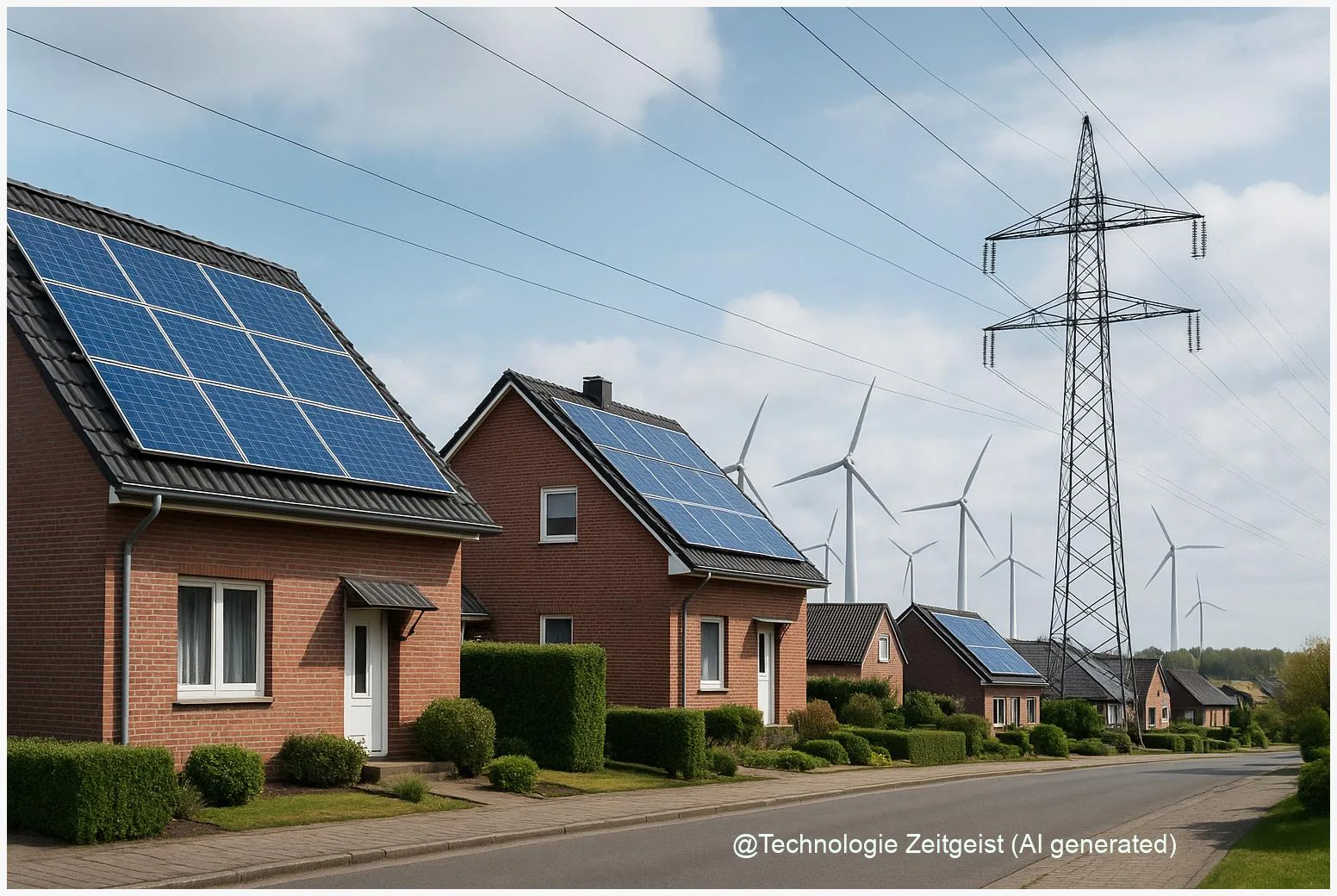
Many people ask why household bills climb when solar and wind have become cheaper. The split between wholesale and retail pricing helps explain this: electricity prices vs renewable energy costs now often move in different directions because retail bills include taxes, grid charges, and system‑operation costs that renewables do not reduce immediately. This article clarifies the main drivers and what they mean for consumers and policy in 2025.
Introduction
If your monthly electricity bill has risen while headlines talk about cheap solar and wind, this feels like a contradiction. The simple reason is that the price you see on your bill is not just the cost of producing a kilowatt‑hour; it combines market energy costs, grid fees, taxes, and the costs of keeping the system reliable. In 2025, analyses showed wholesale prices in many European markets fell compared with the highs of 2022, partly because wind and solar lower the marginal cost of generation. But lower wholesale costs do not automatically shrink retail bills: grid upgrades, balancing services and policy choices often move the other way.
That gap matters for households and for politics. Understanding the separate pieces of a bill makes it easier to see why reforms and choices about tariffs, storage and consumption timing could matter far more than the headline cost of a new wind park. The following sections break down the mechanics, give practical examples, and sketch realistic ways costs could be allocated differently over the coming years.
electricity prices vs renewable energy costs: the gap explained
Wholesale (or spot) electricity prices reflect the short‑run cost of supplying the next megawatt‑hour to the grid. Wind and solar have very low operating costs, so when they supply power they push more expensive plants out of the dispatch order and tend to lower the wholesale price. At the same time, retail prices for households bundle many non‑energy items: network charges (grid fees), taxes and levies, supplier margins, and payments for system services such as balancing and congestion management.
The marginal cost of wind and solar is low; but delivering electricity to homes requires networks, backup and market arrangements that have real costs too.
Because these non‑energy components change on a different timetable, a drop in wholesale prices can coexist with stable or rising household bills. Examples of those components include:
- Netzentgelte: charges to pay for local distribution and high‑voltage transmission lines, and for losses and metering.
- System operation costs: redispatch and balancing payments to keep supply and demand in sync when generation and flows are imbalanced.
- Taxes and levies: fiscal charges and targeted surcharges used to fund renewables support, social programmes, or energy policy measures.
To put a few typical numbers on this (rounded for clarity): the EU household average price in H1‑2025 was about €0.29/kWh, with taxes and levies contributing around 28% of that price. Day‑ahead wholesale averages in parts of Europe were roughly 78–85 €/MWh in 2024. Germany reported redispatch and congestion costs of about €3.2 billion in 2023 (this figure is from 2023 and is therefore more than two years old). Estimated annual investment needs for grids to integrate renewables range widely; some studies cite about €65–100 billion per year through 2030 for the whole EU system.
Table: Selected metrics
| Metric | Approximate value | Unit |
|---|---|---|
| EU household price (H1‑2025) | 0.29 | €/kWh |
| Day‑ahead wholesale (example) | 78–85 | €/MWh |
| Taxes & levies share | ~28 % | percent |
| Redispatch / congestion costs (DE) | ~3.2 | bn € (2023) |
These quantities show the logic: renewables reduce the energy component, but grids, balancing and public charges remain large and sometimes growing items. The way costs are recovered—who pays in fixed charges, who pays per kilowatt‑hour, and what social policies are chosen—decides whether individuals see immediate relief.
How retail bills are built — everyday examples
Think of a household bill as a shopping receipt with several lines. You buy energy on markets or under long‑term contracts; you pay the distributor to use the local wires; you pay levies and taxes set by governments; and your supplier adds a fee to manage the contract. Each line moves for different reasons.
Example A — Contract timing: A supplier that locked a two‑year fixed price when wholesale rates were high will pass those costs through to customers until the contract ends, even if spot prices later fall. The supplier may hedge future exposure to prevent losses, which delays how quickly cheaper wholesale costs reach the consumer.
Example B — Grid investment: If a region needs new lines to bring offshore wind to shore, the investment is typically recovered over many years through network charges. That means someone pays every month for decades, regardless of the current wholesale price of electricity.
Example C — Balancing and negative prices: On very sunny or windy days, wholesale prices can fall sharply or even go negative. Negative prices mean generators sometimes pay to stay on the grid rather than shut down. That volatility increases the value of storage and price‑responsive demand, but until those systems scale up, the operator pays balancing providers — a cost that can appear on retail bills indirectly.
Practical consequence: For someone charging an electric car or running a heat pump, the timing of use matters. Time‑of‑use tariffs can let consumers use cheaper hours, but those savings are smaller when fixed charges or taxes make up a large share of the bill. Thus, lower wholesale prices help most if the retail design allows pass‑through and if consumers can shift demand to low‑price periods.
Tensions and trade‑offs: who pays for the green transition?
Deciding how to allocate costs is political as well as technical. Policymakers must balance three goals: keep energy affordable, ensure reliable supply, and finance the transition to low‑carbon generation and stronger grids. Those goals sometimes pull in different directions.
Equity is one tension. If net costs for grids and balancing are recovered via a flat per‑kWh charge, low‑consumption households and those unable to shift demand can be hit harder as a share of income. If costs are recovered via fixed monthly charges, small consumers lose potential savings from efficiency. Different countries choose different mixes depending on political priorities.
Market‑design is another source of tension. Rapidly rising shares of wind and solar increase periods of low wholesale prices and raise the need for flexibility: storage, demand response, interconnectors and flexible thermal plants. Investing in those solutions costs money today to avoid larger system costs later. The question is whether to socialise those costs broadly, concentrate them on particular consumer groups, or finance them through public borrowing.
There is also a timing problem. Some grid projects and regulatory adjustments are multi‑year efforts. Even when wind and solar reduce the marginal cost of energy, integration, permitting, and financing of new network capacity keep system charges on many bills until projects are completed and financing is repaid.
What may change next, and what it means for you
Several plausible changes could narrow the gap between wholesale and retail costs. Regulators may reform netzentgelt structures to favour dynamic pricing and to smooth large one‑off investments across wider taxpayer or consumer bases. Increased deployment of batteries, vehicle‑to‑grid services and smarter tariffs can reduce balancing costs and move value from system operators to consumers who shift load.
Policy moves under discussion include better transparency of bill breakdowns, limits on which costs can be financed by targeted levies, and mechanisms to accelerate grid investment while reducing peak payments for households. At market level, more explicit reward for flexibility — through capacity markets, ancillary services markets, or flexibility markets — encourages storage and demand response, which stabilises wholesale prices and can lower system costs over time.
For households, the realistic picture is mixed but actionable: investing in insulation and efficient appliances reduces absolute bills regardless of how costs are allocated; smart charging of electric vehicles and simple load shifting can exploit low‑price hours when retail design allows it. On a larger scale, rooftop solar plus modest battery capacity changes how a household interacts with both wholesale prices and grid charges, but it does not eliminate network costs entirely.
Conclusion
Lower wholesale costs from wind and solar are a genuine win. They reduce the energy component of electricity and make clean power cheaper at the margin. Yet household bills are composite instruments: they include the price of networks, balancing and public policy choices that do not fall in step with wholesale markets. That explains why bills can rise even while renewables get cheaper.
Understanding the separate bill elements clarifies where reforms help most: redesigning network charges, improving transparency, rewarding flexibility, and choosing fair ways to finance grid investment. For consumers, targeted shifts in when and how electricity is used can capture some benefits of cheap renewable hours, but broader relief depends on policy and regulation.
Join the conversation and share this article if you found it useful.



Leave a Reply