
Insights
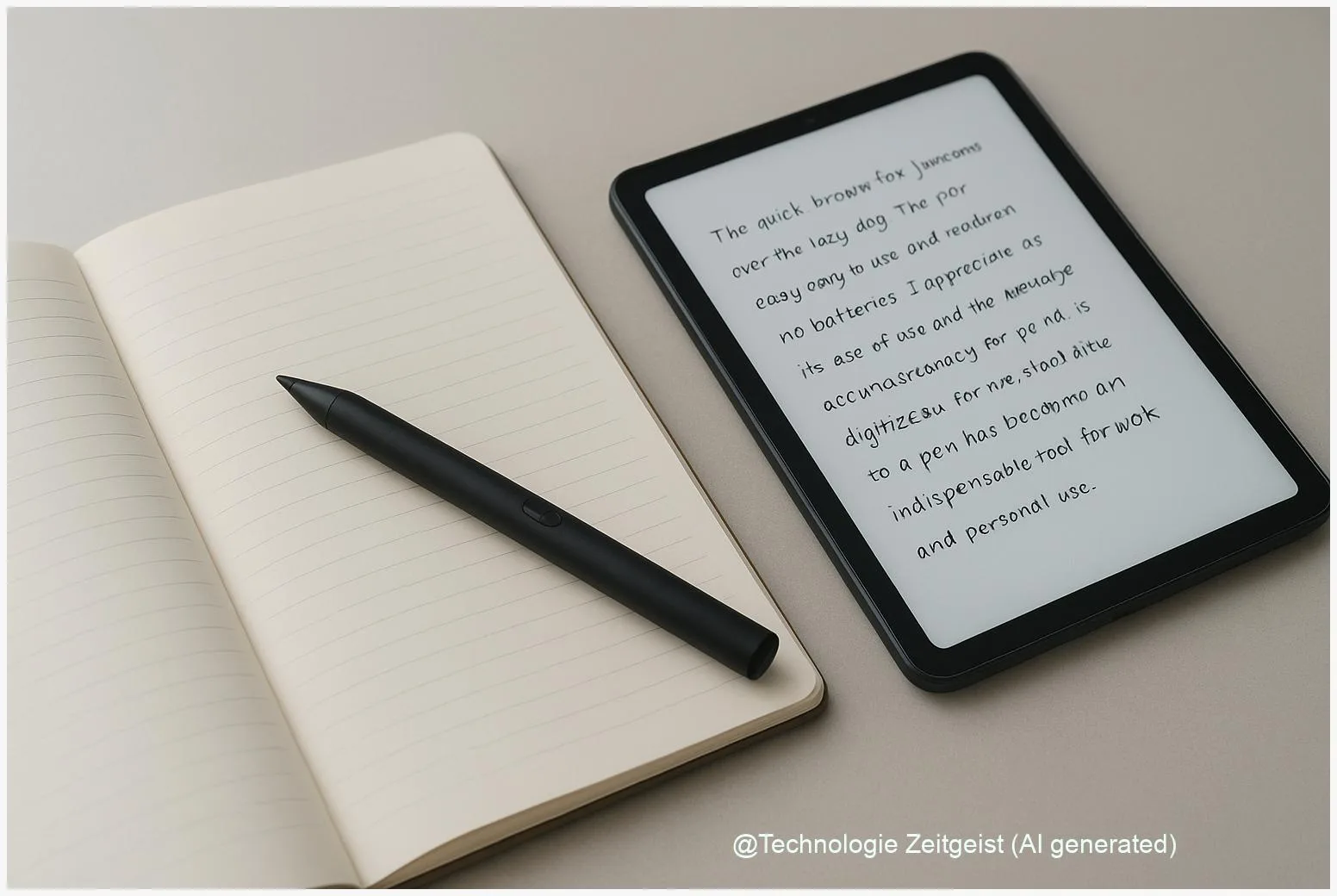
An AI pen is gaining practical value as latency, recognition and workflows improve. New devices and software now often convert handwriting to text reliably and add cloud or on-device options, making smart pens useful for students, meetings and hybrid work.
Key Facts
- Modern smart pens can convert handwriting to typed text and sync with cloud or local apps.
- Improvements in input latency and recognition models make writing feel closer to paper.
- Privacy and whether OCR runs on-device or in the cloud remains a decisive factor.
Introduction
Who: several hardware makers and app developers. What: better handwriting-to-text and lower delay. When: developments through 2024–2025. Why relevant: improved responsiveness and clearer data flows make the AI pen a practical tool for note-taking, study and quick transcription in everyday situations.
What is new
In 2024–2025 several product updates and research results reduced two traditional barriers for smart pens: lag and unreliable recognition. New tablets and dedicated pens report lower input latency and improved stroke capture, while consumer smart-pen makers reintroduced real-time transcription and audio-sync features. Market summaries for 2025 show growing interest in the segment, and recent research demonstrates concrete gains when language models are used during recognition. Some background sources are older than twenty-four months and are noted where appropriate.
What it means
For users this means a smarter, more usable tool: notes that become searchable text, fewer manual transcriptions, and faster meeting summaries. Schools and hybrid workplaces can benefit if privacy is managed and transcription quality is high. Risks remain: app stability, language coverage, and whether handwriting is processed locally or sent to cloud services. Buyers should compare recognition accuracy, latency and the provider’s privacy terms before deployment.
What comes next
Next steps are practical checks and small pilots. Organisations should run short benchmarks that measure character- and word-error rates, perceived latency and battery life. Independent reviews and lab tests (including language and handwriting variety) will appear more in 2026. Producers will likely improve on-device options to address privacy concerns, while app ecosystems keep refining export, search and collaboration features.
Conclusion
An AI pen can now be a practical companion for everyday note-taking when devices offer low latency and reliable transcription. The decisive choices are recognition quality and data handling — check whether OCR runs locally or in the cloud before adopting a solution.
Join the conversation: tell us about your experience with smart pens and share this article if you found it useful.

Leave a Reply