Insights
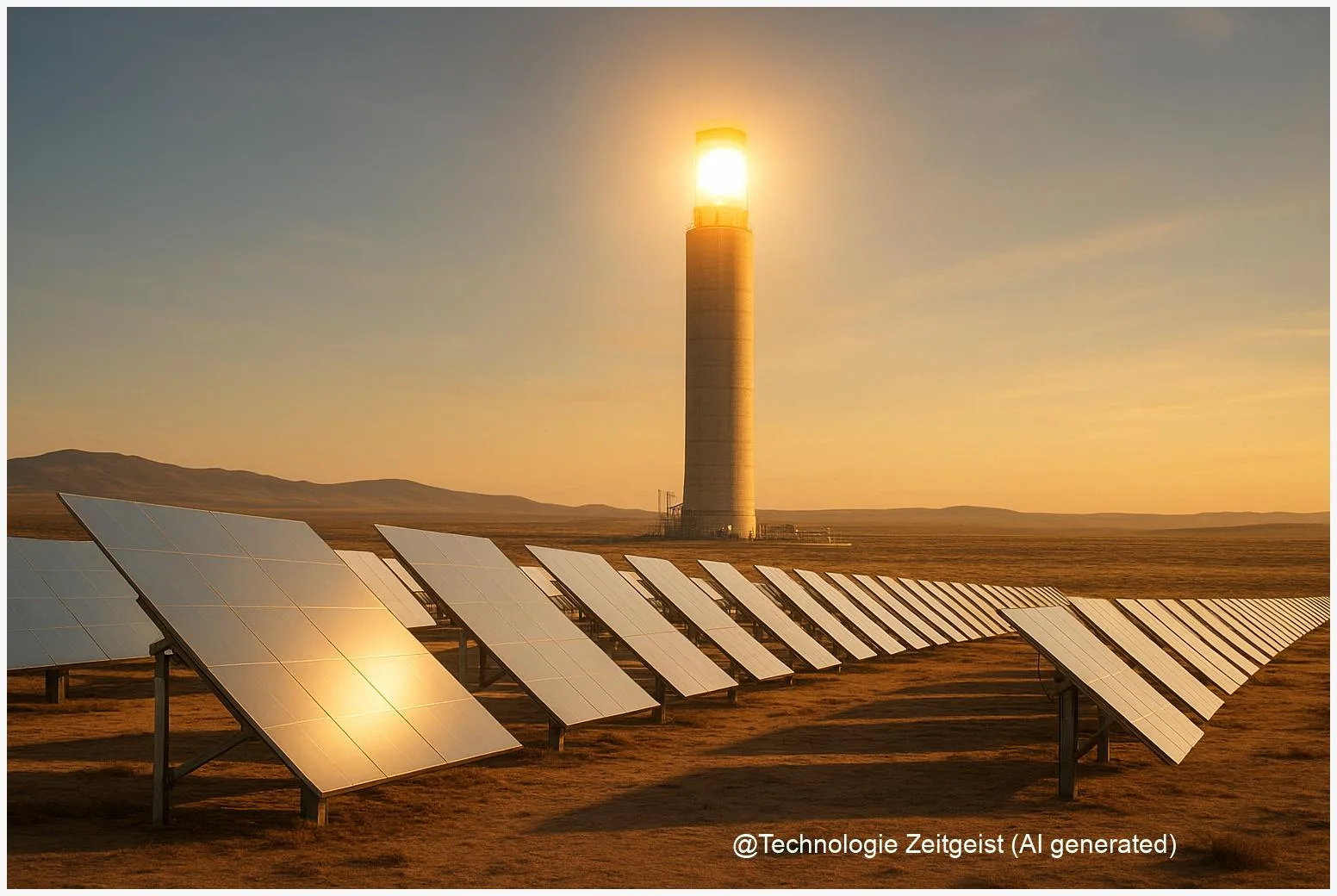
China has issued a national roadmap aiming to scale up Concentrated Solar Power, targeting roughly 15 GW of solar‑thermal capacity by 2030. The plan emphasizes long‑duration thermal energy storage, large tower plants and integrating stored heat with the grid — a move that could reshape regional energy balancing.
Key Facts
- National guidance issued in December 2025 sets a target of about 15 GW of Concentrated Solar Power by 2030.
- China’s installed CSP capacity at the end of 2024–2025 was roughly in the 1–1.6 GW range with an estimated pipeline near 8 GW.
- The roadmap stresses molten‑salt tower designs and several hours of thermal energy storage for firm power delivery.
Introduction
On 23 December 2025 national authorities published guidance that pushes for large‑scale Concentrated Solar Power development through 2030. The document asks for bigger tower plants, long‑duration thermal energy storage and clearer market rules. This is relevant now because stored heat can provide steady electricity when wind and PV fluctuate.
What is new
The new guidance, issued jointly by central energy authorities in late December 2025, sets an ambition of about 15 GW of Concentrated Solar Power capacity by 2030. It identifies sunny inland provinces as priority zones and promotes tower (heliostat) plants with molten‑salt thermal energy storage. Authorities also want clearer rules for grid connections and markets that reward dispatchable renewable power. Public reports and industry summaries show China’s installed base was small compared with the target — roughly 1.1–1.6 GW by mid/late 2025 — but a large pipeline of projects is already declared.
What it means
A meaningful scale‑up of CSP would change how renewables support the grid. Thermal energy storage stores heat from concentrated sunlight and releases it as electricity later; this can smooth evening peaks and provide multi‑hour firm power. If costs fall as planned, CSP with 6–10+ hours of storage can compete with low‑cost fossil power for some applications. At the same time, building tens of gigawatts requires supply‑chain expansion, finance and grid upgrades. Past targets in this technology area have been missed before, so delivery depends on clear tenders, investment plans and operational experience.
What comes next
Over the next months provincial authorities are expected to issue tenders and site lists; developers will seek financing and equipment contracts. Independent validation of project schedules and costs will show how quickly the pipeline can turn into operating plants. International observers will watch LCOE trends and storage performance data to judge competitiveness. Open questions remain on firming mechanisms, the pace of commissioning and whether projected cost reductions for molten‑salt systems materialize.
Conclusion
China’s new roadmap makes Concentrated Solar Power a clear national priority and signals strong demand for long‑duration thermal energy storage. Whether the 15 GW goal is reached depends on finance, industrial scale‑up and timely project delivery.
Join the conversation — share your thoughts on CSP, thermal storage and what this could mean for clean electricity.


Leave a Reply