
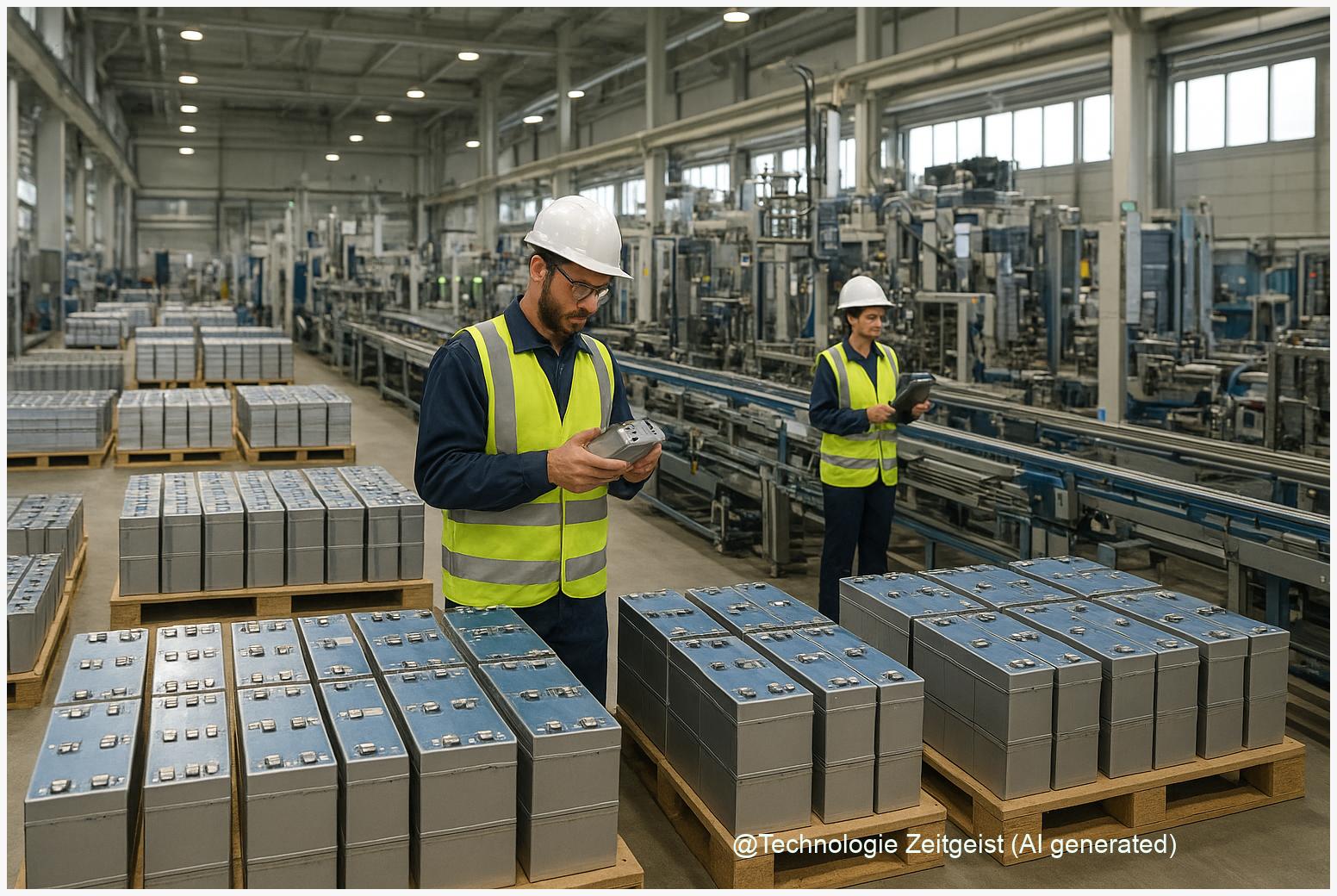
AI companies and modern defense systems both rely on mobile, reliable power — and that ties them to global battery supply chains. A battery supply chains shortage or bottleneck can limit how long drones fly, how fast data centers at the edge run, or how resilient tactical radios remain. This article explains which materials and manufacturing steps create those dependencies, where most capacity sits today, and how governments and companies are trying to reduce the risk.
Introduction
When you charge a phone or rely on a sensor network on a highway, you see only the device and the power icon. Behind that convenience sits a chain of mines, chemical plants and factories that turn raw minerals into battery cells. For companies building large AI models, cloud services and specialized edge devices, and for defence planners equipping sensors and unmanned systems, that chain determines how much energy is available where and when.
Most modern batteries are lithium‑ion. A lithium‑ion battery is an electrochemical device that stores energy in layered materials called electrodes and releases it as electricity. The performance depends on raw materials such as lithium, nickel and sometimes cobalt, plus the factories that assemble cells and packs. That mix of geology, chemistry and industrial capability is why a supply problem in one place can ripple into devices and operations around the globe.
Why defense and AI systems increasingly need batteries
Power matters for range, uptime and mobility. For defence systems this includes sensors, communications, unmanned aerial vehicles and field‑deployable compute. For AI companies it covers large data centers, specialized accelerators at the edge and fleets of autonomous devices that gather training data. Batteries are central because they pack energy into a small volume and weigh less than alternatives such as lead‑acid packs or portable generators.
Operational effectiveness often comes down to available energy: more compact, reliable batteries extend mission time and enable new capabilities.
Not every application uses the same battery chemistry. High‑energy applications favour lithium‑nickel‑manganese‑cobalt or nickel‑rich cathodes; cost‑sensitive or cycle‑heavy uses sometimes shift cobalt out of the mix. Still, the upstream needs overlap: lithium for the active ion, graphite or silicon at the anode, and metals like nickel for energy density. Where those materials are scarce or processing capacity is limited, device makers face scheduling delays, higher prices or forced design changes.
If numbers are useful: official summaries such as the USGS Mineral Commodity Summaries 2024 show rising lithium and nickel demand driven by batteries, while cobalt supply remains geographically concentrated. These documents and energy‑sector analyses also highlight that physical mining is not the only bottleneck—refining and chemical processing capacity matters just as much. Some countries have the ore but lack the processing plants; others refine large shares of imports into battery‑grade chemicals.
Table: typical supply‑chain roles and why they matter
| Stage | What happens there | Why it matters |
|---|---|---|
| Mining | Extract ore (lithium, cobalt, nickel) | Sets physical resource base and location risk |
| Refining/chemicals | Turn ore into battery‑grade chemicals | Often concentrated; determines usable supply |
| Cell manufacturing | Assemble electrodes, electrolyte and cells | Controls final cost, performance and scale |
How battery supply chains are organized and why they concentrate
A small set of industrial steps creates most of the economic value. Mining is widespread: Australia, Chile and Argentina are large lithium producers; the Democratic Republic of the Congo is a major cobalt source. Yet downstream processing—refining ore into lithium hydroxide or sulfate, producing cathode active materials, coating electrodes and making cells—has higher technological barriers. Those plants require capital, skilled labour and environmental permitting, and they are therefore more geographically concentrated.
Industry studies and policy reviews in recent years show a marked concentration of cell and chemical processing capacity in East Asia. That concentration means that shocks — for example an export restriction, a large factory outage, or a rapid domestic demand surge — can affect global availability quickly. At the same time, announced and under‑construction capacity outside East Asia is growing. Policymakers in Europe and North America have launched funding and regulations to attract factories, and alliances are forming to secure trusted supply lines.
Supply concentration is not an abstract risk; it shapes procurement strategies. For companies building AI hardware, a prolonged shortage of high‑energy cells can force choices: reduce fleet sizes, slow rollout of new edge devices or redesign systems for lower energy density. Defence procurement often requires guarantees of supply, qualified suppliers and traceability; procurement cycles are long, which makes rapid adjustments harder.
Policy tools used so far include strategic stockpiles of critical materials, public financing for domestic cell plants, and regulatory standards that encourage recycling. The European Critical Raw Materials Act (2023) is an example of a legislative attempt to diversify sources and spur local processing capacity. International coordination — not just competition—will be necessary because raw materials and processing steps are scattered across many countries.
Everyday examples: from a smartphone to a tactical drone
Concrete examples help to see how the global chain matters. A smartphone battery is small, but production volumes are enormous; delays or material shortfalls at the chemical level can still affect manufacturing schedules worldwide. For AI companies, the more relevant scale is fleets and data centers: training clusters and edge servers use many high‑power supplies and rely on consistent deliveries of specialized power components.
Take a tactical drone used for reconnaissance. Its flight time depends on battery energy density and thermal performance. If manufacturers cannot source the nickel‑rich cathodes they need to achieve a specific energy target, the drone either carries less payload or requires more frequent recharging — both reduce operational effectiveness. In a distributed AI sensing network, the same effect appears: lower battery performance reduces sampling frequency and data freshness.
Recycling and second‑life use are practical levers in many civilian cases. Used electric vehicle batteries can be repurposed for stationary storage, freeing some pressure on new cell demand. However, recycling rates for battery materials remain modest in most countries, and recovering certain materials at scale is technically complex and energy intensive. As a result, recycling complements but does not yet replace primary supply.
Another operational detail: logistics and certification. Defence systems often demand audited, traceable supply chains and components qualified to military standards. That adds time and reduces the pool of acceptable suppliers. For AI hardware, suppliers may accept more commercial flexibility but still need predictable long‑term supply contracts to plan production runs and server upgrades.
Opportunities, risks and plausible scenarios
Three trends matter for the near future. First, continuing demand growth for vehicles, grid storage and devices will raise absolute needs for battery materials. Second, industrial policy and private investment are building cell factories in more regions; this will reduce but not eliminate concentration in the medium term. Third, technology change — improved cathodes, silicon anodes or alternative chemistries such as sodium‑ion — could ease pressure on some minerals.
Risks include geopolitical disruption to trade flows, single‑site outages at large chemical plants, and slower than expected progress on recycling and substitution. These risks are manageable but require planning: diversified sourcing, strategic reserves of key materials, certification regimes that allow reliable alternative suppliers, and investments in recycling infrastructure.
For AI companies and defence buyers the practical response includes clearer demand forecasting, multi‑year supply contracts, and pilots that test alternative chemistries in non‑critical roles. Governments can help by accelerating permitting for processing plants, offering targeted grants for strategic factories, and supporting R&D into recycling and materials that reduce reliance on scarce elements.
Scenarios to watch: a moderate transition where new factories outside East Asia reduce concentration by the late 2020s; a supply stress scenario where one or two refinery outages cause temporary price and delivery pressure; and a technology shift where new chemistries reduce demand for a specific metal, easing a bottleneck but creating new manufacturing requirements. Planning for all three is sensible because procurement cycles and industrial investments are slow.
Conclusion
Batteries are the connective tissue between geology and devices: the choices made at mines, refineries and factories determine how long drones fly, how fresh edge data remains, and how quickly AI systems can be deployed in the field. Modern defence systems and AI companies therefore share a dependency on the same global battery supply chains. That dependency brings both operational risk and a clear menu of responses: diversify suppliers and production capacity, increase recycling and reserves, and support alternative chemistries. Over the coming years those steps will decide whether shortages become brief interruptions or long‑lasting constraints.
If you found this useful, share the article and join the discussion with your questions and local observations about battery availability.


Leave a Reply