
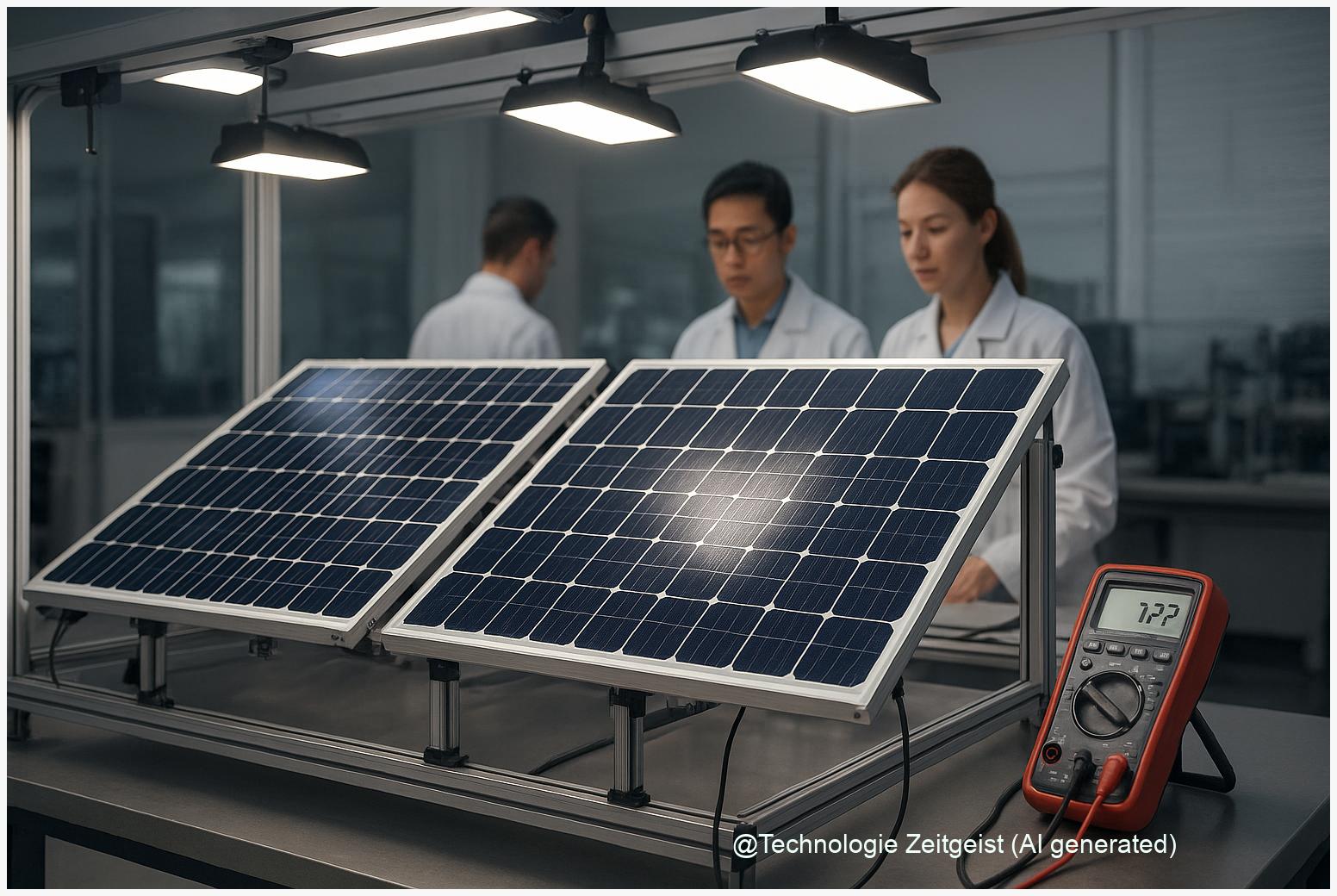
Trina Solar recently announced a new efficiency figure for a tandem design, a claim that touches on the growing field of tandem solar cells. The figure, if independently certified, would mark progress toward higher‑efficiency PV; however, as of 2025.12.24 independent laboratory certification is not publicly available. This article explains what tandem solar cells are, why reported efficiency numbers matter, and what a verified milestone from a large manufacturer would mean for energy use and industry adoption.
Introduction
Trina Solar’s announcement of an improved tandem efficiency has drawn attention because it combines established silicon technology with a second light‑absorbing layer. For readers who follow home solar or national energy planning, two practical questions arise: how much more electricity could such panels produce, and how soon might that extra output reach rooftops or utility projects? The reported number matters in two ways — as a laboratory result and as a certified, repeatable measurement that can be compared across labs. Industry verification typically requires independent testing (for example by NREL or accredited test labs) with documented test protocols. Without that certification, efficiency claims are useful signals of progress but not definitive proof of commercial readiness.
How tandem solar cells work
A tandem solar cell stacks two different light‑absorbing layers so each captures different parts of the sunlight spectrum. The most common pairing is crystalline silicon at the bottom and a perovskite material on top. Perovskites are a class of crystalline compounds that absorb light well and can be made quite thin. By placing a perovskite layer over silicon, the tandem cell can use high‑energy (blue) photons in the top layer and lower‑energy (red/infrared) photons in the silicon layer. That division reduces energy wasted as heat and raises the overall conversion efficiency.
A simple way to think about it is splitting the job: the top layer catches the high‑energy light, the bottom layer uses what remains, so less sunlight slips through unused.
Two technical distinctions matter in reporting efficiency. “Cell” efficiency refers to a small, laboratory‑tested device under standard test conditions (AM1.5G spectrum, specific temperature). “Module” efficiency refers to a finished, larger piece of a panel that includes framing, glass, and interconnections; module efficiency is normally lower than cell efficiency. Independent certification often lists the tested area and whether the number is “aperture‑corrected” — small differences here can move a claimed efficiency by one percentage point or more. For benchmark context: advanced perovskite‑silicon tandem cells reported in research literature through 2024 commonly fall in the range of roughly 28–33 % cell efficiency under laboratory conditions; certified values are often a bit lower after independent calibration.
If a manufacturer like Trina reports a new high efficiency, the crucial verification steps are an independent calibration certificate and a published test protocol showing active area, temperature, and light spectrum. Without those, the number is a promising indicator but not yet comparable to certified records.
If numbers or comparisons are clearer in a structured format, a table can be used here.
| Feature | Description | Value |
|---|---|---|
| Typical commercial silicon module | Mass‑produced rooftop/utility modules | ~20–23 % |
| Research tandem cell (lab reports up to 2024) | Perovskite on silicon in laboratory devices | ~28–33 % (cell) |
What a higher efficiency means in daily life
Higher panel efficiency translates into more electricity from the same roof area, a simple concept with practical consequences. For a homeowner with limited roof space, a jump from a typical commercial module at ~21 % to a validated tandem module at, for example, ~26 % would allow roughly 20–25 % more energy per square metre. That can reduce the need for extra roof installations or tilt mounts, and it improves returns in places where roof space is the constraint.
For large‑scale solar farms, the benefit is land efficiency. More energy from the same plot reduces land use, permitting friction, and sometimes grid‑connection costs. For electricity systems, higher per‑panel output can lower levelized costs of electricity if the new panels maintain performance over decades and if manufacturing costs do not rise disproportionately.
However, real‑world gains depend on more than peak‑efficiency numbers. Angle of light, temperature, soiling (dirt), shading, and long‑term degradation affect energy yield. A laboratory PCE number is a starting point; module reliability data (for example standardized accelerated lifetime tests) determine whether the extra efficiency persists over the panel’s lifetime. In everyday terms, a promising lab milestone becomes widely useful only when it is replicated at scale with stable, weather‑resistant packaging.
Finally, there is a supply‑chain angle. Perovskite layers require different materials and processing steps from silicon. If those processes can be integrated into large‑scale manufacturing without major cost or durability trade-offs, homeowners and utilities will eventually see tandem options in product lines. Until then, higher lab efficiency mainly signals future potential.
Opportunities and tensions for the solar industry
A verified efficiency milestone by a major manufacturer would carry three practical implications. First, it would increase investor and supplier interest in scaling production lines for tandem architectures, potentially accelerating capital deployment into new manufacturing tools. Second, it would raise expectations for module roadmaps among utilities and installers, who factor real energy yield into procurement. Third, it would sharpen competition among existing silicon producers and newer entrants focused on perovskite technology.
There are several tensions to consider. Stability is the most important technical risk: many perovskite formulations have shown high initial efficiency but can degrade faster than silicon under moisture, heat, or UV exposure. Packaging and encapsulation methods are improving, but long‑term outdoor data over thousands of hours remains the decisive test. A second tension is manufacturing scale. Some processing steps for perovskites are compatible with roll‑to‑roll or thin‑film coating methods, but integrating them with silicon wafer production at gigawatt scale is an industrial challenge.
Regulation and standards add another layer. Certification authorities and national test labs will set rules for how tandem modules are measured and labeled. Until international standards for tandem testing are fully harmonized, marketplace comparisons will remain uneven. Finally, market adoption is partly economic: if tandem modules carry a price premium that exceeds the value of additional energy over the panel lifetime, adoption will be slow. The economics depend on manufacturing cost, installation costs, and local electricity prices or incentives.
In short, an announced efficiency gain is promising but not decisive by itself. Independent certification, reproducible manufacturing, and reliable lifetime performance are necessary to turn a headline into widespread benefit.
What might come next
Assuming a claimed efficiency is genuine, the immediate sequence often follows a pattern: first independent certification by an accredited lab (for example NREL or an IEC‑accredited lab); next peer or industry scrutiny comparing the reported protocol with accepted standards; then pilot production runs; and finally scaled commercial modules if reliability tests pass. For industry watchers and potential buyers, the key milestones to monitor are the certification PDF, published stability tests (for example T80 or similar endurance metrics), and announcements about pilot production capacity.
From a policy perspective, validated higher‑efficiency modules influence grid planning and incentive design. Higher output per square metre can ease constraints in densely populated regions where space is scarce. For developers and utilities, the timeline from lab record to commercial availability typically spans several years; careful procurement strategies weigh the expected performance improvements against delivery risk.
For individuals interested in rooftop solar today, the practical implication is patience combined with awareness: watch for certified products and long‑term warranties rather than early press numbers alone. For investors and industry analysts, a confirmed milestone by a company with manufacturing scale would be a signal to reassess capacity plans, supplier contracts, and R&D priorities.
Conclusion
Perovskite‑on‑silicon tandem designs offer a clear technical path to higher laboratory efficiencies. A claim by a major manufacturer like Trina Solar is important because it could shorten the time from laboratory innovation to mass‑market panels. Yet verification is essential: certified measurements, clear test protocols, and long‑term stability data decide whether a reported figure is an incremental lab advance or a milestone with commercial consequences. Until an independent calibration certificate and reliable endurance data appear, the announcement should be treated as a promising development that needs validation before it changes buying decisions or energy system plans.
If you found this useful, share your thoughts and questions below — we welcome reasoned discussion and links to verified sources.




Leave a Reply