
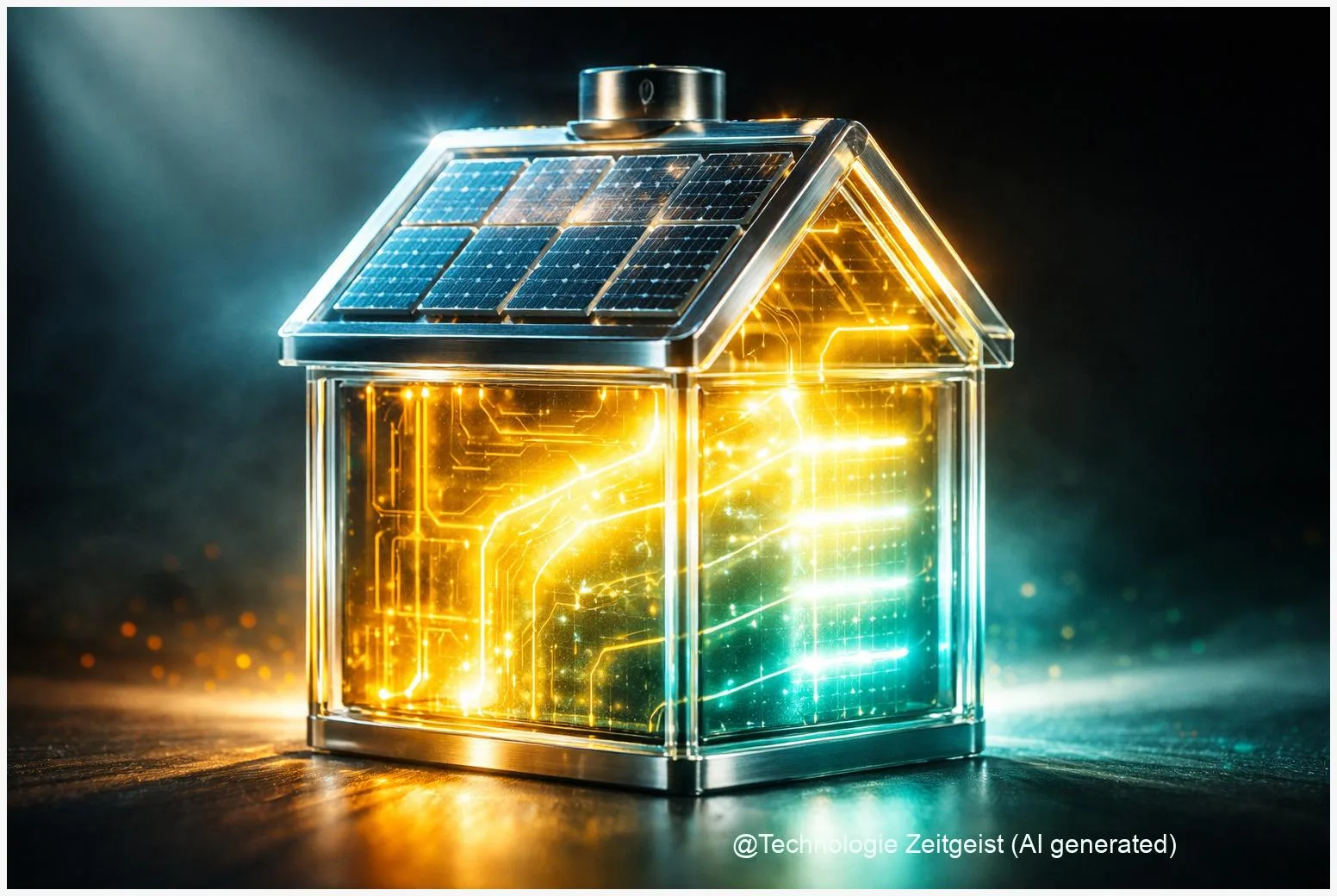
Solar self-sufficiency is the degree to which a household meets its own electricity needs from rooftop panels and on-site storage. Achieving it requires the right mix of panel area, a well-sized home battery and simple load management so daytime solar output matches what the household actually uses. This article describes realistic performance ranges, what a battery can (and cannot) do, and which design choices matter most for a reliably energy-independent home.
Introduction
Many households that install solar expect to become independent from the grid or at least cut bills substantially. That expectation is understandable, but the path to meaningful independence is not automatic. A rooftop array produces most of its energy in the middle of the day, while people typically need power in mornings and evenings. A battery can shift energy across time, but its size, efficiency and control software determine how much of the rooftop generation you actually use at home.
Practical choices — how many panels fit on your roof, whether you can shift laundry or EV charging into daylight, and which battery chemistry you pick — change results more than marketing slogans do. The figures that matter for planning are simple: how much the panels produce, how much of that you can consume directly, how much a battery can store and return (its usable capacity and round‑trip efficiency), and the household’s daily load pattern. The following chapters walk through these elements with concrete numbers and clear trade-offs so you can judge what energy independence means for a typical European home in 2026.
Solar self-sufficiency: the fundamentals
At its simplest, solar self-sufficiency is the share of a household’s electricity that comes from its own solar system. Two things set that share: how much electricity the panels generate and how much of that is used on site rather than exported. On average across a country the national “self-consumption” number can look small, because exports from many roofs during sunny midday hours lower the national share even where individual homes use much of their own power.
National analyses show that rising battery uptake and more rooftop capacity have increased the total volume of self-supplied solar, but the share of PV production used on site remains modest without storage.
Practical ranges matter more than a single figure. Field and lab studies indicate that typical households without battery storage use roughly 20–40 % of the electricity their rooftop array produces, depending on roof size and daytime occupancy. Adding a residential battery commonly pushes that share much higher, though the gain depends on battery size (kWh), its usable capacity, and efficiency losses during charging and discharging.
If a table helps, here are compact reference values drawn from recent German and European analyses and lab tests. These numbers are rounded ranges for orientation, not precise guarantees.
| Feature | Description | Typical value / range |
|---|---|---|
| Rooftop PV size | Small family homes | 3–8 kW (installed DC) |
| Self-consumption without battery | Share of PV used directly in the house | ≈20–40 % |
| Self-consumption with residential battery | Depending on battery size, control and household flexibility | ≈45–75 % (wide range) |
Two technical terms worth a quick note: usable capacity is how many kilowatt‑hours you can actually draw from a battery (some capacity is reserved to protect battery life), and round‑trip efficiency describes the fraction of energy you get back after charging and discharging (losses happen in the battery and the inverter). Measured round‑trip efficiencies for residential systems typically lie near the mid‑90s percent in lab conditions but fall at low power levels or when standby losses are significant.
Putting panels and a battery together
Designing for real self-sufficiency starts with matching production and consumption. If your roof can host a 5 kW array and your household uses on average 10–12 kWh/day, midday generation will still exceed consumption on sunny days; without storage most of that surplus goes to the grid. A battery stores the surplus and releases it in the evening. The size of the battery therefore depends on how many evening hours you want to cover and how often you need full autonomy (sunless days).
In practice households combine modest battery sizes with behavioural changes to get the best value. Shifting large appliances (dishwasher, washing machine) into daytime, charging an electric vehicle during the afternoon and using smart heating controls reduce the required battery size. Many installers recommend a battery in the 5–10 kWh usable range for a typical family to cover evening peaks and increase self-consumption noticeably; larger batteries are chosen by households that want longer autonomy or to charge an EV overnight without grid power.
Efficiency and control matter: a system with 95 % round‑trip efficiency and low standby losses will return more usable energy than one with 88–90 % efficiency even if nominal capacities are identical. Likewise, the inverter configuration (AC‑coupled vs. DC‑coupled) and the control algorithm (time‑based, price‑aware, or state‑of‑charge constrained) shape results. Because of these dependencies, economic payback and carbon‑saving calculations are sensitive to realistic, measured battery performance rather than manufacturers’ ideal numbers.
Before installation, a simple household audit helps: collect a week of 15‑minute meter readings if possible (many smart meters or inverter portals provide that), note when large loads occur, and check how often you need power through the night. Combining that with a local yield estimate for your roof lets installers propose a PV/battery pairing that targets an achievable level of self‑sufficiency without excessive oversizing.
Opportunities and practical limits
Solar self-sufficiency brings clear advantages: lower electricity bills, resilience during short outages (depending on inverter design), and reduced export to times of low wholesale prices. On a system level, more on-site consumption eases daytime grid congestion and can reduce curtailment pressure when many generators feed at peak. However, the path includes trade-offs.
First, cost. Batteries remain a significant upfront expense. Their value depends on local price signals — retail electricity prices, feed‑in tariffs or export compensation, and any incentives. In many European markets, households that buy electricity at high retail prices and receive little for exports see a better household business case for storage than those with generous export payments.
Second, physical limits. A battery cannot create energy; it only shifts it in time and incurs losses. On cloudy weeks, a household that sized a system for partial independence will still need the grid. For households seeking absolute off‑grid independence year‑round, the required PV and storage capacities are large and expensive compared with hybrid grid‑connected designs. For most urban and suburban homes, the practical goal is high self‑consumption and occasional islanding, not permanent off‑grid operation.
Third, product variability and claims. Independent lab tests and field inspections have shown that usable capacity, standby losses and round‑trip efficiency can differ from datasheet numbers. Buyers should ask for measured test reports or independent inspection results rather than rely solely on marketing figures. For deeper technical discussion about storage impacts on bills and system design, see the TechZeitGeist guide Home Solar Batteries: How Smart Storage Cuts Bills.
What the near future looks like
Market and policy trends are shaping how achievable solar self‑sufficiency will be for more households. Grid data and national analyses show growing self‑consumption volumes as storage installs increase, but system‑level curtailment and congestion become relevant where PV deployment outpaces local flexibility. Regulators and network operators are testing new tariff signals and aggregation schemes that reward households for flexible charging and discharging — an important enabler for higher practical independence without excessive storage costs.
Technology trends also matter. Batteries are gradually improving in cost per kilowatt‑hour and in real usability; independent lab programs have increased transparency by measuring round‑trip efficiency and usable capacity under real‑world conditions. Smart controls that align battery behaviour with price signals or aggregator instructions will lift value for households, especially once dynamic retail tariffs or local flexibility markets become common.
For people planning a system now, the implication is constructive: buy a system that reflects measured performance, plan for gradual upgrades, and consider how your own consumption can be made more flexible. Households that combine a moderate battery with simple behavioural changes typically capture most of the near‑term financial and resilience benefits without the cost and complexity of attempting full off‑grid independence.
Conclusion
Solar self-sufficiency is a practical and measurable goal, but not a single number you can buy off the shelf. It grows from three linked choices: how much solar your roof can generate, how much storage you install (usable capacity and real efficiency), and how you time or shift consumption. Typical households without a battery use around a quarter to a third of their solar directly; adding a well‑chosen battery often raises that into the half‑to‑two‑thirds range for everyday use. The grid remains essential as a safety net for long cloudy periods, while policy and market designs will determine how quickly storage pays back and how much value households capture from flexibility.
Join the conversation: share your experience with solar and batteries or ask a question so other readers can learn from practical examples.

Leave a Reply