
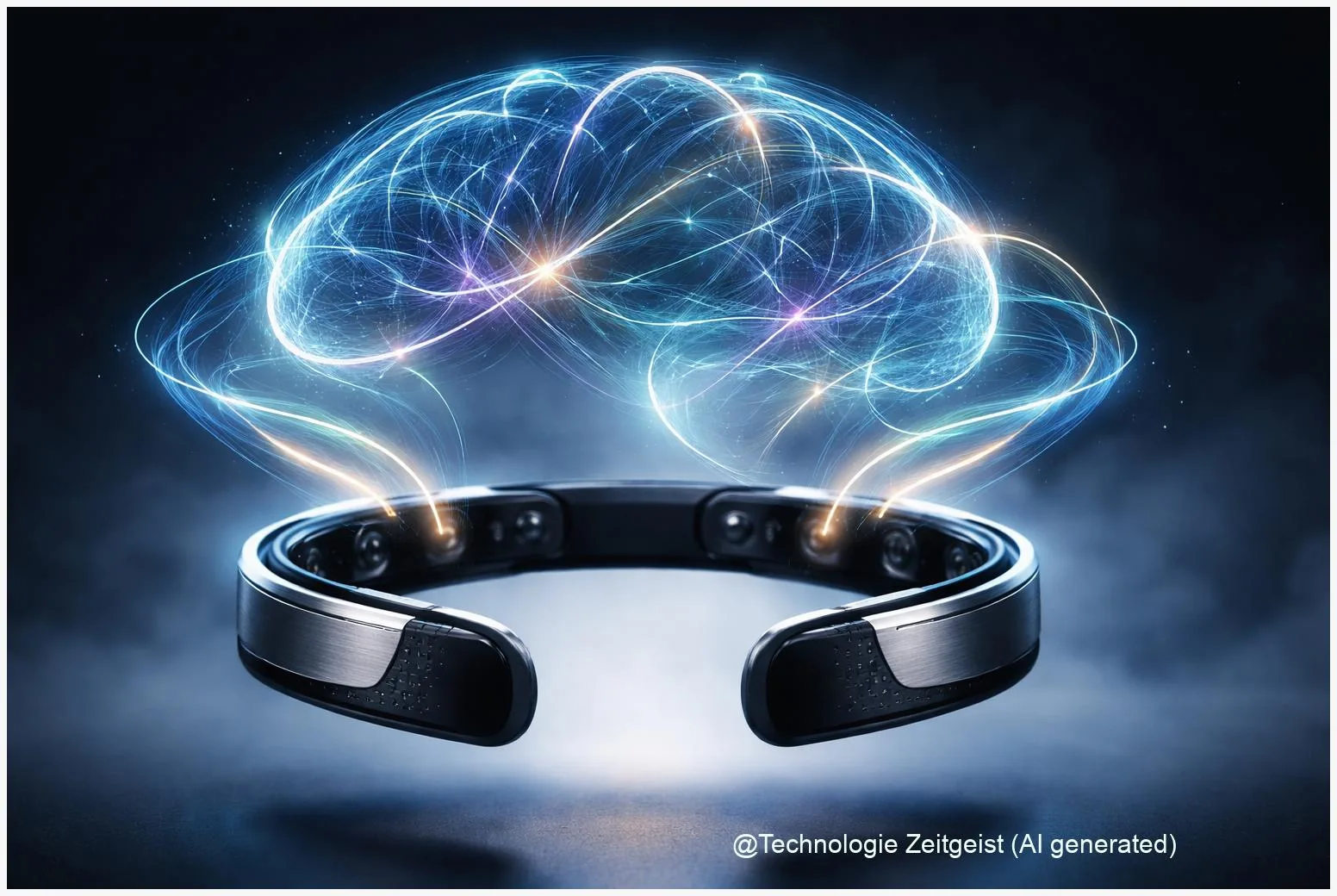
CES 2026 showed a surge of prototypes and consumer‑facing devices that claim to read or interpret brain activity. The main thread was non‑invasive approaches aimed at everyday tasks: faster gaming inputs, attention tracking inside headsets, and ear‑worn sensors for simple cognitive signals. These announcements highlight both near‑term product ideas and important limits — notably the gap between company demos and independent validation for brain‑computer interfaces.
Introduction
At CES 2026 several startups and established brands presented consumer devices that incorporate brain‑sensing elements. Those demonstrations often aim to solve recognizable, everyday problems: reduce latency in gaming, help with focus while working, or add another control channel to headphones and AR headsets. The presentations are visually convincing, but they typically rely on internal tests or short demos. That leaves questions for buyers and curious users: what can non‑invasive brain‑computer interfaces realistically do today, which claims need independent proof, and how might these devices affect privacy, product design and regulation over the next few years?
Brain‑computer interfaces: how they work
A brain‑computer interface (BCI) is a device that detects electrical or other signals produced by the nervous system and translates them into a digital output. Non‑invasive BCIs typically use sensors on the scalp (electroencephalography, EEG) or inside the ear to measure brain waves. These signals are small and noisy; modern systems combine hardware that captures the signal with software — often machine learning — that looks for patterns linked to simple states, such as attention, drowsiness, or specific short commands.
Think of the system as three parts: the sensor, the signal cleaner, and the interpreter. Sensors collect raw voltage traces; cleaning removes muscle and environmental artefacts; the interpreter converts cleaned patterns into actions or scores. This chain is why small shifts in sensor placement, motion, or background noise can change results rapidly. Because of that fragility, most commercial demonstrations focus on robust, low‑dimensional outputs (for example: more or less focused) rather than detailed thought reading.
CES 2026 emphasised non‑invasive consumer wearables rather than implants. These devices prioritise comfort and practical form factors: ear‑buds, headbands, and headset‑integrated electrodes. Their selling point is convenience and the potential to add subtle controls without requiring clinical procedures. Still, the science community distinguishes between signal detection (can the device sense something?) and reliable interpretation (can it do so consistently across people and settings?). Many claims seen at CES are early in that second phase, which requires independent replication and peer‑reviewed evidence for broader trust.
Early demos show potential but rarely include full methods or open datasets for verification.
After a quote, the body text continues the argument calmly.
If numbers or comparisons are clearer in a structured format, a table can be used here.
| Feature | Description | Value |
|---|---|---|
| Signal type | EEG (scalp) or ear‑EEG (in‑ear) | Low amplitude, high noise |
| Typical output | Binary or scalar state (e.g., focused / not focused) | Coarse but actionable |
Everyday uses shown at CES 2026
Certain consumer scenarios dominated the floor this year. One visible track was gaming: vendors described headset add‑ons that reduce input lag by detecting short neural markers of intent and triggering in‑game actions. These demos use metrics that matter to players (reaction time, hit accuracy) and, in some press materials, manufacturers reported small but measurable latency or accuracy changes in internal tests. Another common pitch was cognitive wellness and attention tracking inside headphones — a nudge or adaptive audio played when a device detects distraction or fatigue.
For users these are low‑friction features: a gaming company might advertise a headband that offers marginally faster responses in specific tasks, or a set of earbuds that remind you to take a break when attention declines. Yet important caveats apply. The improvements reported at CES mostly came from vendor testing on limited groups or controlled tasks. Independent reviews, larger and more varied participant samples, or public datasets were usually absent. That matters because an effect that appears with one group in a lab can shrink or disappear in real daily use.
CES also highlighted lifestyle devices that pair EEG‑like sensing with audio therapies or sleep coaching. Some companies announced pricing and preorder windows for consumer models. These product plans make adoption plausible over the next two years, but they also increase the need for clear labeling: consumers should know whether a device uses brain signals for control, what it stores, and whether raw neural traces are retained or ever used to train models.
For a practical look at how companies evaluate AI tools using real‑world data, see our reporting on AI agent evaluation and contractor samples, which explains trade‑offs between realism and privacy in testing pipelines.
Opportunities and practical risks
The opportunities are concrete: another, hands‑free control channel for phones and AR glasses; biometric context to tune audio or notifications; and potentially assistive interfaces for people with limited mobility. For companies this opens new product features and subscription services tied to cognitive state management.
At the same time, the risks are practical and worth listing plainly. First, accuracy and robustness vary widely between people. A device tuned to detect a simple pattern in one person may miss it in another, creating inconsistent experiences. Second, data and privacy concerns are real: neural signals are an intimate type of biometric data. Vendors must be explicit about retention, uses and whether signals could be used to infer medical conditions. Third, model and measurement claims often come from internal tests; independent validation is still rare. Until third‑party labs publish reproducible evaluations, many CES claims should be seen as preliminary.
Regulation and ethics matter too. Use of brain‑derived data raises questions about consent, age limits, and the permissible commercial use of physiological signals. Consumer protection authorities in Europe and elsewhere are watching biometric and health‑adjacent claims more closely; product teams should prepare clear privacy notices and opt‑out paths. From a safety perspective, manufacturers must avoid promises that imply clinical benefit unless they pursue appropriate medical validation and certification.
These tensions are visible in the CES coverage: press releases highlight performance improvements, while independent outlets note the absence of open data and peer‑reviewed evidence. Consumers and buyers should therefore prefer devices whose vendors publish methods, support independent testing, and commit not to use raw neural traces for unrelated model training.
Where this technology could go next
Expect a two‑track development path. In the short term (one to three years), firms will ship better‑integrated headsets and ear‑wear that offer simple, robust features: attention flags, single‑intent triggers, and wellness nudges. These features can survive variability because they operate at low dimensionality and require less fine‑grained interpretation.
Longer term (three to ten years), a smaller set of applications may mature once devices improve signal quality and large, independent evaluation studies become available. Those could include richer assistive controls and rehabilitation aids where the signal‑to‑action mapping is well understood and clinically validated. Achieving that requires open datasets, peer‑reviewed studies and common benchmarks that go beyond vendor demos.
For readers deciding whether to try a neural wearable now: treat early devices as experiments rather than essentials. Look for transparent vendors that publish methods and permit independent testing. If privacy matters, prefer products that process raw signals locally and keep only short, clearly explained summaries in the cloud. For developers and product teams, the opportunity is to build features that are valuable even when the neural signal is imperfect — for example, combining a small neural input with other sensors (eye tracking, motion) to raise overall reliability.
Energy and infrastructure also matter. As devices scale, manufacturers will need standardized testing labs and cross‑company benchmarks; for an example of corporate technology and energy choices affecting product roadmaps, see our article on how AI data centers source firm low‑carbon power.
Conclusion
CES 2026 made one thing clear: brain‑computer interfaces are moving from niche labs into consumer product plans. Most demonstrations focused on non‑invasive sensors integrated into headsets and earbuds and aimed at simple, robust actions rather than deep mind reading. The practical benefit today lies in subtle controls and contextual signals, not in fully general neural interpretation. Buyers should value transparency and independent testing; manufacturers should publish methods and commit to clear privacy controls. Over time, a handful of applications with rigorous validation could become genuinely useful in daily life, but that outcome depends on careful engineering, open evidence and sound rules for using biometric data.
Join the discussion — share your experience with neural wearables and whether you would try one.


Leave a Reply