
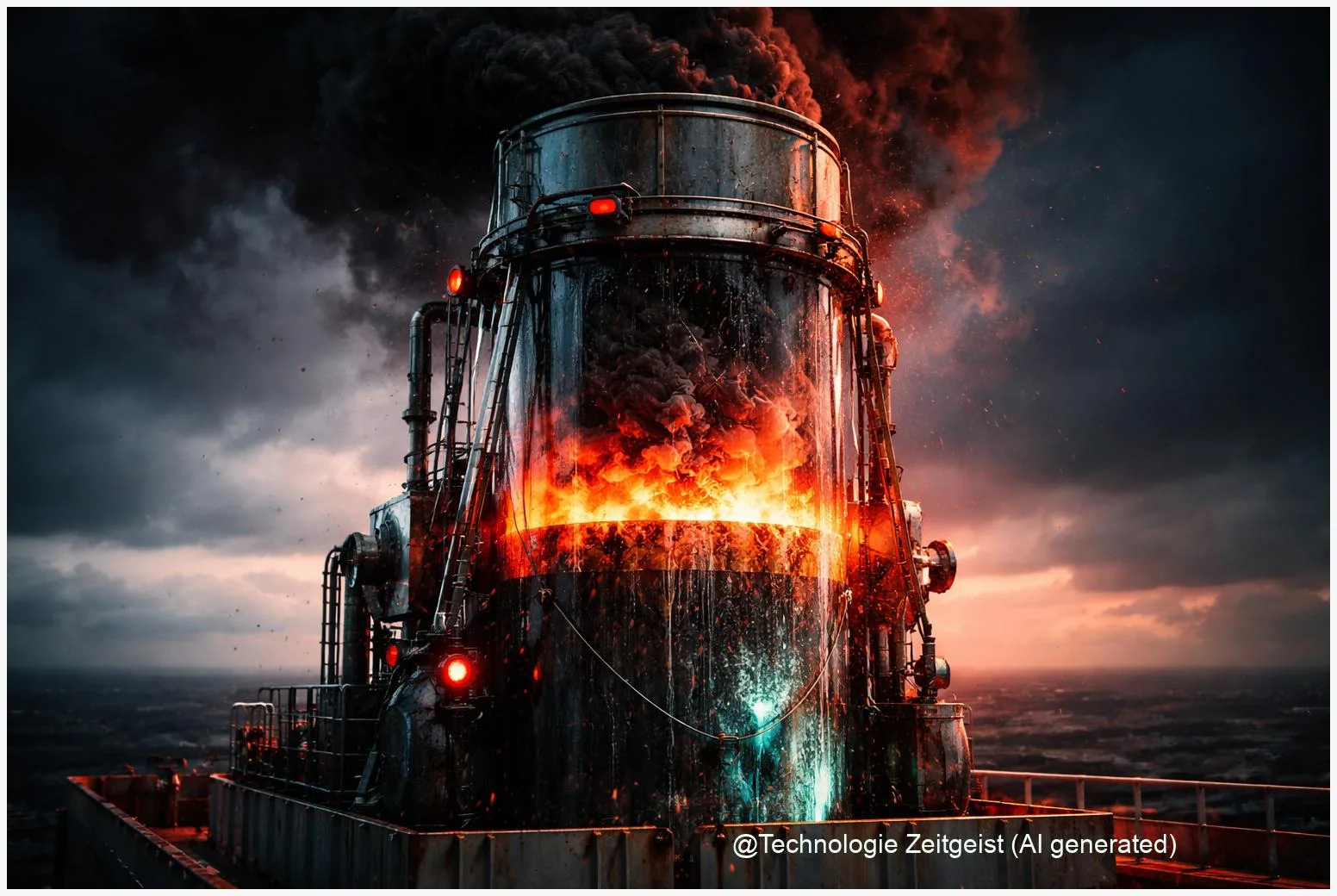
Ship carbon capture is often presented as a quick fix for shipping emissions, but it struggles with clear physical and economic limits. Small chemical scrubbers, electricity needs, and the problem of storing liquefied CO2 on board create trade-offs that reduce net climate benefit. This article explains why onboard CO2 traps face steep barriers at sea and where the technique still makes sense as part of a larger port‑to‑storage approach.
Introduction
Most large ships burn heavy fuel oil or low‑sulphur blends and emit thousands of tonnes of CO2 each year. The idea of fitting a filter or “carbon trap” on board sounds attractive: capture emissions where they appear and hand them off to storage. In reality, space, weight, and energy on a ship are scarce. Adding capture equipment typically needs extra heat or electricity, a large tank to hold liquefied CO2, and safe procedures for offloading to ports. Those requirements change how the ship operates and how much fuel it uses, and they can wipe out much of the climate benefit that capture promises.
This introduction sets the scene for four focused chapters that explain the technology fundamentals, what actual installations would demand at sea, the main tensions between benefit and cost, and realistic developments that could make parts of the idea useful. The goal is to show why shipboard capture often fails to deliver in isolation and where it can be part of a practical maritime decarbonisation strategy.
Ship carbon capture: basic principles
Carbon capture on ships borrows the same basic techniques used on land: chemical absorption (often using amines), physical adsorption on solid sorbents, membranes that separate CO2 from flue gas, or cryogenic cooling to condense CO2. “Amines” are chemicals that bind CO2 in a liquid solution; heating the solution releases the gas again so the amine can be reused. Each approach needs space, power, and a way to handle the captured CO2.
On paper, capture units can reach high removal rates; at sea, the constraints are fuel penalty, tankage and offloading logistics.
Three practical constraints limit shipboard use:
- Energy penalty — regeneration of solvents or running compressors needs heat and electricity.
- Volume and weight — tanks for liquefied CO2 (LCO2) are large and heavy, and space on deck or in holds is limited.
- Offloading and infrastructure — captured CO2 must be transferred safely to shore or another ship, requiring ports with reception facilities.
When numbers help, studies report common ranges rather than precise values, because ship type and assumptions vary. For example, solvent regeneration often needs roughly 3–4 GJ per tonne of CO2 captured, and retrofit energy penalties can raise fuel consumption by tens of percent for high capture rates. Those ranges appear in government and independent studies (see Sources).
If values are easier to compare in a compact format, a short table clarifies the trade-offs.
| Technology | Maturity | Typical energy need |
|---|---|---|
| Amines (liquid absorption) | High | ≈3–4 GJ/tCO2 |
| Solid sorbents (adsorption) | Medium | 1.5–3 GJ/tCO2 (varies) |
Those figures are sufficiently rough that they must be read as ranges. Their main use is to show that capture needs both heat and power at a magnitude that competes directly with propulsion energy on many ships.
What shipboard systems look like in practice
Turning the basic technologies into a functioning system on a vessel requires three linked subsystems: the capture unit itself, CO2 conditioning (compression and cooling to produce LCO2) and a storage/handling solution for the captured gas. Each of these adds mass, volume and operational complexity.
Consider a typical retrofit scenario. A medium‑size tanker or ro‑ro ferry gets an amine unit installed near its exhaust, piping to a regeneration unit that needs steam or hot water. If the ship can route waste heat from its engines to run that regeneration, the extra fuel burn is lower. If not, a burner or electric heaters are needed, which increases fuel use. After regeneration the CO2 is compressed and cooled to become liquid CO2 for storage; LCO2 must be kept at low temperature and moderate pressure, so tanks require insulation and safety systems.
Space is a surprise constraint. Tanks for even a few hundred tonnes of CO2 occupy significant hold or deck area and change a ship’s load plan. On shorter routes (ferries or short sea cargo) there is sometimes a business case: a vessel can capture emissions for a short voyage, offload at a ready port and return without overly reducing cargo capacity. For long ocean voyages, by contrast, the required tank volume becomes prohibitive unless ships make frequent offloads.
Offloading creates another set of practical problems. Ports need dedicated equipment and safe procedures to receive LCO2, and port operators must accept, store or transfer the CO2 into the wider transport system (pipelines, barges or ISO tanks). Today, few ports have that readiness. Studies therefore model several options: ship‑to‑ship transfer at anchor, ship‑to‑shore piping, or using intermediate barges. Each option raises costs and regulatory hurdles including safety approvals and local permits.
For operators this translates into hard choices: sacrifice cargo or range, pay for extra crew training and port fees, or accept that capture works only on selected ship types and routes. The emerging literature recommends pilots on ferries, short sea operators and selected LNG fleets where space, waste heat and port proximity align best.
Where onboard capture helps — and where it backfires
On the plus side, onboard capture can sharply reduce the CO2 leaving a ship’s funnel for the periods when a unit runs. That is valuable for operators required to report emissions and for ports seeking to lower local concentrations of greenhouse gases. It also creates a route to matching shipping with emerging CO2 transport and storage infrastructure in coastal hubs.
The tensions are clear and quantitative. Adding capture usually increases the ship’s fuel consumption because regeneration and compression need energy. In model studies a high capture rate can raise fuel use by a noticeable percentage; that additional fuel consumption can produce CO2 elsewhere (more upstream fuel production emissions) or reduce the net avoided CO2. Cost estimates in the literature vary widely — some studies place full chain costs for capture, liquefaction and temporary on‑ship storage roughly between about USD 75 and USD 300 per tonne of CO2. Different figures reflect different system boundaries: whether they include transport to permanent storage, which ports are available, and the ship type used in the study.
Safety is another real constraint. LCO2 behaves differently from common liquid fuels: it is cold, can cause embrittlement if materials are not suitable, and an accidental release forms a dense gas cloud that requires specific emergency procedures. The maritime regulatory framework did not originally foresee routine handling of large amounts of LCO2 at many commercial ports; classification societies and port authorities have published guidance, but practical standards and port capability remain limited.
Finally, there is an accounting question that matters for climate impact. Capturing CO2 at the ship’s stack reduces emissions measured at that point, but a full lifecycle view asks whether the total greenhouse gases emitted across fuel production, extra fuel burned for capture, and the later handling and storage of CO2 are lower overall. Without a strong port‑to‑storage chain, onboard capture risks shifting emissions rather than eliminating them.
Paths forward: realistic scenarios and choices
Given the limits above, three plausible near‑term scenarios emerge that help decide where effort and money should go.
First, targeted pilots on short sea routes and ferries. On short voyages the need for large storage tanks is smaller, ports are nearer for frequent offload, and the capture unit can be sized to the operational profile. These pilots would provide practical data on energy penalties, safety, and port handling routines.
Second, integration with port clusters. The value of shipboard capture rises dramatically if a handful of ports build CO2 reception terminals and connect to offshore storage or industrial reuse. In such a network, ships need only temporary storage and regular offloading, and CO2 can enter an economy of scale that reduces cost per tonne. Building those ports requires coordination between shipping companies, port authorities and regional storage projects.
Third, choose alternative decarbonisation routes where capture is least efficient. These include switching fuels (to low‑carbon fuels such as biofuels or e‑fuels where available), operational measures (speed reductions, route optimisation), and shore‑power or hybrid propulsion that reduce emissions without the weight and complexity of LCO2 systems. For many ship types these approaches are currently simpler and cheaper.
For policymakers and port planners the practical implication is clear: funding and permitting should prioritise port reception capability and a few well‑designed pilots rather than widespread retrofits. For shipping companies, careful fleet‑level assessment is essential: some vessels and routes may make sense for capture, but for most, alternatives will bring larger and quicker emission reductions.
Conclusion
Onboard carbon capture looks attractive as a concept but often fails to deliver when measured against space, energy and logistics realities at sea. The technology itself is mature in parts, yet the combination of capture unit, liquefaction, storage and safe offloading forms a chain with weak links today: ports rarely have reception facilities, tanks take valuable cargo volume, and the extra energy can reduce or cancel climate benefits. That does not mean shipboard capture is useless; placed selectively — short routes, ships with spare heat, and ports connected to storage networks — it can contribute. In most cases, however, shipping decarbonisation will progress faster and cheaper through fuel switch, operational efficiency and port infrastructure that enables a coordinated ship‑to‑shore CO2 value chain.
Share your thoughts and practical experiences with ship decarbonisation in the comments — and share this article if you found it useful.


Leave a Reply