
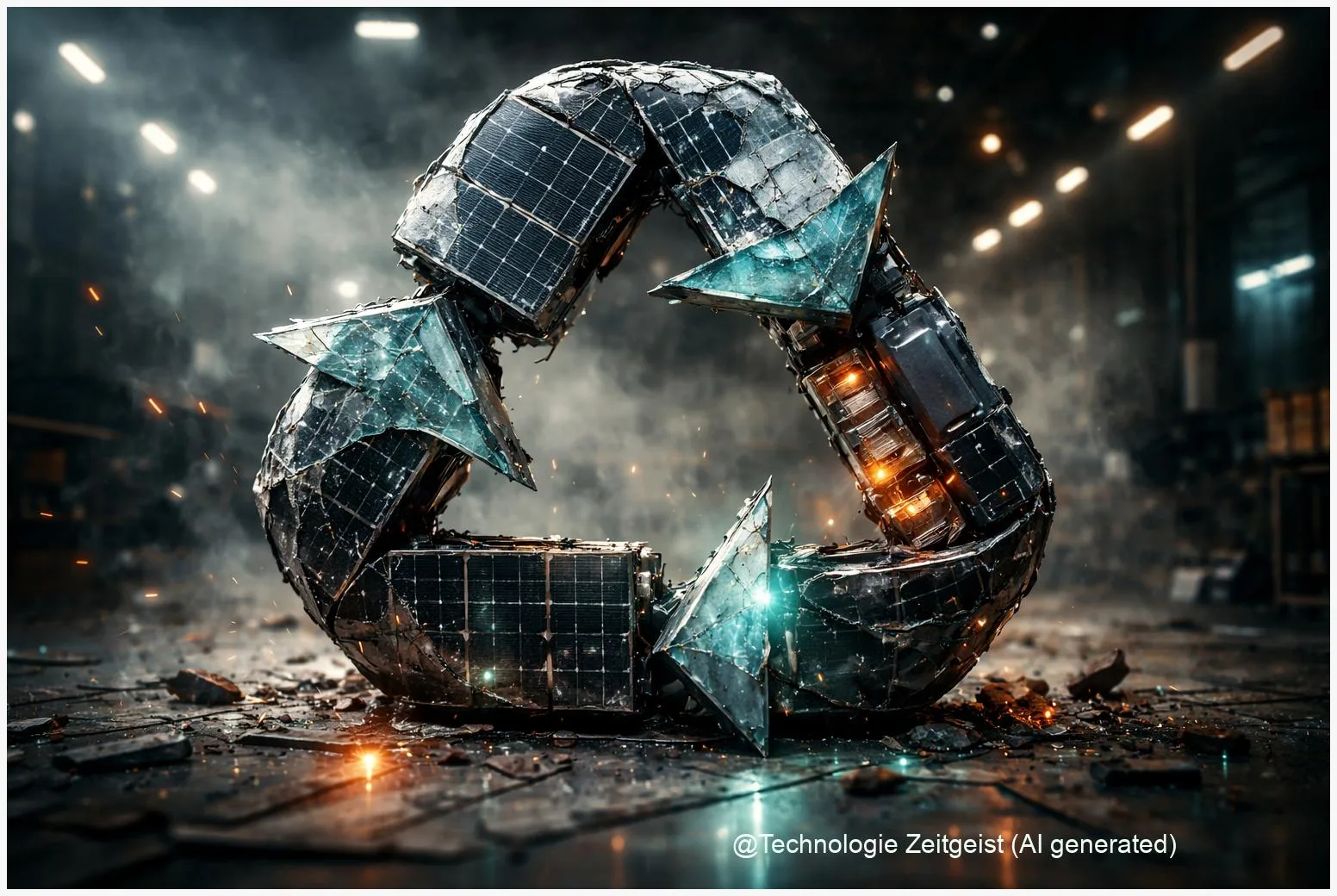
Solar Panel & Battery Recycling
As first-generation solar arrays and EV packs reach retirement, recycling is essential to recover glass, silicon and critical metals. This article compares collection, disassembly and processing for PV modules and lithium-ion batteries, and outlines what materials can be recovered and which processes need scale-up.
Introduction
Rooftop arrays from the 2010s and early EV batteries are now reaching end of life. Recovering materials without large environmental cost requires collection networks, preprocessing and targeted recovery methods.
How recycling works
Common routes include mechanical separation, hydrometallurgy, pyrometallurgy and emerging direct recycling. Each has trade-offs in yield, energy use and material quality.
Everyday examples
Rooftop modules may be delaminated and glass separated; utility-scale parks can use mobile preprocessing. EV packs may be repurposed for second life or sent to hydrometallurgical or pyrometallurgical recycling depending on chemistry and condition.
Outlook
Volumes rise sharply in the 2030s. Policy tools like extended producer responsibility and battery passports, together with improved sorting and direct recycling, will determine how much secondary material returns to factories.
Conclusion
Turning potential into steady secondary supply needs standards, collection and local processing capacity along with incentives for recyclers and manufacturers.




Leave a Reply