
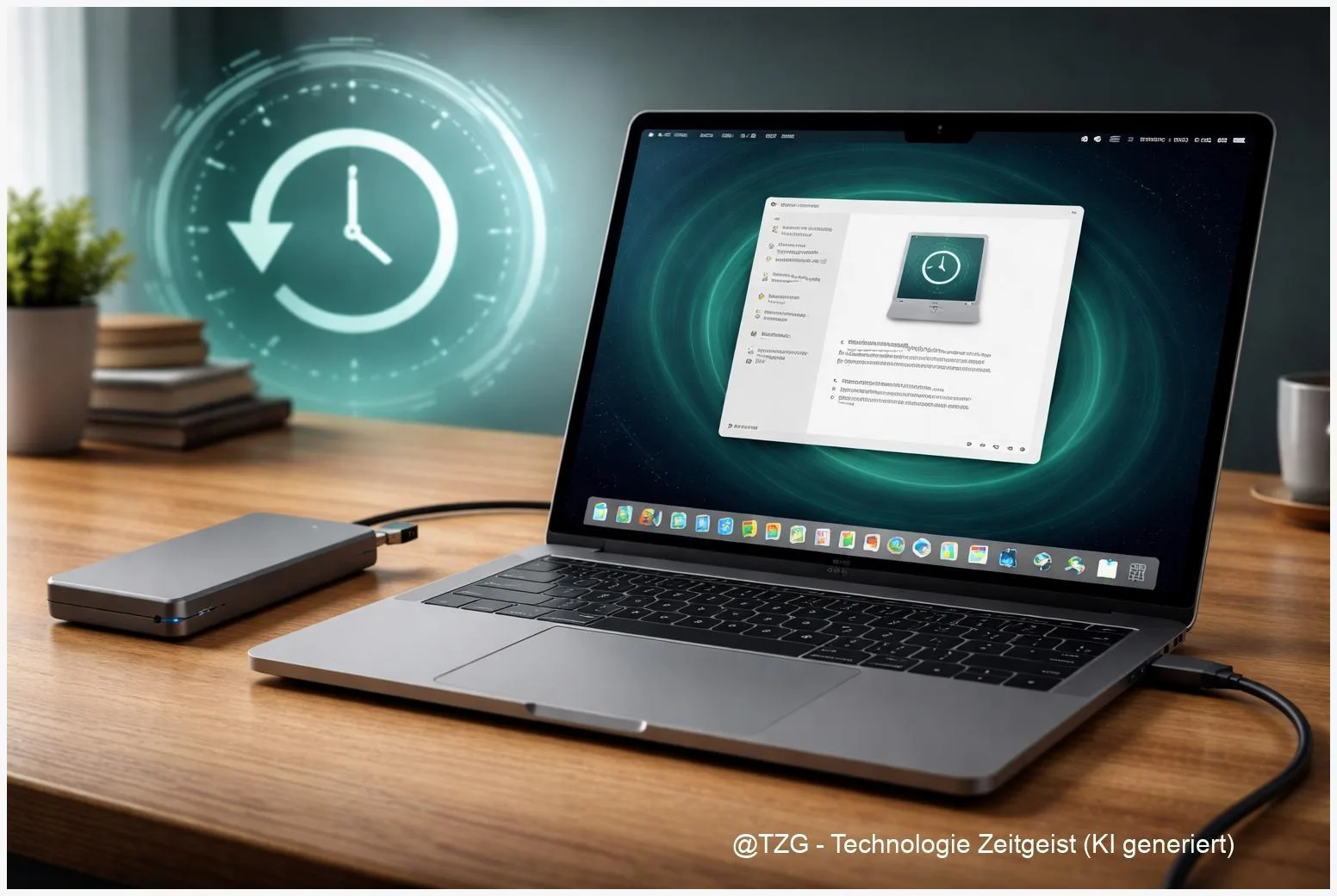
A Time Machine backup is the simplest way to protect your Mac against accidents: a lost laptop, a broken SSD, or a bad update. With one external drive, macOS can save automatic versions of your files in the background, so you can restore a single document or your whole system later. This guide shows how to set up Time Machine on a Mac safely, including encryption, what to check before you start, and what to do if Time Machine won’t back up.
Introduction
Your Mac usually feels reliable—until the day it doesn’t. A coffee spill, a stolen backpack, or an external SSD that suddenly refuses to mount can turn “all my stuff is on the Mac” into a real problem. Even smaller mishaps matter: you overwrite a school project, delete the wrong folder, or an app update breaks something you needed.
Time Machine is built into macOS and is designed for exactly these moments. Once it’s set up, it creates automatic backups in the background and keeps older versions, so you can go back in time when something went wrong. The key is doing the first setup cleanly: the right drive, the right format, and (for most people) encryption so your backup is protected if the drive gets lost.
The steps below focus on an external drive because it’s the most common, affordable, and dependable option for everyday use.
Basics and Overview: What a Time Machine backup really does
Time Machine is macOS’ built-in backup system. It saves copies of your files to a backup disk and keeps multiple “versions” over time. That means you can restore a file as it looked yesterday, last week, or before you edited it. It also lets you restore many settings and apps when moving to another Mac, and it can be used for full recovery via macOS Recovery if your Mac won’t start.
A useful term to know is encryption. When you encrypt a backup, macOS locks the backup with a password, so someone who finds your backup drive can’t read your files. This is especially important for portable drives.
A backup is only helpful when it runs automatically and you can actually restore from it.
In practice, the most common setup is: one external hard drive or SSD connected via USB-C or Thunderbolt, dedicated to Time Machine. macOS then runs automatic backups (the first one can take a while), and after that it mostly saves changes.
| Option or Variant | Description | Suitable for |
|---|---|---|
| External USB/Thunderbolt drive | Simple, fast, works offline; best reliability when connected directly. | Most people, laptops and desktops. |
| Encrypted backup | Protects your backup with a password so lost drives don’t leak personal data. | Anyone carrying drives around or sharing spaces. |
Preparation and Prerequisites: Drive choice, space, and a quick safety check
Before you click any backup buttons, take two minutes to avoid the most common setup mistakes. Apple recommends using a backup disk with at least twice the storage capacity of your Mac, and ideally dedicating it to Time Machine. That gives Time Machine enough room to keep older versions instead of constantly deleting history.
Go through this quick checklist:
- Pick the right drive: A USB-C/Thunderbolt SSD is faster; a classic external hard drive is usually cheaper per GB. Either works.
- Connect directly if possible: Plug the drive into your Mac instead of a flaky hub, especially for the first backup.
- Decide on encryption now: If the backup may ever leave your home, enable encryption during setup. Use a strong password and store it in a password manager.
- Check your macOS settings location: On modern macOS versions, Time Machine is configured in System Settings (not the older System Preferences).
- Know what “formatting” means: If you erase/format a drive in Disk Utility, existing data on that drive can be deleted. If the drive contains files you still need, copy them elsewhere first.
If you want extra peace of mind, do a small warm-up: open a few important files (Photos library, Documents) and confirm they’re where you expect. Backups are easier when your data is already organized.
Step-by-Step Instruction: Set up Time Machine on Mac with an external drive
The exact wording can vary slightly between macOS versions, but the workflow is stable: connect the drive, select it as the backup disk, and keep automatic backups turned on. Look for the Time Machine clock icon in menus where available; it helps you check progress.
- Connect your external drive to the Mac (USB-C/USB-A adapter is fine). If Finder shows the drive in the sidebar, the Mac can see it.
- Open Time Machine settings: go to System Settings > General > Time Machine.
- Add a backup disk: choose Add Backup Disk (or a similarly named button). Select your external drive from the list.
- Enable “Encrypt backups” if offered. Set a strong password and a password hint. Keep in mind: without that password, you cannot restore from an encrypted backup.
- Confirm and start: complete the setup. Time Machine may start backing up automatically. The first backup can take from minutes to many hours depending on how much data you have and how fast the connection is.
- Check that it’s running: return to the Time Machine page and look for the latest backup time and current status (for example “Backing up” or “Preparing”).
- Do a quick restore test: create a small test file on your Desktop, wait until a backup finishes, then try restoring that file from Time Machine. This is the fastest way to confirm the setup is actually usable.
If everything is set correctly, you’ll see a recent “Latest Backup” timestamp, and the backup drive will gradually fill up over time. That’s normal: Time Machine keeps history until the disk needs space.
Tips, Troubleshooting, and Variants: When Time Machine won’t back up
Time Machine is usually hands-off, but a few issues appear often—especially right after setup or after an interrupted backup. The good news: most fixes are simple and don’t require deleting your backup.
Problem: “Preparing Backup” takes forever. Apple notes that Time Machine may stay in the preparing stage longer after interruptions or large changes. First, be patient during the initial backup. If it seems stuck for a long time, stop the backup, restart the Mac, and reconnect the drive directly (no hub). Also check whether security software is scanning the backup drive; excluding the backup disk can help.
Problem: “Backup disk not available” or the disk can’t be found. Verify the cable and port, then eject and reconnect the drive. If the drive appears in Finder but not in Time Machine, re-select it in Time Machine settings. For persistent issues, run Disk Utility > First Aid on the backup disk (and, if needed, on your Mac’s internal disk).
Tip: Keep the backup secure. If your backup drive is portable, encryption is worth it. If you already set up Time Machine without encryption, macOS also offers ways to encrypt a storage device later, but enabling encryption during Time Machine setup is the cleanest path.
Variant: Backing up external data drives. Many people store video projects or photo archives on another external drive. Depending on your macOS settings, external drives can be excluded from Time Machine by default. If you want them included, check Time Machine options and remove those drives from the exclude list (only do this if your backup disk has enough space).
For related how-tos, TechZeitGeist also has a step-by-step guide on setting up Time Machine on an external drive and an overview on encrypting USB sticks and external drives on Mac.
Conclusion
Setting up Time Machine to an external drive is one of the most practical “set it once, benefit for years” tasks on a Mac. With the right drive, enough space, and encryption enabled, you get automatic backups that protect you from everyday mistakes and real hardware failures. After the first backup is done, check the latest backup time from time to time—and do a quick restore test once in a while. That small habit is what turns a backup from a nice idea into something you can rely on when it matters.
If you run into a Time Machine hiccup (or found a setup detail that differs on your Mac), share what you saw—your note can help other readers troubleshoot faster.

Leave a Reply