
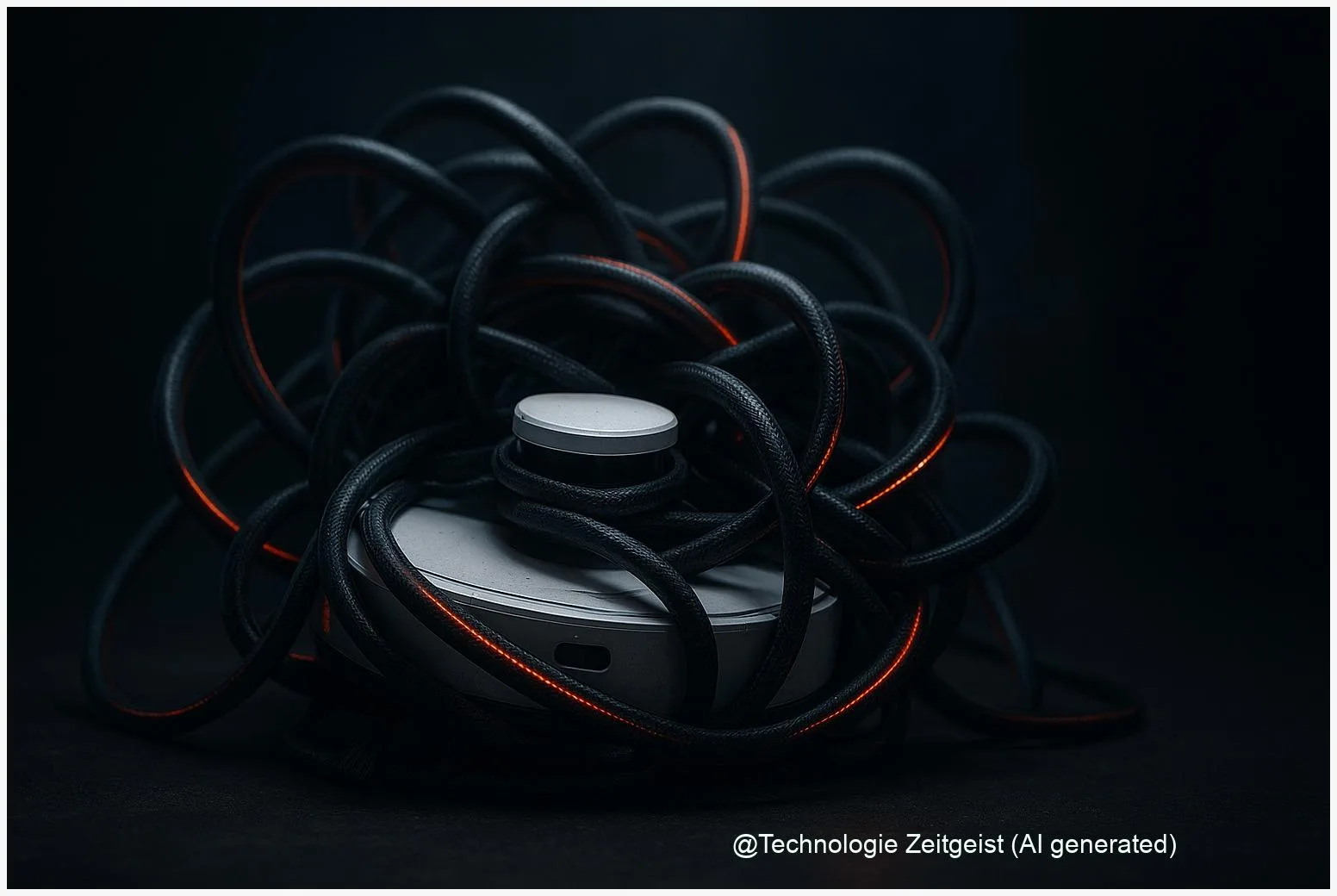
Cable tangles are one of the most frequent annoyances with an otherwise helpful household robot. The phrase “robot vacuum cable avoidance” has become common because recent models use cameras and smarter mapping to spot and steer clear of cords and charging leads. This reduces the time you spend untangling brushes and rescuing a stuck device, but it does not eliminate the problem entirely. Readable controls, regular firmware updates and a few simple habits make the difference in daily use.
Introduction
Most people buy a robot vacuum to save a few minutes of routine work. The disappointment arrives when the cleaner drags a phone charger across the room, wraps a USB cable around its brush, or stops dead on a headphone wire. That scene is common enough that manufacturers began adding dedicated sensors and software to reduce such mishaps.
Since 2021, several mainstream models introduced camera-based “obstacle detection” and smarter mapping that can identify cords and other small hazards. Reviews by major outlets reported clearly improved behaviour compared with older models, while independent lab-style numbers for cable detection remain scarce. The central question for buyers and users is practical: how much can these systems reduce cable-related failures, and what must you still do to keep cleaning reliable?
How modern vacuums detect and avoid cables
Early robot vacuums relied on simple bump sensors: when the machine hit an object, it reversed and tried a different direction. That works for furniture, but not for thin, flexible items like cables. Two technological approaches became common to address that gap: depth and distance sensors (LiDAR, infrared) and camera-based vision systems paired with object recognition software.
Camera-based systems use a forward-facing camera plus on-board or cloud algorithms to classify what the camera sees. When the software recognises a cable or a small obstacle, it flags the spot in the robot’s map and plans a route around it. The manufacturer iRobot, for example, introduced a system marketed as PrecisionVision in 2021 that sends a photo to the app when the robot detects a novel obstacle; reviewers praised the practical improvement but noted limits in some lighting conditions.
Manufacturers often combine visual detection with mapping: the robot learns room geometry and avoids marked problem areas on subsequent runs.
To keep the overview simple, the following table summarises the common sensor types and their typical strengths for cable avoidance.
| Sensor | Description | Strength for cables |
|---|---|---|
| Bump sensors | Physical contact detectors on bumpers | Low — reacts only after entanglement |
| Infrared / cliff sensors | Measure distance or drop-offs | Moderate — can detect thicker cables at short range |
| LiDAR | Laser-based mapping of room geometry | Moderate — precise for edges, less so for fine cords |
| Camera + vision software | Image recognition and learned object classes | High — best for thin or flexible cables when lighting is adequate |
In short: camera systems offer the best technical chance of recognising and avoiding narrow cables, but performance depends on lighting, camera placement and the underlying recognition model. Many reviewers reported fewer cable incidents with camera-equipped models, but they also described occasional misses or situations where the robot still became entangled.
Using cable avoidance in everyday life
For most households, the technology does not remove the need for basic preparation. The most effective routine combines the robot’s features with small habits that take seconds.
Start by setting up the robot’s map properly. Several manufacturers require a complete initial run to build a “smart map” and to enable obstacle detection in the app. That map lets the robot remember where it saw a cable and avoid the same place on later runs. Reviewers from CNET and The Verge recommended performing this setup before counting on autonomous cleaning, and Consumer Reports pointed out that some detection functions only activate after map creation.
Next, choose easy physical fixes: fasten loose cables against skirting boards with clips, tuck laptop chargers under a desk, or lift phone cords off the floor during cleaning. For recurring problem spots, use the robot’s app to draw a virtual no-go line or mark an obstacle. If your model lacks app controls, a magnetic strip or physical barrier is a simple alternative.
Practical example: charge a laptop at a desk overnight but unplug the thin charging cable in the morning before a scheduled cleaning. It takes only a few seconds and removes one frequent source of entanglement. For pet owners, camera systems can also detect and avoid small objects that look like pet waste; manufacturers even offered limited replacement guarantees for specific failures, which shows how companies are trying to reduce user risk.
Finally, keep firmware and the app updated. Many improvements to object detection arrive as software updates rather than new hardware. If the manufacturer provides an images review feature, check it occasionally to verify what the robot is classifying as an obstacle.
Benefits, limits and trade-offs
Camera-assisted cable avoidance brings clear benefits: fewer interruptions, less manual cleaning of brushes and a lower risk of damaged cables or ports. Reviewers who tested camera-equipped models in 2021 and 2022 described noticeably fewer entanglements compared with older robots.
At the same time, the technology has limits. Thin, dark cables that lie against a dark floor are still difficult to see. Low lighting, glare, very cluttered scenes and cables crossing rugs can reduce detection rates. Reported failures are not nonexistent; reviewers and user reports both mention occasional cases where the robot either missed a cable or misclassified another object and altered its route incorrectly.
Privacy is another consideration. Camera-based navigation records images and sends them to the app on many models. Most manufacturers implement settings that limit storage and let users opt out of cloud-based image processing, but users should check privacy settings before enabling advanced features. Consumer Reports and other outlets remind readers to understand what images are stored and for how long.
Finally, warranties and marketing claims deserve scrutiny. Companies may promote cable avoidance as a headline feature and even offer replacement promises for specific problems, but independent, publicly available metrics for how often a vacuum correctly identifies and avoids cables are rare. That gap matters: without standardised tests, buyers must rely on reviews, user reports and the manufacturer’s terms.
Where the technology may go next
Expect incremental improvements rather than a single breakthrough. Two directions are likely to matter in the coming years: better on-device vision and richer sensor fusion. On-device models run inference locally on the robot, which reduces the need to send images to the cloud and shortens reaction time. Combining camera data with LiDAR or structured light can make small objects easier to detect under varied lighting.
Another likely development is more standardised testing. Independent labs and consumer groups could adopt simple protocol suites that measure how often a robot recognises and avoids a set of common cables under controlled conditions. That would allow clearer comparisons across brands and models, and help consumers choose devices based on measurable performance instead of marketing language.
For shoppers: look for clear app controls for obstacle detection, frequent firmware updates, and documented privacy choices. If you rely on robots in homes with many thin cables or with children who leave toys on the floor, prefer models with camera-assisted detection plus robust mapping features and an easy way to mark no-go zones.
Small behavioural changes will remain a powerful complement to better sensors: stowing cables, raising loose cords, and doing a quick scan before a cleaning still deliver the biggest reduction in tangles for most households.
Conclusion
Camera-driven obstacle detection has made a visible dent in the problem of robot vacuums and cables. Where previous machines often became entangled, newer models can spot and avoid many cords, reducing interruptions and maintenance. That improvement depends on good lighting, an initial mapping run and occasional user habits such as clipping or tucking cables away before a scheduled clean. Independent, standardised figures on detection accuracy are still limited, so practical preparation and sensible expectations remain essential for trouble‑free automated cleaning.
Join the conversation: share a tip or a story about your robot vacuum and cable tangles — readers learn quickly from real use.

Leave a Reply