
Insights
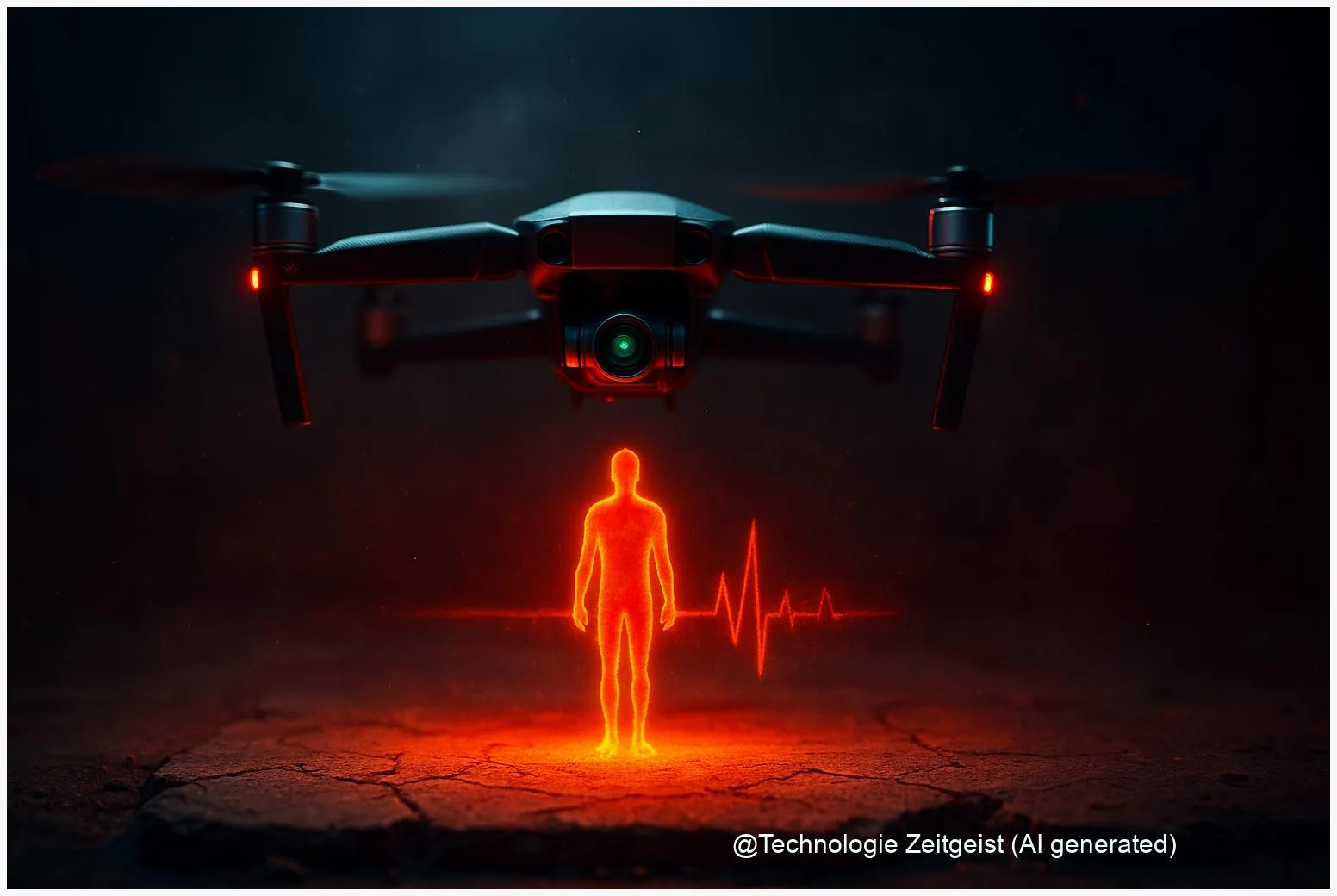
Rescue robots are increasingly using drones with thermal cameras and camera-based vital‑signs to speed triage after disasters. Field challenges in 2024 and experimental studies from 2023 show feasibility but also clear limits from weather, motion, and privacy concerns. Sensor fusion and field tests with first responders are the next steps.
Key Facts
- Drones equipped with thermal or RGB sensors can detect signs of bleeding or an elevated heart rate in controlled tests.
- The DARPA Triage Challenge (2024) demonstrated multimodal stand‑off sensing but noted scaling and communications limits.
- Environmental factors, movement and limited datasets currently restrict reliable automated triage without human oversight.
Introduction
Researchers and agencies have been testing drones and other rescue robots to help find and prioritise injured people after mass incidents. Recent trials and studies show these systems can flag likely serious casualties quickly, but accuracy drops in wind, smoke or clutter. That matters because faster, reliable triage can change which victims receive first care.
What is new
In 2024 the DARPA Triage Challenge staged field courses where teams used UAVs and UGVs with “stand‑off” sensors to detect physiological signs and prioritise casualties. The event acted as a practical pilot for automated triage tools and set scoring criteria like time‑to‑triage and localisation accuracy. Complementing that, peer‑reviewed studies from 2023 demonstrated two technical capabilities: thermal cameras on drones can reveal fresh bleeding signatures in short windows, and camera‑based remote photoplethysmography (rPPG) can estimate heart rate from drone video under favourable conditions. Note: the 2023 studies are older than 24 months and were controlled trials rather than large real‑world deployments.
What it means
For emergency services, rescue robots and especially drones promise faster situational awareness on arrival. They can scan large areas quickly and mark hotspots for human teams, reducing time spent on low‑yield searches. For vendors and funders, the market opportunity lies in robust sensor fusion — combining thermal, RGB, radar/UWB and audio — plus clear confidence metrics to avoid false alarms. Risks include wrong priorities from noisy data, privacy and airspace rules, and potential bias if methods work differently across skin tones or clothing. Practically, these systems are tools to support, not replace, human triage.
What comes next
Experts recommend coordinated field trials with fire and ambulance services that test systems in more realistic, large‑scale scenarios. Standards for evaluation should be adopted: localisation accuracy, true/false positive rates, and time‑to‑triage. Technically, priority work includes sensor fusion for smoke and motion, robust rPPG under movement, and public datasets to avoid overfitting. Regulation and SOPs — covering airspace, data retention and informed consent — must be developed alongside technical trials so first responders can adopt the tools safely and legally.
Conclusion
Drones and other rescue robots can accelerate initial triage by locating likely serious casualties faster than search teams alone. However, current evidence shows they work best when multiple sensors are combined and a human remains in the decision loop. The near‑term focus should be on realistic field trials, clear performance metrics and legal safeguards before wide operational use.
Please share your experience with drone-assisted searches or questions about practical deployment — join the discussion and share this article.



Leave a Reply