
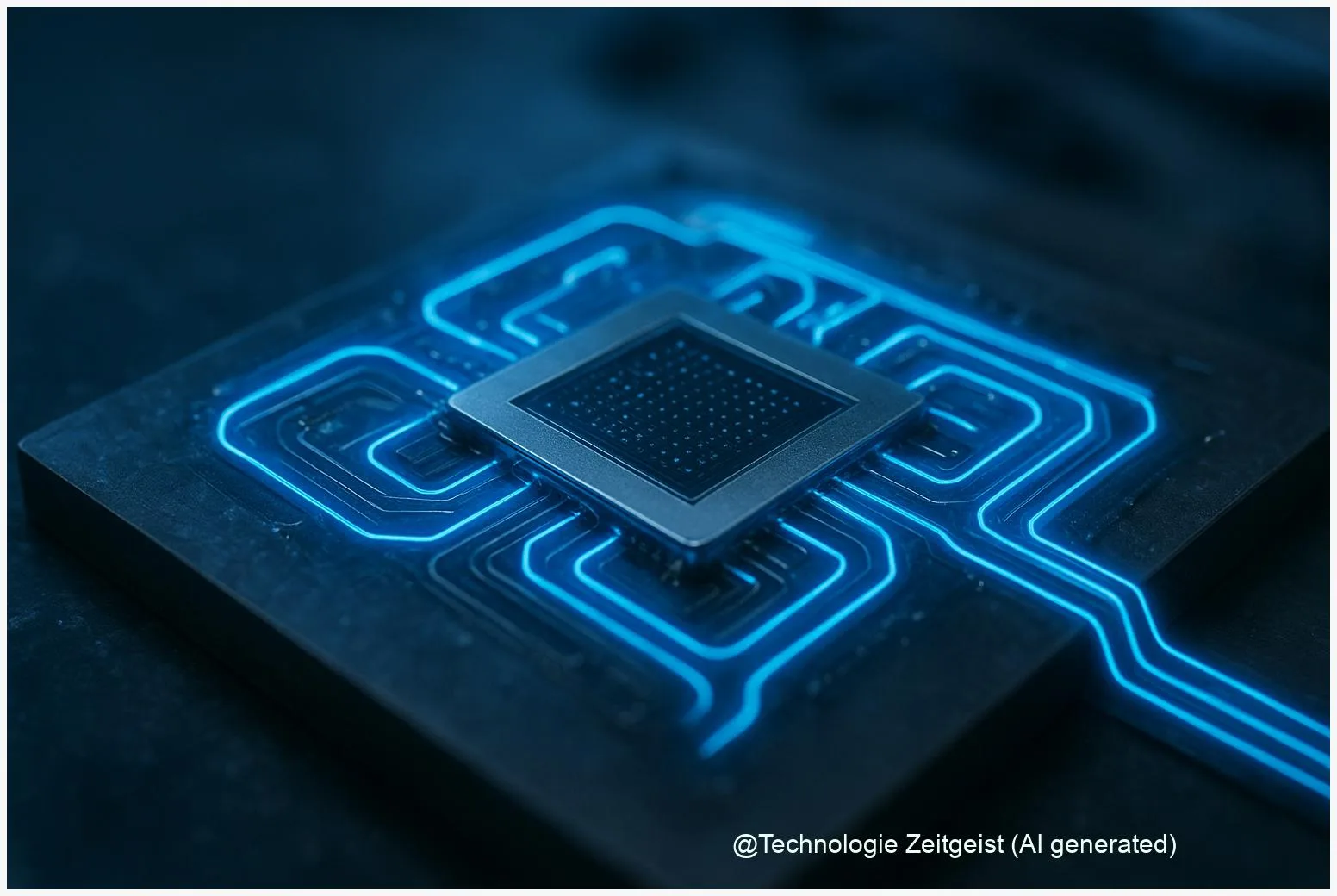
Quantum computing is often described as mysterious, but the basic questions are simple: how do qubits store information, why does entanglement matter, and what stops a quantum machine from working reliably? This summary introduces the term Quantencomputer as a concise label readers may already have seen and outlines ten fundamental concepts — from the qubit and superposition to entanglement, gates, and decoherence — that together explain how a quantum computer works and why noise and error correction shape its near future.
Introduction
Every modern computer uses bits that are either 0 or 1. A quantum device uses qubits, which can hold more flexible states and can be linked in ways that classical bits cannot. That flexibility creates new computational paths: some problems can be explored with very different resource scaling than on ordinary machines. At the same time, the same physical sensitivity that gives qubits their power makes them fragile. Experimental teams report coherence times measured in microseconds to milliseconds depending on technology, and practical use depends heavily on reducing noise and applying error correction.
Throughout the following chapters you will find simple mental models and concrete examples: what a qubit actually is in laboratory terms, why entanglement produces correlations that classical devices cannot mimic, and why decoherence — the loss of quantum behaviour through interaction with the environment — is the main technical barrier. The text sticks to ten guiding ideas so the picture remains compact and useful for years to come.
Qubit and superposition — the basic physics
A qubit is the quantum analogue of a bit: while a classical bit is either 0 or 1, a qubit can be in a combination of both states at once. This combination is called superposition. Technically, a qubit is a two-level quantum system; common physical realizations are the energy levels of a trapped ion, the spin of an electron, or the current states in a superconducting circuit. The key point is that you can control amplitudes and phases, which determine how that superposition will behave under further operations.
Superposition allows a single quantum device to represent many classical configurations simultaneously, but only certain operations can extract useful results from that parallelism.
One helpful mental model: treat the qubit as a tiny arrow on a sphere (the Bloch sphere). The arrow’s direction encodes the relative weights of the two basis states and the phase between them. When you perform a measurement the arrow collapses to one of the classical outcomes — and that collapse is irreversible. Because of this, quantum programs carefully arrange sequences of gates that create interference patterns so that the right outcomes are more likely when measured.
If a small table clarifies differences, here is a compact comparison.
| Feature | Description | Example |
|---|---|---|
| Classical bit | Value is either 0 or 1 | Memory cell in RAM |
| Qubit | Superposition of 0 and 1 with phase | Electron spin, superconducting circuit |
Entanglement, interference and how quantum gates operate
Entanglement is a form of correlation stronger than anything allowed classically: two or more qubits can become linked so that measuring one immediately gives information about the other, even when their individual states looked random beforehand. Entanglement is a core resource for many quantum algorithms and for quantum communication protocols.
Quantum gates manipulate qubits in controlled ways, changing amplitudes and phases. Gates on single qubits rotate their state on the Bloch sphere; multi-qubit gates, such as the controlled-NOT, create entanglement by conditioning one qubit’s operation on another. Importantly, quantum computation uses interference: different computational paths add up and can cancel or reinforce probabilities. Algorithms like Shor’s or Grover’s exploit structured interference so that correct answers are amplified before measurement.
To see how this differs from classical logic, consider searching an unsorted list. A classical routine checks elements one by one; a quantum approach like Grover’s uses interference to increase the chance of finding the right item faster, offering a square-root speed-up for certain problems. That advantage relies on keeping phase relationships intact across many gates — which links directly to coherence and error rates discussed later.
Decoherence, errors and what engineers do about them
Decoherence describes how quantum states lose their uniquely quantum properties through unwanted interaction with the environment. There are two common types: phase damping (dephasing), where phase information is lost, and amplitude damping, where energy leaks and populations change. Both destroy superposition and entanglement if unchecked.
Decoherence times are given names like T1 and T2 in experiments. T1 measures energy relaxation — how quickly a qubit falls from an excited state to a lower-energy state — and T2 measures how long phase information survives. Reported values differ by technology: superconducting qubits often have coherence in the microsecond to millisecond range; trapped ions and certain spins can show longer coherence under controlled conditions. These numbers change with materials, design and shielding.
Engineers use several strategies to cope. Physical improvements (better materials, lower temperature, improved shielding) increase raw coherence. Dynamical decoupling sequences apply specially timed pulses to cancel certain noise. Most importantly, quantum error correction (QEC) encodes one logical qubit into several physical qubits, detecting and correcting errors without directly measuring the logical state. QEC is costly: it requires many additional qubits and careful gate performance, which is why current devices are called noisy intermediate-scale quantum (NISQ) machines — useful for experiments but limited for fully error-corrected large computations.
Industry and labs report steady progress: hardware and codes improve in parallel. However, independent validation matters: manufacturer claims about code efficiency and error thresholds need peer-reviewed replication before they can be treated as settled facts.
Why quantum advantage is hard and what to expect next
Quantum advantage means a practical task done significantly faster or more efficiently on a quantum machine than on classical hardware. Demonstrations in tightly controlled, narrow tasks have appeared, but general, broadly useful quantum advantage remains elusive. The challenges are multiple: maintaining coherence across many qubits, scaling up with low error rates, and designing algorithms that translate abstract quantum strengths into real-world speed or cost improvements.
Short- to medium-term milestones are realistic and useful: better simulators for chemistry, specialised quantum sensors, and hybrid classical-quantum workflows where a quantum processor handles a narrowly defined subtask inside a larger classical computation. For researchers and interested readers, learning the basic building blocks — qubits, gates, entanglement, and error correction — makes these paths easier to understand and follow.
At a systems level, expect gradual layering: improved qubit hardware and control, more sophisticated error suppression, and incremental adoption of error-correcting codes. The community often cites the combination of hardware advances and algorithmic adaptation as the most plausible route toward broadly useful quantum computing within the next decade, although exact timings remain uncertain.
Conclusion
Quantum computing rests on a few compact ideas: qubits that hold superpositions, entanglement that creates non-classical correlations, gates and interference that steer probabilities, and decoherence that erodes the quantum advantage. The term Quantencomputer captures the device category you may encounter in technical or popular reporting, but the practical question is always the same: can engineers keep quantum states coherent long enough and at sufficient scale to run useful algorithms? Progress is steady, combining physical engineering, clever control techniques, and heavy investments in error correction. For now, most real-world benefit will come from specialised, hybrid use cases while researchers work toward fully error-corrected machines.
Join the conversation: share the article or leave a question about which quantum ideas you’d like to read about next.


Leave a Reply