
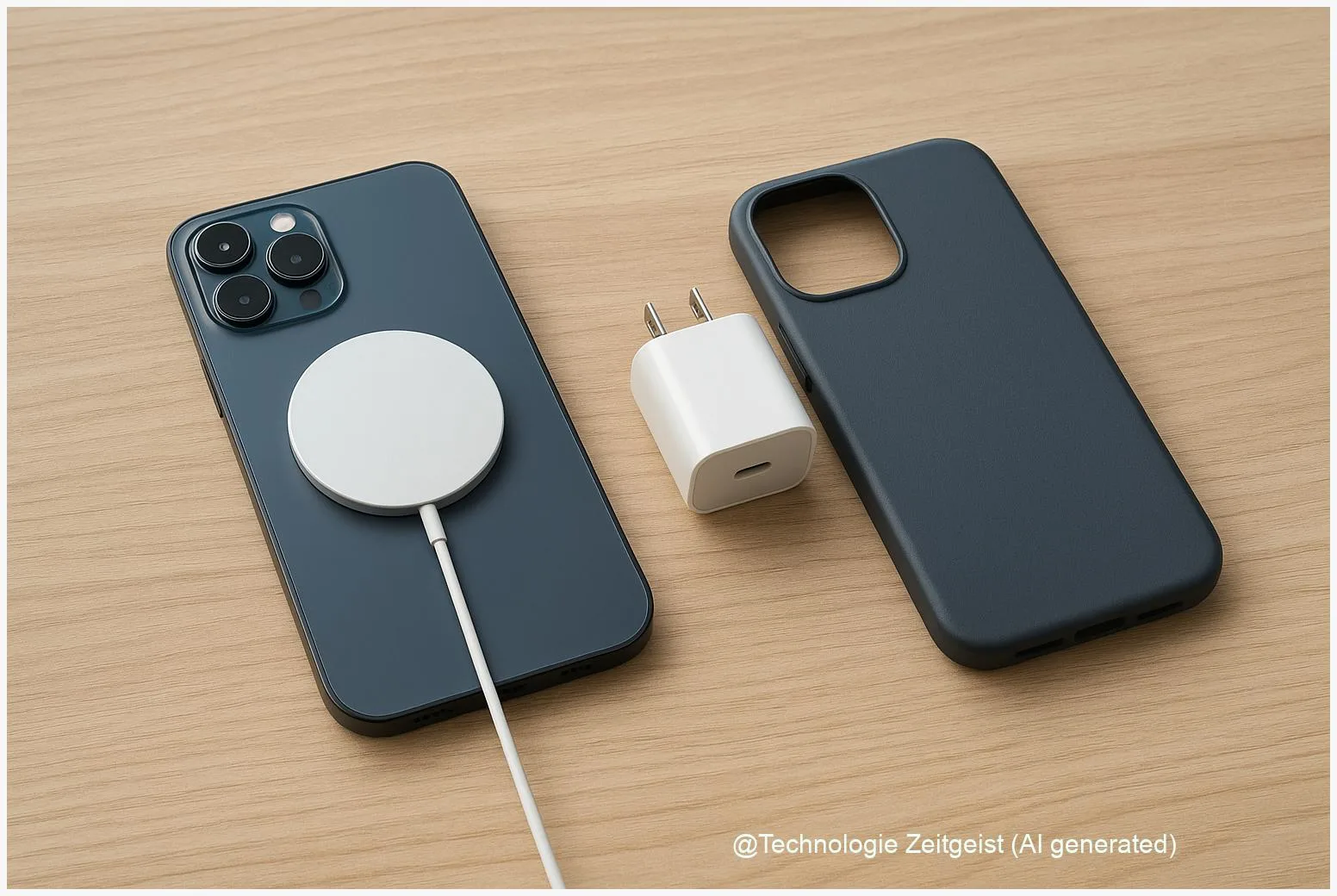
Choosing the right add‑ons for an iPhone can feel overwhelming. This guide focuses on iPhone Zubehör 2026 and highlights which cases, MagSafe and Qi2 chargers, cables and power banks actually help in daily use. You will learn which features matter for compatibility and battery health, and how to spot certified, safe chargers so you avoid poor performance or extra heat.
Introduction
Most people buy an iPhone accessory based on looks or a short product description. The hidden problem is that modern accessories are also small computers: chargers negotiate power, magnetic mounts exchange status via a protocol, and cases change how well wireless charging aligns. Those interactions determine whether a MagSafe charger reaches its top speed, whether a power bank reliably charges through a case, and how warm your phone runs during a fast session.
In 2025 and into 2026, two developments matter especially: the wider rollout of Qi2 (a WPC standard that formalizes a magnetic wireless profile) and Apple’s continued use of its MagSafe ecosystem. That combination promises easier cross‑brand compatibility — in principle — but real devices still need correct certification, proper power adapters and sometimes firmware to play nicely. This article helps you choose accessories that work, stay safe, and age well.
iPhone Zubehör 2026 — Basics of MagSafe, Qi2 and Cases
MagSafe began as Apple’s magnetic attachment system for iPhones. It uses built‑in magnets to centre chargers and to let accessories snap on reliably. Qi2 is a revision of the Qi wireless‑charging standard that adds a Magnetic Power Profile (MPP). MPP helps chargers and phones align magnetically and negotiate higher power levels — in 2025 the Wireless Power Consortium published extensions supporting up to 25 W in certain combinations.
Two short technical notes: Qi2 refers to the wireless charging protocol family that includes MPP; it describes how transmitter and receiver talk. The most important practical effects for everyday users are alignment (magnet strength and placement), allowed power level (15–25 W for recent implementations), and whether the charger is certified by the WPC.
Certification and clear labelling are the simplest ways to reduce surprises: look for a Qi/Qi2 ID or a manufacturer statement of compliance.
Below is a compact overview of common accessory categories and what to check when you shop.
| Feature | Description | Why it matters |
|---|---|---|
| MagSafe / Qi2 charger | Magnetic wireless pad designed for MPP; some support up to 25 W | Better alignment, higher peak power when both charger and phone support it |
| Protective case | Thin vs thick, magnetic ring built in or not; some materials block charge | Can reduce wireless speed or prevent correct magnetic coupling |
| Power bank | Battery pack with wired USB‑C or integrated MagSafe attachment | Use certified banks for stable output and thermal safety |
Everyday choices: cases, chargers and power banks that fit your life
Start by naming how you use the phone: commuting with short top‑ups, long travel days, or mostly at a desk. That determines whether your priority is protection, convenience or charging speed.
If you prioritise protection, choose a case that lists MagSafe compatibility and remains under about 3–4 mm thickness in the camera and back area. Manufacturers who build their own magnetic ring usually document the compatibility level; third‑party cases that lack a magnetic alignment ring can nudge a MagSafe puck off centre and drop charging speed.
For charging: wired charging remains the fastest for battery‑to‑battery transfers. A quality USB‑C Power Delivery (PD) wall adapter in the 30–60 W range does two jobs: it charges your phone fast when using a cable and it provides sufficient headroom for some magnetic wireless chargers to reach higher advertised peaks. Always use certified cables and adapters from reputable brands to reduce the risk of poor negotiation or overheating.
On power banks: the most practical solutions are either a high‑capacity USB‑C bank that supports USB‑PD or a MagSafe‑style bank with an integrated magnetic ring. MagSafe power banks are extremely convenient for charging on the go without cables, but note that magnetic banks usually charge at wireless rates — slower than a wired PD connection. For long travel days, pair a MagSafe bank for small top‑ups with a separate USB‑C bank that supports wired fast charging.
Look for clear labelling: a Qi2 or Qi Certified badge, the Qi‑ID if available, and the supported power level in watts. These details predict real performance more reliably than glossy marketing photos.
Opportunities and risks: heat, interoperability and certification
Faster charging and magnetic alignment are helpful, but they bring tensions. Wireless power is less energy efficient than wired charging, and faster wireless rates produce more heat. Heat shortens battery life over the long term, so phones throttle charging speed when temperatures rise. That means an accessory that advertises high wattage does not always deliver it in practice — the device, case, charger and ambient temperature all matter.
Interoperability has improved since the Qi2 announcements, but field reports show gaps. Some older pads or car chargers that were built for the older Qi profiles may force modern phones back to low power (for example roughly 5 W) because of mismatched negotiation. Independent testing and reporting in 2025 documented such fallbacks in specific device‑charger combinations; practical advice is to test a new accessory with your phone and case before relying on it for long trips.
Certification remains the most reliable signal. The Wireless Power Consortium maintains a certified product database; manufacturers approved by the WPC have passed protocol and safety checks that reduce the chance of abnormal behaviour. If a product lacks a visible Qi or Qi2 ID, expect a higher risk of issues and limited warranty support.
Counterfeit or poorly engineered chargers can cause actual safety risks, ranging from excessive heat to inconsistent voltage. Only purchase from established retailers, and prefer accessories with clear specs and return policies. When in doubt, a modestly priced, certified accessory from a reputable brand tends to be the safer choice than an unbranded premium‑looking product.
What comes next: standards, firmware and smarter accessories
Standards and firmware will keep shaping which accessories are useful. By late‑2025 WPC documents expanded Qi2 to include a 25 W class in select configurations, and early certified products appeared. That creates potential for faster wireless sessions, but full benefits depend on consistent implementation across chargers and phones.
Manufacturers may issue firmware fixes that improve negotiation between phone and charger. That means a problematic combination today can become reliable after an update, so prefer accessories from companies that publish firmware or have active support. For vehicles, expect a gradual upgrade of built‑in pads — many cars still use older Qi profiles and will take time to transition.
For a pragmatic plan: pick a single, well‑labelled MagSafe or Qi2 charger for daily docked use and a high‑quality USB‑C PD adapter for wired sessions. Keep a certified MagSafe power bank for true cable‑free top‑ups. When you buy, check the WPC certified list or the product’s Qi‑ID, and keep the receipt so you can test returns if real‑world performance differs from claims.
Conclusion
The most useful iPhone accessories in 2026 will be those that combine clear certification, sensible thermal and power design, and straightforward compatibility information. A MagSafe or Qi2 certified charger plus a reliable USB‑C PD adapter and a protective case that states MagSafe compatibility will cover most people: you get convenient wireless top‑ups, fast wired charging when needed, and physical protection without surprises.
When shopping, prioritise documented certificates (Qi/Qi2 ID), manufacturer support for firmware updates, and test a new accessory with your case and car pad if possible. That approach reduces the most common problems — slow charging, unexpected heat, and poor fit — and keeps your phone performing well for years.
Share your own accessory experiences below and tag a friend who’s choosing a new iPhone case.

Leave a Reply