
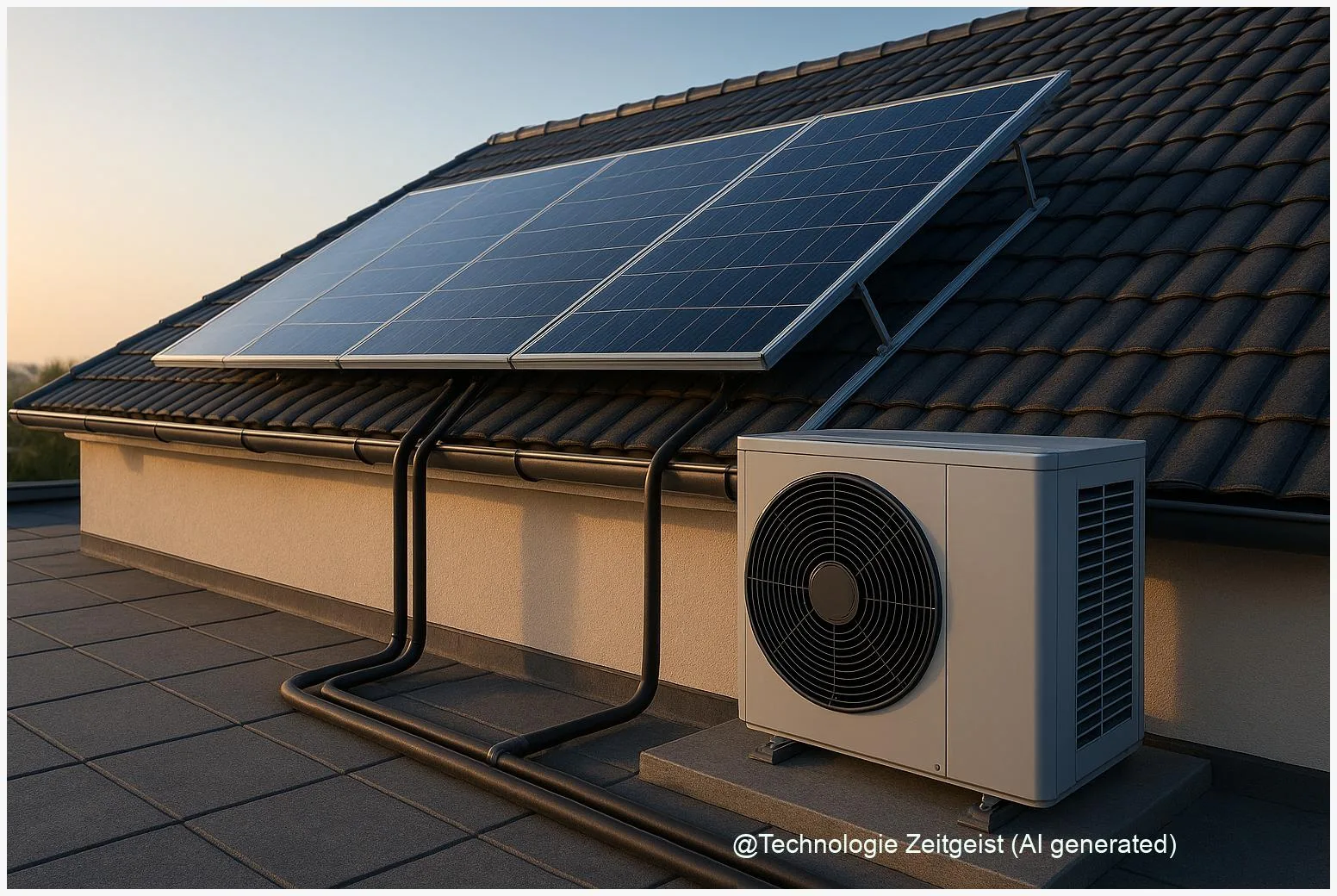
PVT + Heat Pump: How Buildings Save Electricity on Heating
Combining photovoltaic thermal (PVT) modules with low-temperature heat pumps can reduce grid electricity used for space heating by supplying warmer source temperatures and on-site solar electricity.
How a PVT module works
PVT panels produce electricity and capture heat. The warmed fluid (commonly 20–40 °C under normal operation) becomes a more efficient heat pump source, reducing electrical input per unit of delivered heat and often improving seasonal performance.
Everyday setups
Typical layouts route PVT fluid to a buffer tank or use PVT to recharge short ground loops. On sunny days PVT supplies both electricity for household loads and heat for the heat pump, increasing self-consumption and lowering grid imports.
Practical benefits and limitations
Benefits include better seasonal efficiency and efficient use of roof area. Limitations are variability in field evidence and higher upfront costs compared with standard PV. Control strategy and installation quality are decisive.
Conclusion
When designed and controlled properly, PVT-coupled heat pump systems typically raise seasonal performance and reduce electricity drawn from the grid. Multi-year field trials and standardised KPIs will clarify expected gains across climates and building types.




Leave a Reply