
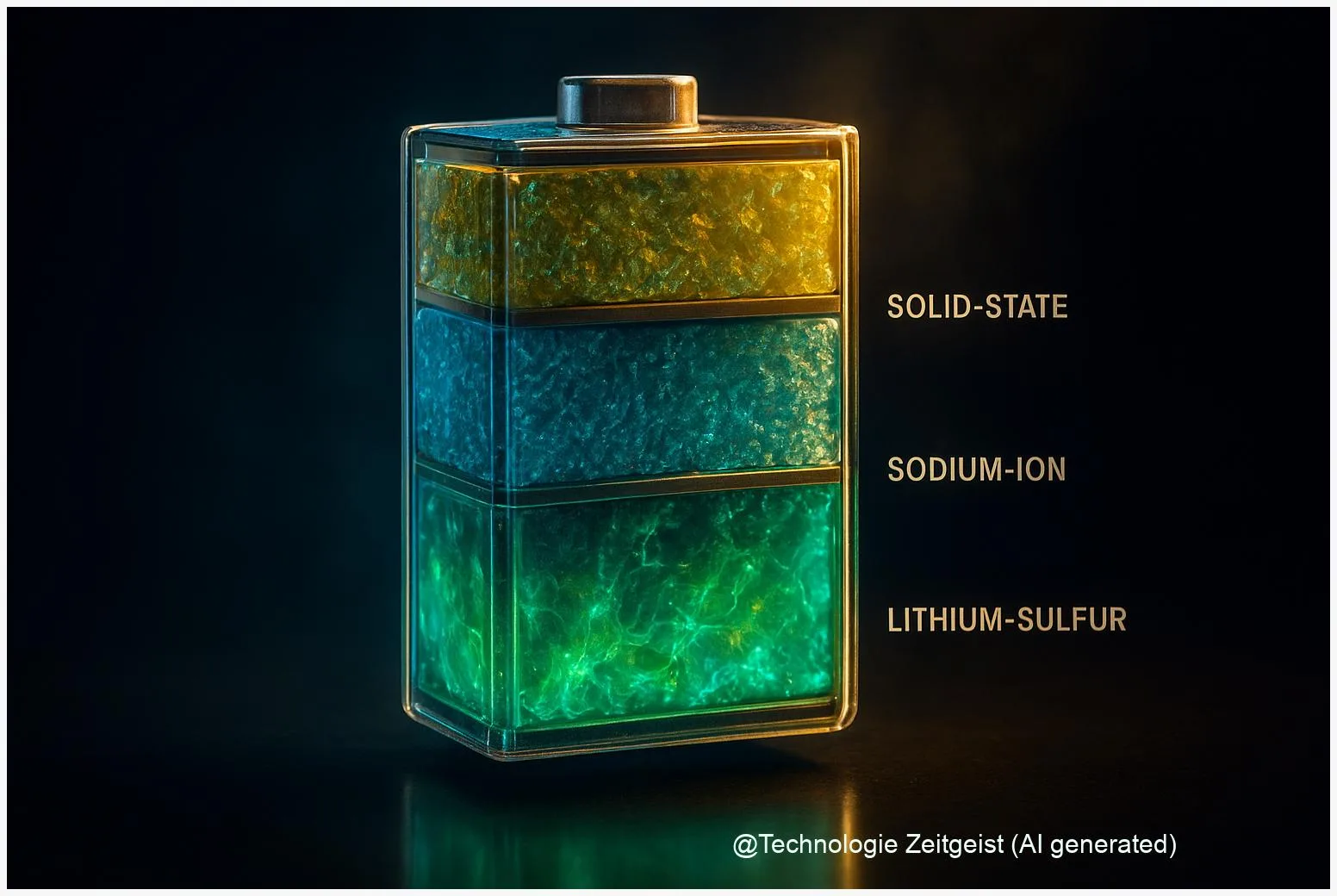
Many readers ask which technologies will replace lithium‑ion. The phrase next‑gen batteries covers several competing ideas — solid‑state cells with lithium‑metal anodes, sodium‑ion cells, lithium‑sulfur chemistry and silicon‑rich anodes. Each offers a concrete advantage (higher energy, lower raw‑material strain or improved safety) but also real manufacturing or durability limits. This article lays out where each option stood by 2026, what problems remain, and which choices are likely to matter for cars, phones and grid storage.
Introduction
If you care about how far your phone will last, how long an electric car drives, or how renewable energy is stored, the limits of lithium‑ion batteries matter. Lithium‑ion chemistry has dominated for decades because it balances energy, cost and manufacturability. But that same dominance has exposed supply chains, material constraints and, in some designs, safety trade‑offs.
Researchers and companies have pursued several “what comes next” ideas. Each next‑generation approach aims at one or more clear goals: higher energy per kilogram, lower dependence on scarce materials, faster charging, or safer operation at scale. The reality in 2026 is that several candidates show promise in labs or early pilot lines, yet none has become a broad, drop‑in replacement for today’s automotive or consumer cells. Below, each main technology is explained in plain terms, then compared by likely uses, limits and the near‑term path to wider availability.
next‑gen batteries: basic options and how they differ
Start with simple definitions.
Solid‑state batteries replace the liquid electrolyte inside a typical lithium‑ion cell with a solid electrolyte. A solid electrolyte can be ceramic or polymer‑based and promises higher safety and, with a thin lithium‑metal anode, higher energy density. A key risk is making perfect contact between the solid electrolyte and electrodes at production scale.
Sodium‑ion batteries use sodium instead of lithium. Sodium atoms are heavier and larger, so typical cells store less energy by weight, but sodium is more abundant and cheaper. That makes sodium‑ion attractive for stationary storage and lower‑range electric vehicles where cost and raw‑material security matter.
Lithium‑sulfur (Li–S) cells replace expensive nickel‑cobalt cathode materials with sulfur, a very light and cheap element. In theory Li–S can reach much higher energy per kilogram, but in practice the chemistry tends to lose active lithium or shuttle soluble intermediates that shorten life; research focuses on fixing these issues.
Silicon‑enriched anodes increase the amount of silicon in place of graphite. Silicon holds about ten times more lithium per gram than graphite, so it can raise energy density, but it expands a lot during charging and requires new binders, coatings and cell designs to survive many cycles.
Each approach improves one or two properties of lithium‑ion cells, but brings a different manufacturing or longevity challenge.
For clarity, a short comparison helps. The numbers below are rounded summaries from laboratory and industry reports available through 2025–2026 and should be read as indicative ranges rather than fixed performance guarantees.
| Technology | Typical cell‑level energy | Readiness & main limit |
|---|---|---|
| Sodium‑ion | ~100–175 Wh·kg⁻¹ | Pilot/early series; limited energy vs. high‑end Li‑ion |
| Solid‑state (Li‑metal anode) | projected >250 Wh·kg⁻¹ | Lab progress strong; manufacturing, thin lithium anode costs |
| Lithium‑sulfur | research reports ~300–400 Wh·kg⁻¹ (cell level) | High theoretical energy; scaling, cycle life and electrolyte use |
| Silicon‑rich anodes | cell gains typically 10–30 % over graphite baseline | Pilot production; mechanical expansion and lifetime |
Sources for the ranges include industry briefs and peer‑reviewed work up to 2025 (see sources). For example, sodium‑ion pilot lines reported cells near 175 Wh·kg⁻¹ in late‑stage announcements, while lithium‑sulfur research papers published in 2025 reported pouch‑level energies above 300 Wh·kg⁻¹ under carefully controlled conditions (Nature Communications, 2025). Solid‑state work shows encouraging ionic conductivities but highlights a production cost gap linked to depositing thin lithium layers (Nature Energy, 2024).
How these batteries would change everyday devices
Some changes would be visible to users; many would happen behind the scenes.
Smartphones and laptops: a modest increase in cell energy or faster charging from silicon anodes could extend device life by hours without major redesigns. A true step change in phone runtime would need either much higher energy density (as promised by advanced Li–S or solid‑state) or software and hardware efficiency improvements alongside the battery gains.
Electric vehicles: here the difference is more tangible. If solid‑state cells with lithium‑metal anodes reach production at reasonable cost, they could raise vehicle range by a third or more at the pack level, or allow lighter packs for the same range. Lithium‑sulfur, with higher energy per kilogram in research cells, could cut battery pack weight substantially. But both options currently face durability or manufacturing hurdles that delay mass‑market rollout.
Grid and home storage: sodium‑ion batteries are likely to appear early in utility and residential systems where energy density is less important than cost and resource security. Their lower reliance on lithium could reduce raw‑material pressure and make storage cheaper in some regions.
Charging infrastructure and recycling: newer chemistries change the rules for safety testing and recycling flows. Solid electrolytes can improve thermal stability, which eases safety management, but new materials create recycling challenges that must be solved to avoid shifting environmental burdens.
Opportunities and practical risks
Opportunities are specific and measurable. Sodium‑ion can reduce dependence on lithium supply and bring lower material costs for large stationary systems. Lithium‑sulfur and solid‑state approaches promise higher energy per kilogram, which matters for aviation, long‑range EVs and weight‑sensitive uses. Silicon‑rich anodes provide an incremental and manufacturable route to higher energy within existing lithium‑ion factories.
But each path carries a clear risk profile. For solid‑state batteries the main challenge is the lab‑to‑fab gap: materials that perform in small cells may be hard to produce reliably at gigafactory scale, and thin lithium anodes can add significant cost per cell unless deposition methods improve (Nature Energy, 2024). Lithium‑sulfur’s chemistry often requires more electrolyte per unit sulfur in current designs; reducing that “E/S ratio” without losing life is a central technical bottleneck (Nature Communications, 2025).
Silicon anodes increase capacity but also cause electrode swelling. Engineers mitigate this with new binders, composite particles and clever electrode architectures, yet long calendar life and high cycle counts required by automotive customers remain a tougher target. For sodium‑ion, the performance gap versus high‑end lithium‑ion persists; this limits some vehicle use but keeps the technology attractive for cost‑sensitive stationary uses.
Finally, supply chains and recycling systems must adapt. A new dominant chemistry would require new material processing, regulatory testing and recycling infrastructure; transitions of that scale take years and substantial investment.
Where development is likely to go next
Expect an incremental, multi‑track transition rather than a single, sudden replacement of lithium‑ion. In the near term (one to three years) sodium‑ion and silicon‑enhanced cells are the likeliest to reach commercial niches: sodium‑ion for grid and low‑range EV packs, silicon blends to boost energy in mainstream cells without a factory overhaul.
Mid‑term (three to seven years) could see more pilot solid‑state lines and limited product launches in premium niches where cost is less sensitive and energy or safety gains matter. For lithium‑sulfur, the decisive progress will come when pouch‑level tests show consistent cycle life beyond a few hundred cycles at realistic electrolyte usage and when manufacturing routes for the special cathodes scale up.
What can readers watch for? Public, independent cell‑level data (pouch tests that include packaging mass), third‑party lifetime testing over hundreds of cycles, and transparent techno‑economic numbers for production cost per kWh are the most meaningful indicators that a lab result is moving toward real products. Reports from reputable bodies and peer‑reviewed replications are far more reliable than single company press claims.
For policymakers and fleet buyers, the sensible approach is diversification: pilot sodium‑ion for stationary projects now, engage with silicon‑anode suppliers for vehicle testing, and require transparent, independent validation before committing to new factory builds for solid‑state or Li–S technologies.
Conclusion
“Next‑gen batteries” is a useful shorthand for several distinct technologies that each address a different limit of present‑day lithium‑ion cells. As of 2026, sodium‑ion and silicon‑enriched anodes are closest to broader deployment, offering pragmatic cost or incremental energy gains. Solid‑state and lithium‑sulfur hold larger theoretical advantages in energy and safety, but both face substantial manufacturing and lifetime hurdles before they can replace mainstream lithium‑ion at scale.
Decisions about procurement, investment or personal purchases should rely on independent, cell‑level test data that include packaging, cycle life and production cost metrics rather than headline energy numbers alone. The next few years will therefore be less about a single winner and more about which technologies prove they can be manufactured reliably, affordably and with acceptable lifetime in real‑world use.
If you found this useful, join the conversation below or share the article with someone interested in battery tech.


Leave a Reply