
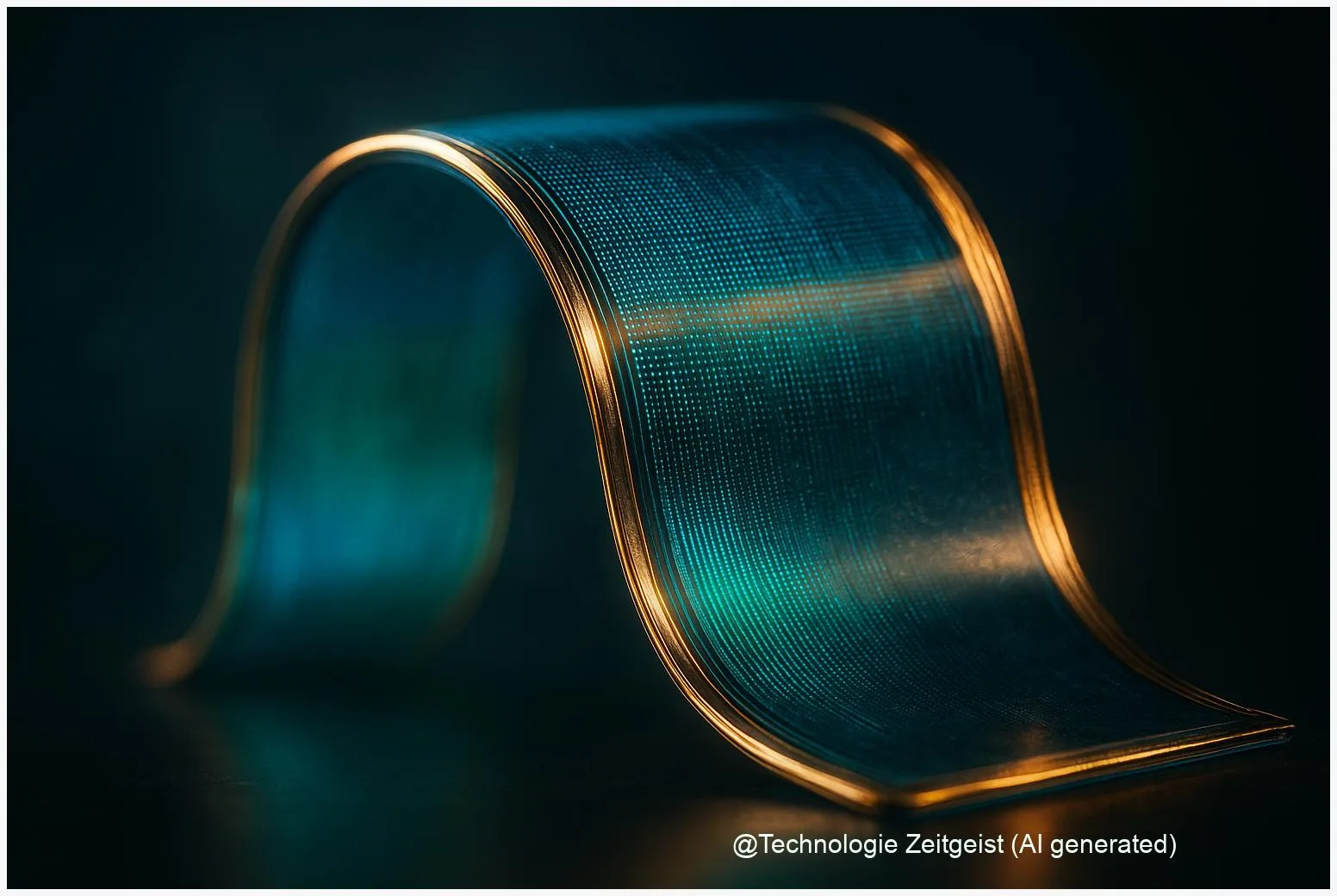
Flexible OLED screens are increasingly appearing in mid-range smartphones because production has become cheaper and more reliable. The term Flexible OLED refers to organic light-emitting displays built on bendable plastic or thin glass that allow curved, light, and damage-resistant panels; improvements in yields, cheaper materials, and larger factory capacity have cut costs. This article outlines the production and market reasons behind the price shift and what it means for buyers and phone makers.
Introduction
Many smartphones that cost less than €400 now offer curved or bendable screens that used to be reserved for premium models. That change raises a simple question: why are flexible displays becoming affordable? The short answer is a mix of manufacturing improvements, new materials and much larger factory capacity in Asia.
Flexible OLED is a display type that uses organic light-emitting diodes on a bendable substrate such as a thin plastic film instead of rigid glass. This design saves weight, tolerates small impacts better and enables curved edges or foldable formats. In the past, building such panels reliably was expensive because the processes were delicate and yields — the share of usable panels from a production run — were low.
Over the last two years, yields improved, equipment and materials became cheaper, and several large factories scaled up. For consumers that means more choice: mid-range phones can now include features such as higher refresh rates and thinner designs without the premium price tag once required by flexible screens.
Flexible OLED fundamentals
Flexible OLED panels rely on three basic building blocks: the light-emitting organic layers, a thin barrier or encapsulation to protect those organic materials from moisture, and a backplane that controls each pixel. The most visible difference to older glass displays is the substrate: instead of thick glass, manufacturers use polyimide or ultrathin glass to make the panel bendable. Polyimide-based panels are often called P-OLED.
Two technical terms matter for costs. First, encapsulation: organic materials are sensitive to water and oxygen, so manufacturers apply either thin-film encapsulation (TFE) or hybrid barriers that combine thin films with protective films. TFE processes have matured and now use fewer layers and faster deposition steps, which raises the share of good panels from the factory. Second, backplanes: modern phones increasingly use LTPO backplanes. LTPO is a type of transistor array that allows variable refresh rates and saves energy; it is more complex to make but adds user-visible value, such as longer battery life.
Better barrier films and simpler deposition steps reduced waste in production, turning an expensive speciality into a volume product.
To compare at a glance, the table below summarizes the practical trade-offs between flexible (plastic) and rigid (glass) OLED constructions.
| Feature | Flexible (P-OLED) | Rigid (Glass OLED) |
|---|---|---|
| Weight | Lower | Higher |
| Impact resistance | Better | Worse (can crack) |
| Manufacturing complexity | Medium (depends on encapsulation) | Lower |
Those engineering choices affect cost. In recent years, three practical shifts lowered panel prices: better yields at existing factories, new production techniques that need fewer process steps, and more factories producing flexible panels at scale. Each factor alone helps; together they reduce the price gap with traditional glass displays.
How these screens reach mid-range phones
Panels become cheaper when the proportion of usable product from a factory rises and when factories run at higher volume. Over the last two years, several manufacturers increased flexible panel output and refined processes that previously produced many rejects. That changed the math: a higher yield lowers the cost per usable panel markedly.
Another cost driver is supply-chain learning. Components and production tools that were once bespoke are now standard. Suppliers of barrier films, equipment for laser lift-off (LLO) and deposition tools have optimized their products for polyimide handling and TFE steps. Those optimizations reduce downtime and waste, which shows up as lower panel prices.
Market structure also played a role. Newer factories in East Asia expanded capacity and competed aggressively on price. When several factories target the same phone segments, original equipment manufacturers (OEMs) can negotiate better contracts or multi-source components, pushing prices down. Analysts observed that flexible panel shipments rose in 2023–2024 while average selling prices fell, a pattern typical when supply catches up with strong demand.
Practical example: a mid-range phone maker can choose between a rigid screen with slightly lower manufacturing cost and a flexible panel that adds a modest premium but improves design and durability. As flexible panel prices fell, that modest premium became small enough that many mid-range models now list curved or nearly bezel-free screens.
Opportunities and risks for buyers and makers
For consumers the main benefit is clearer: more phone models with lighter, curved screens, longer battery life (when LTPO is included) and fewer splashy price tags. For manufacturers and suppliers, the shift brings both opportunity and pressure.
On the opportunity side, flexible panels let designers make thinner phones, hide antennas more cleanly around edges and introduce modestly better drop resistance. LTPO backplanes further improve battery life by lowering refresh rates when the screen content is static. Those features help mid-range phones stand out in a crowded market without large increases in bill-of-materials cost.
Risks are practical: the production processes remain more sensitive than those for rigid glass, so sudden yield setbacks can affect supply and cause short-term price increases. Also, using LTPO adds manufacturing complexity; some mid-range models may skip LTPO to save costs while still using flexible substrates for design benefits.
There is a broader tension between feature parity and cost. As flexible OLED becomes common, manufacturers must find other ways to differentiate, such as camera performance, battery capacity or software. For smaller suppliers this faster commoditization can squeeze margins and favor larger companies that negotiate long-term supply contracts.
Where the technology could go next
Several realistic developments could push prices further down or open new product classes. One is larger, more advanced production lines (so-called Gen‑8.6 and Gen‑8.7 fabs). When those lines come online and run stably, they offer economies of scale that typically reduce panel cost. Another is further simplification of encapsulation: if TFE and hybrid barriers keep improving, manufacturers will reduce both process time and waste.
Innovation at the patterning and deposition level may also matter. Photo-patterning and tandem emissive stacks can improve brightness and lifetime without proportionally increasing cost. At the same time, cheaper and more reliable LTPO processes will determine whether battery-saving refresh-rate features become standard in mid-range phones or remain a high-end perk.
From a supply perspective, two scenarios are plausible: one where capacity growth continues and prices fall steadily, and another where capacity additions slow and price declines flatten. Which path unfolds depends on investment cycles in fabs and on how quickly OEMs commit to large-volume contracts. For users, the practical advice is simple: expect more flexible displays in lower price bands over the next two to three years, with premium features such as LTPO arriving more gradually.
Conclusion
Flexible OLED panels are reaching mid-range phones because manufacturing has become more efficient and factory capacity has grown. Better barrier technologies, higher yields and broader competition lowered the price premium that once limited these screens to flagship models. The outcome is tangible: thinner, lighter and more durable phones at lower cost, and the gradual spread of energy-saving LTPO features.
For buyers this means better hardware options in lower price bands; for makers it means shifting priorities from exclusive displays toward other differentiators like cameras and software. Watching factory investments and LTPO adoption will indicate whether prices keep falling or stabilize at the new norm.
Join the discussion: share your experiences with curved or flexible screens and what you value most in a mid-range phone.

Leave a Reply