
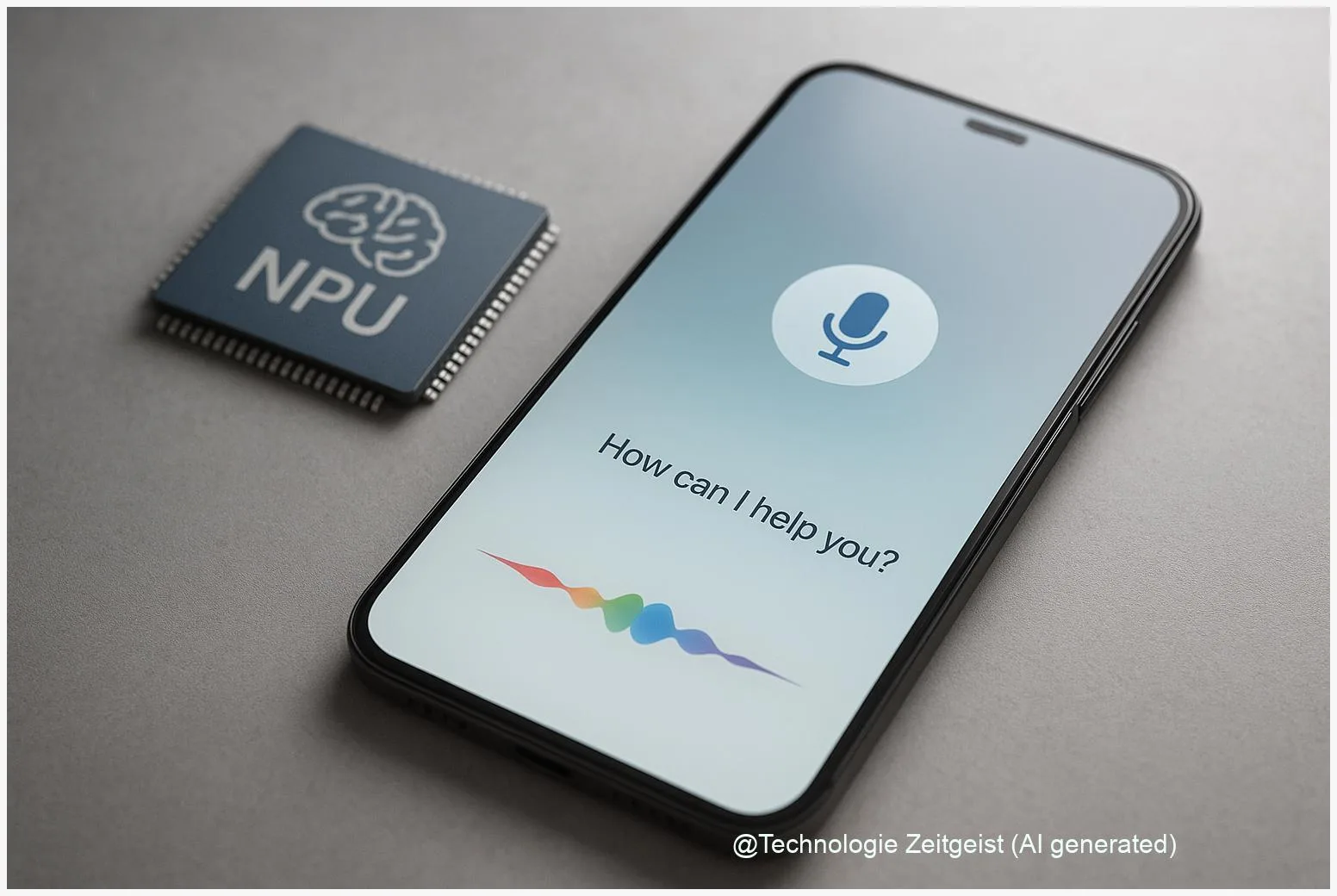
These mobile tech predictions 2026 describe how smarter on‑device AI, shifting supply costs and new rules will change the phones people buy. Over the next year, phones will perform more tasks locally thanks to dedicated NPUs and compact language models, while component shortages and regulation push prices and repair rules in new directions. The result affects battery life, privacy and the basic trade‑off of features versus cost.
Introduction
Most people use a smartphone every day without thinking about the chips and rules behind it. In 2026, three shifts will be visible in ordinary use: more AI work done on the phone itself, higher average retail prices driven by component demand, and clearer legal limits on repair, updates and energy labels. These forces meet in concrete trade‑offs. A faster on‑device assistant can respond instantly and keep private data local, but it needs more silicon and memory. Memory shortages and AI datacenter demand make components costlier, which pushes manufacturers to change prices and product mixes. New EU regulations require longer update support and spare‑part availability, which affects how long phones remain useful.
None of these changes is purely technical. They affect whether you keep a phone three years or five, whether offline language tools work well, and how repairable a device is in your city. This article describes the technical background, everyday examples you will notice, the tensions and risks, and realistic outcomes to expect through 2026.
mobile tech predictions 2026: On‑device AI becomes central
On‑device AI means running models on the phone’s processor rather than in the cloud. The shift is enabled by dedicated neural processing units (NPUs), specialized circuits that perform common AI math much more efficiently than general CPUs. NPUs work well with quantized models—AI models compressed from 32‑bit floating point to smaller integer formats—which reduces memory needs and energy demands. Benchmarks designed for phones show that NPUs already give a clear energy and latency advantage for many typical tasks.
Mobile NPUs reduce latency and energy for small generative models, making everyday AI features practical without a constant cloud connection.
What is practical today? Research and industry tests in 2025 found that compact language models in the 1–7 billion parameter range can be used on higher‑end phones when run in an optimized way; some vendors ship on‑device models of around 3 billion parameters. Independent mobile inference suites provide repeatable comparisons for these setups, while peer‑reviewed papers describe techniques for splitting long prompts and keeping latency low. In short: the hardware, model designs and software stacks are mature enough that many useful AI functions can run locally on consumer phones in 2026.
That technical maturity comes with practical limits. Large models still need memory bandwidth and steady power; thermal limits force phones to trade sustained throughput for temperature control. Also, not every phone has a fast NPU—this capability is concentrated in recent mid‑range and premium models—so the benefits are uneven across the market.
If you are curious about the technical grounding: look to mobile benchmark suites and vendor optimization guides to compare real‑world performance rather than marketing claims. Benchmarks report both compute throughput and energy per token for language tasks, which matter more for daily use than peak TOPS numbers alone.
What new AI features will feel like in daily use
Expected on‑device features in 2026 focus on latency, privacy and offline reliability. For example, typing suggestions and short replies will become more context aware and much faster because the model runs on the phone rather than sending text to a server. Voice assistants will handle longer back‑and‑forths without a network roundtrip, and on‑device translation will work with lower delay and greater privacy.
Camera apps will use AI locally for instant editing: background replacement, noise removal and style changes can be applied without uploading photos. That reduces bandwidth use and keeps private images on the device. Other practical uses include smart summarization of long articles saved on the phone and privacy‑preserving inbox triage that highlights important messages without exposing content to external servers.
These features rely on a few concrete capabilities: a sufficiently fast NPU, enough on‑device memory to hold a compressed model and the phone’s ability to manage power and heat. In devices with weaker NPUs, manufacturers will use hybrid approaches—performing light work locally and sending heavier tasks to the cloud when the user is online. This hybrid mode aims to preserve the best parts of both approaches: local responsiveness and the power of larger remote models.
From a user perspective, the main takeaways are simple: some phones will feel noticeably smarter and faster in offline scenarios, and those differences will be most visible in assistants, camera tools and language services. The rest depends on how manufacturers balance model size, quantization and battery management in their software stacks.
Price pressure, repair rules and the tensions they create
Changing hardware needs and market forces will affect prices and availability in 2026. Analysts revised average selling price forecasts upward: one major research group projected an ASP rise of around 6.9 % for 2026 while expecting a slight drop in shipment volumes. The driver is largely higher memory and component costs, partly caused by reallocations of DRAM and NAND to AI datacenters. Memory price surges in late 2025 already altered bill‑of‑materials for entry and mid‑tier phones, which is where price increases are most likely to show first.
At the same time, regulators in the EU introduced stronger rules for energy labelling, minimum update guarantees and spare‑part availability. New requirements set minimum battery longevity (measured in charge cycles), demand several years of spare‑part supply and require at least five years of software updates. These rules make phones more durable in principle, but they also add cost for manufacturers and therefore influence pricing and product planning.
Those two forces pull in different directions. Suppliers and OEMs face pressure to offer more silicon and memory to support on‑device AI, while regulation forces longer support lifecycles and spare‑part inventories. The result could be simpler model lineups: fewer low‑margin entry devices, or entry models with reduced feature sets to hold prices down. Alternatively, makers may shift more capability toward cloud features for cheaper models and reserve local AI for higher‑priced variants.
For consumers this means two tensions to watch: cost versus capability, and convenience versus repairability. Better on‑device AI tends to increase hardware cost; stronger repair rules increase service costs for manufacturers. Which effect dominates will vary by brand and market. As a buyer, check the update policy, spare‑part promises and whether the model advertises an on‑device AI assistant—those factors will shape value over the phone’s lifetime.
Scenarios for 2026 and practical decisions for buyers
Three realistic scenarios are likely to play out across different markets in 2026. First, a premium‑led scenario: flagship models include larger on‑device models and higher memory, delivering responsive offline assistants and advanced camera AI; those phones keep commanding higher prices but offer longer update guarantees. Second, a hybrid scenario: many mid‑range phones support selective local AI for key features and rely on cloud fallbacks for heavier tasks; prices rise modestly and product lines become more segmented. Third, a constrained‑cost scenario in very price‑sensitive markets: manufacturers cut non‑essential features or limit local AI to keep entry prices stable—cloud services remain the route to advanced AI.
What should a buyer consider when deciding whether to upgrade in 2026? First, check update and spare‑part commitments: a phone with at least five years of security updates and a seven‑year spare‑part promise will likely stay useful longer, especially under new EU rules. Second, consider the value of on‑device AI for your routines: do you need instant offline transcription, private document summarization or advanced camera editing without uploads? If yes, a model with a capable NPU and sufficient memory is worth the premium. Third, watch battery health and repairability: battery longevity and a clear repair policy affect total ownership cost more than raw performance in many cases.
Finally, remember the hybrid option: even if a new phone lacks full on‑device AI, many manufacturers will offer cloud‑enhanced services that approximate the experience when connected. This choice means you can balance cost, privacy and capabilities depending on network access and how much you value local processing.
Conclusion
In 2026 the most visible change in everyday phones will be smarter, faster local AI on devices that can afford the silicon and memory; this improves latency and privacy for many features. At the same time, component pressure driven by AI datacenters and new rules on updates and spare parts will push manufacturers to reassess product lineups and prices. The combined effect is more variation across models: premium phones will emphasise on‑device intelligence and longer support, while budget models will use cloud options or simpler hardware to keep costs down. For buyers the essential factors are update guarantees, battery health and whether local AI genuinely improves the tasks you do daily.
Join the conversation: share your thoughts and tips about upgrading or keeping your phone in 2026.

Leave a Reply