
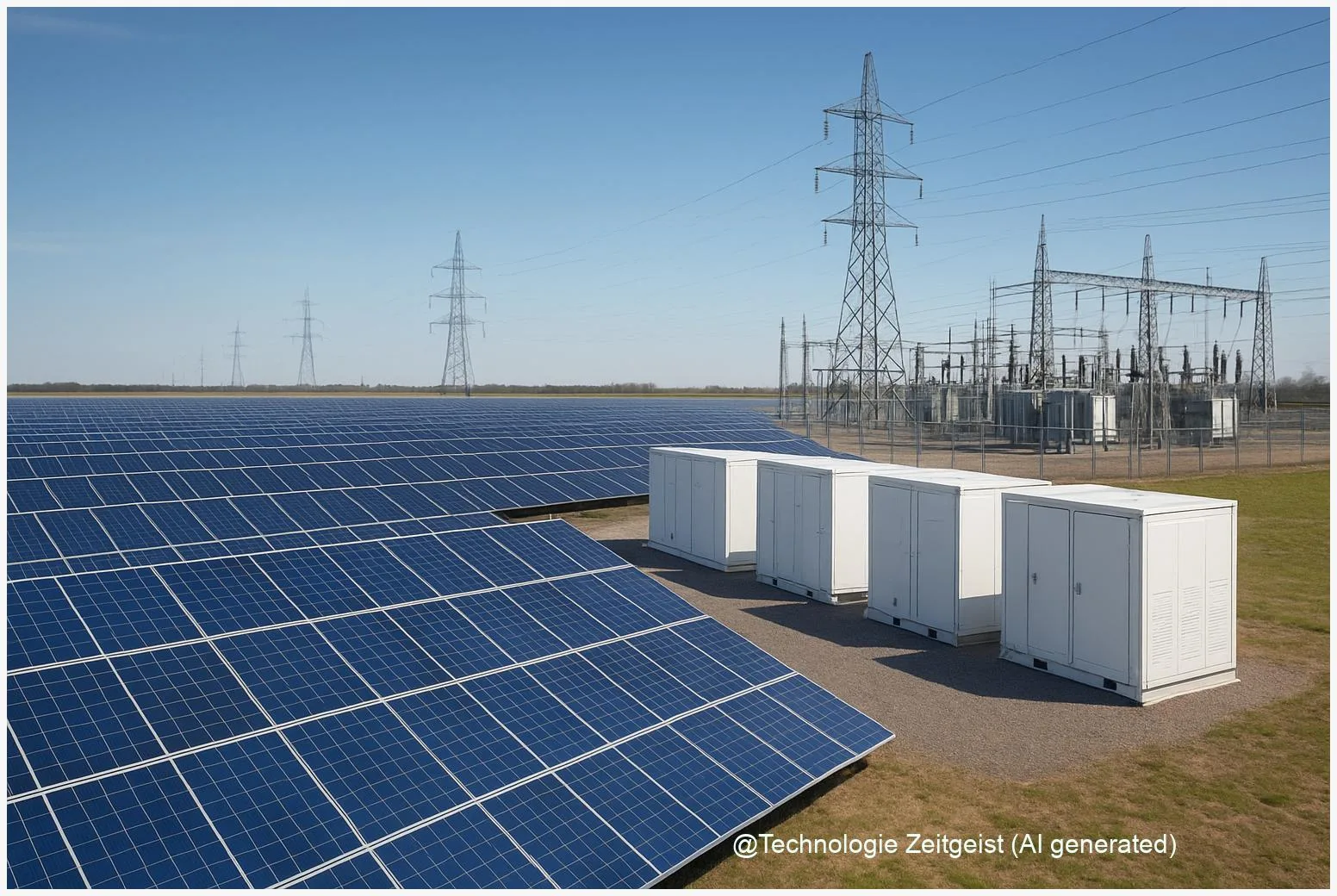
Large-scale solar plus storage projects can provide daytime energy, fast grid services and short-duration backup that together reduce the need for coal and many natural gas peaker plants. A well‑designed solar plus storage project balances photovoltaic generation with battery capacity and controls to cover peaks, smooth ramps and supply reserves; this makes it economically competitive in many regions when grid upgrades and market rules allow it. The article uses real project examples and public studies to show where such projects replace fossil plants and where limits remain.
Introduction
If you are asking whether utility‑scale solar and big batteries can take over the roles now filled by coal and natural gas, the short answer is: in many cases, yes — but not without careful planning. Coal plants traditionally supply continuous energy, inertia and long-duration reserves; gas peakers fill short, sharp spikes. A solar plus storage project pairs daytime solar generation with battery capacity that charges when sun is abundant and discharges when demand peaks or supply dips.
Think of rooftop solar that powers your home during the day while a home battery smooths evening demand: at grid scale, the same idea requires much more coordination. Studies from technology institutes and grid operators show that falling costs for photovoltaic panels and batteries make this combination economically viable for many retiring fossil units. Still, the technical and market changes required are concrete — grid connections, longer storage for multi‑day shortages, and rules that reward fast responses.
How a solar plus storage project works
At its simplest, a solar plus storage project combines an array of photovoltaic (PV) panels with a battery energy storage system (BESS) controlled by software that optimizes charging and discharging. A battery stores electrical energy chemically and releases it on demand; common utility batteries today are lithium‑ion systems rated in megawatts (MW) for power and megawatt‑hours (MWh) for energy. Duration is the ratio of MWh to MW (for example, a 4‑hour battery delivers its rated MW for roughly four hours).
Two technical roles matter most: energy and grid services. Energy means shifting abundant midday solar into evening peaks. Grid services include frequency response, voltage support and rapid ramping — functions coal provided steadily and gas peakers provided quickly. Batteries are especially good at fast response; solar provides the bulk energy during daylight. Planners combine these to meet both short events and routine peak hours.
The combination of daytime solar and short‑duration batteries replaces many—but not all—functions of older fossil plants, provided transmission and market rules are aligned.
Below are representative figures drawn from public studies and recent projects to give a sense of scale and scope.
| Feature | Description | Representative value |
|---|---|---|
| NREL reference PV+Battery | Utility configuration used for cost modelling | ~134 MW PV / 78 MW battery, 4 h (ATB 2024) |
| Large deployed BESS example | Project that helped retire coal in an island grid | 185 MW / 565 MWh (Hawaii case, 2024) |
| Peaker capacity to screen | Typical regional peaker fleet size in an example study | ~9.8 GW (California peaker fleet, 2020) |
| Cost trend | Falling LCOE for PV+storage improves competitiveness | Marked declines projected in NREL 2024 ATB |
These numbers illustrate typical sizes and the concept of combining MW (power) and MWh (duration) to match a retiring plant’s services. System planners then run dispatch simulations to check if the supply profile meets local demand and reserve rules.
How a large project replaces coal and gas in daily operation
Replacing a coal unit differs from replacing a gas peaker. Coal historically supplied steady energy and services such as inertia and long runs; gas peakers provided short bursts during afternoon or evening peaks. A solar plus storage project replaces these roles by layering functions across the day.
During daylight, PV supplies the bulk of energy that would otherwise come from coal. When demand rises in late afternoon and evening, batteries discharge to cover the shortfall. For many plants the critical measure is whether the combined system can meet the local reliability standard: capacity during peak demand, plus reserves for unexpected outages. Studies and project experience show this is possible when batteries are sized to match typical evening peaks and when transmission or demand response fills gaps.
Operational sequencing is important. Grid software schedules solar output first, then reserves battery capacity for evening peaks and for fast system services such as frequency response. Where a fossil plant provided many hours of continuous energy, a single solar plus 4‑hour battery may not suffice; planners either add more battery hours, overbuild solar (to store more during day), or rely on a regional portfolio that shares resources across a wider area.
Real examples matter: an island grid in 2024 retired a coal plant with the support of a large battery that supplies capacity and services previously provided by the plant. Independent analyses (for example regional modeling by research labs) similarly find that portfolios of solar and storage can cost‑effectively replace many coal units, especially where land, interconnection and market signals align.
Risks, limits and trade-offs
Solar plus storage is not a universal, one‑size‑fits‑all replacement. The first limit is duration: standard utility batteries today commonly provide 4–6 hours. If a retiring coal plant regularly supplies ten hours or multi‑day energy during cloudy, low‑wind periods, short‑duration storage alone cannot fully substitute. That is why long‑duration storage, flexible demand, and transmission remain part of the solution.
Second, interconnection and queue delays can be a real barrier. Building a large solar plus storage project requires grid connection capacity; in many regions, interconnection queues and upgrade costs raise project timelines and bills. Third, lifecycle emissions depend on how the battery is charged. Batteries charged from a fossil‑heavy grid can shift emissions rather than eliminate them; studies that use life‑cycle approaches warn procurement should include clean charging requirements to secure real GHG benefits.
Fourth, economics and market design matter. Studies show falling costs make solar plus storage competitive in many places, but local electricity markets must reward capacity, fast response and energy shifting appropriately. Where markets lack these signals, batteries may struggle to recover costs even if they deliver system value.
Finally, social and environmental trade‑offs include land use for large PV arrays and end‑of‑life management for batteries. Recycling, reuse and clear procurement standards help manage these impacts and should be part of project planning from the start.
What comes next for planners and communities
For planners and communities the practical path starts with targeted pilots and portfolio thinking. Instead of a single plant replacement, regions should model portfolios of PV, short‑ and long‑duration storage, demand flexibility and targeted grid upgrades to see how combinations meet reliability standards. Pilots that pair large solar farms with batteries and transparent performance contracts give operators real data on dispatch, degradation and market revenues.
Policy choices speed or slow this shift. Incentives that reward clean charging, require recycling plans or pay for fast grid services change the business case. Likewise, clearer capacity valuation methods (for example ELCC—effective load‑carrying capacity) help batteries receive payment for the reliability they provide.
For communities, the promise is fewer local emissions and new construction jobs, but also the need for fair planning processes. Authorities should evaluate local grid upgrades, land siting and workforce retraining together with technical feasibility. In many regions, the next five to ten years will be decisive: falling costs already make solar plus storage a practical alternative in many cases, but delivering system reliability at scale requires technical, commercial and regulatory alignment.
Conclusion
Large solar plus storage projects can replace many of the energy and grid services historically supplied by coal and natural gas, particularly for daytime generation and short evening peaks. The combination of falling PV and battery costs, proven project deployments and portfolio modeling supports this outcome in many regions. However, project viability depends on duration needs, interconnection capacity, clean charging rules and market structures that value flexibility and fast response. Where multi‑day shortages are possible, additional long‑duration storage, transmission or flexible backup remain necessary.
Join the discussion: share your experience with local energy projects or questions about planning and policy.

Leave a Reply