
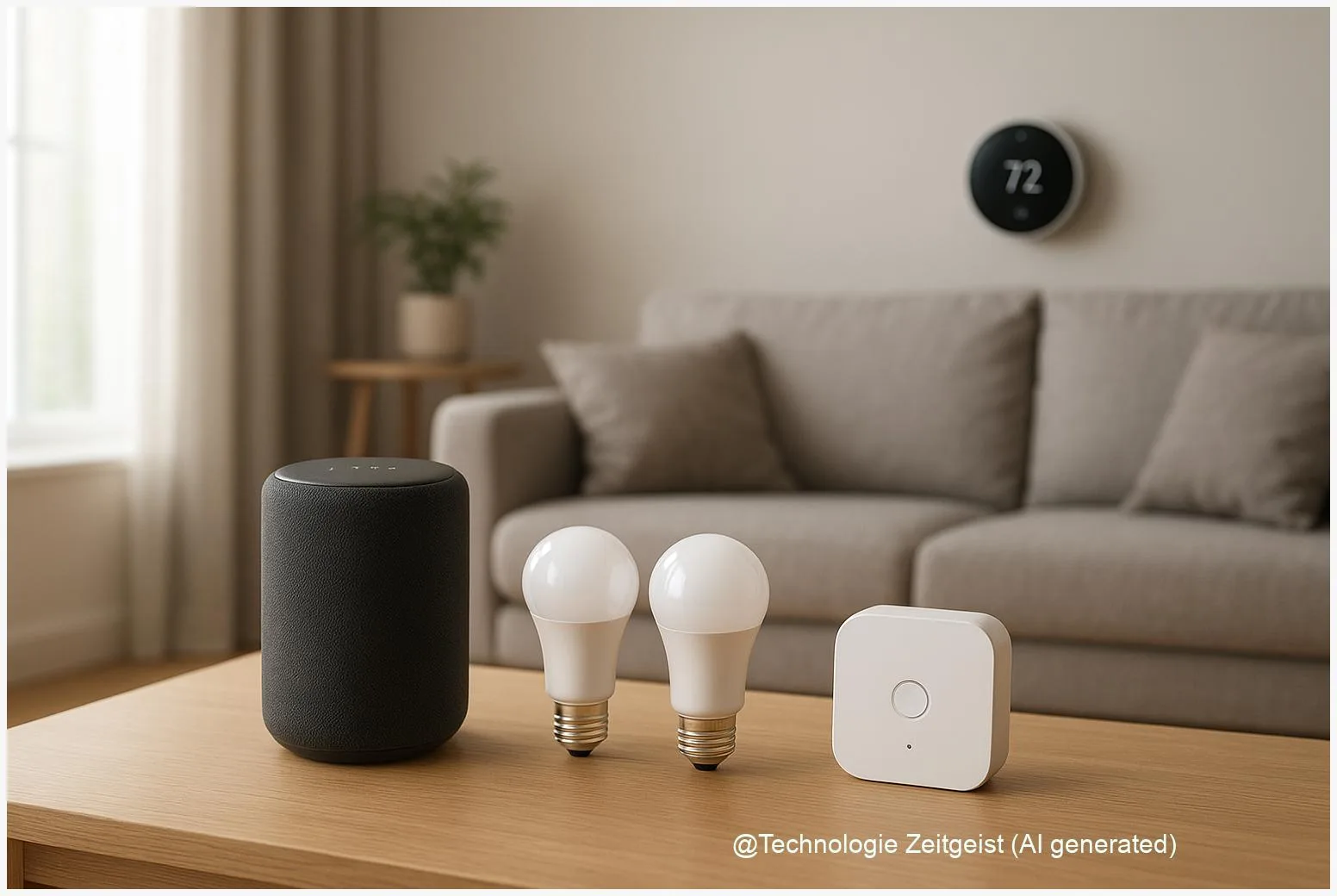
The Matter Standard aims to reduce the number of apps and hubs needed to run smart-home devices. By defining a common, IP-based language for lights, locks, thermostats and new appliance types, Matter Standard helps devices from different brands work together more reliably. This article shows what Matter means for a functioning smart home, which network technologies it uses, and what to check when you buy devices in 2026.
Introduction
If your smart bulbs, speakers and thermostat still require different apps and a maze of adapters, you are not alone: compatibility is the main frustration for many households. Matter was created to cut through that mess by giving devices a shared, IP-based way to identify themselves and their capabilities.
For users this means fewer setup steps and more reliable automations; for manufacturers it means following a single specification and passing a certification process. The technical details can look dense, but the result you will notice is simpler pairing, clearer permissions, and better support for battery-powered gadgets. This introduction prepares the core questions we answer next: how Matter works, which networks it uses, what still requires attention, and how the situation is likely to change by 2026.
Understanding the Matter Standard
Matter is an interoperability standard developed by the Connectivity Standards Alliance (CSA). At its core Matter defines a set of device types, a common data model, and how devices announce themselves and accept commands over IP. Saying a device “speaks IP” means it uses standard Internet addressing (IPv6) so different transports can carry the same instructions.
The specification that most engineers reference is Matter 1.2, first published in October 2023. That release added several common appliance types and improved testing tools. Because October 2023 is more than two years before December 2025, some implementation details and platform rollouts referenced in early papers have since advanced; however the core architecture remains the same.
Matter separates the application-level device model from the underlying transport (Thread, Wi‑Fi, Ethernet), which makes the same device behavior work over different networks.
Three network approaches are commonly discussed with Matter: Thread, Wi‑Fi and legacy low‑power radios such as Zigbee that currently require a bridge. Thread is a low‑power, mesh network built on IPv6 and is particularly suited to battery devices. Wi‑Fi gives higher bandwidth and direct cloud access but uses more power. Zigbee devices can appear as Matter devices only when a bridge converts their native messages into IP that Matter understands. The following table highlights these differences simply.
| Feature | Description | Typical use |
|---|---|---|
| Thread | Low‑power IPv6 mesh, needs a border router to reach Wi‑Fi or internet | Battery sensors, smart locks, bulbs |
| Wi‑Fi | High bandwidth, direct cloud access, higher energy use | Cameras, hubs, assistants |
| Zigbee (legacy) | Proprietary network that requires a bridge to present as Matter/IP | Older smart bulbs, some sensors when bridged |
Manufacturers must pass CSA certification to carry an official Matter label; certification ensures a consistent commissioning (pairing) flow and predictable behavior across platforms. That certification step explains why a new Matter device may appear late on a platform even after the specification is published: writing firmware, performing tests and coordinating platform support take additional months.
How Matter works in everyday homes
On a practical level Matter changes the way you add devices. Instead of choosing a brand‑specific app, you use a single controller app or hub that supports Matter to discover and name devices. During setup, Matter uses Bluetooth for initial provisioning—this step lets a phone or hub authenticate a new device—and then hands control to Thread or Wi‑Fi depending on the device’s capabilities.
Consider three simple examples. First, a Matter‑certified light bulb that supports Thread will join a mesh network and remain reachable even if Wi‑Fi drops; commands travel over the low‑power network and a border router links them to your phone. Second, a Matter camera will usually use Wi‑Fi for video streams because Thread does not provide the necessary bandwidth. Third, older Zigbee bulbs can still be used if your home has a bridge that translates Zigbee messages into Matter‑compatible IP messages—this preserves investment but keeps one more box on the shelf.
Platform integration matters: major platforms now support Matter to different degrees. For example, smart-home controllers from certain providers can manage Matter devices directly while continuing to support legacy ecosystems. When you buy, check whether the device is Matter‑certified, whether it supports Thread or only Wi‑Fi, and whether your existing hub functions as a Thread border router. Those three checks avoid surprises and reduce the need for extra adapters.
Opportunities and practical tensions
Matter brings clear benefits: fewer apps, cleaner setup flows, and a stronger chance that devices will keep working after a vendor changes strategy. Still, the rollout exposes frictions. One tension is timing: the specification moves faster than certification cycles and platform rollouts, so announcement dates do not always match what users can buy or install.
Security and privacy are central opportunities and obligations. Matter standardizes secure device commissioning and role‑based permissions so a guest can control some devices without getting access to others. Yet these protections depend on manufacturers shipping firmware updates and platforms performing careful reviews; incomplete or delayed updates leave gaps.
Another practical issue is mixed ecosystems. Many homes have a mix of Thread, Wi‑Fi and legacy radios. Bridges help, but they add latency and a single point of failure. Also, some device categories—appliances and vacuums added in Matter 1.2—require more sophisticated data types and testing, which means platform vendors may enable them slowly. For buyers, patience matters: a matter‑certified device that matches your platform is usually a safer choice than an early model without completed certification.
What to expect toward 2026
Through 2026, expect steady improvement rather than an overnight fix. The specification and certification infrastructure are in place, and platform vendors continue to expand support for the device types introduced in Matter 1.2. That means more appliances, air purifiers and robot vacuums will appear as native Matter devices on mainstream controllers.
Network-wise, Thread adoption should grow in rooms with many battery devices, while Wi‑Fi will remain dominant for cameras and high‑bandwidth needs. Border routers (often built into smart speakers or home hubs) will become standard household items, reducing manual bridging over time. Still, expect a transitional phase where some vendors keep legacy bridges to protect existing customers.
For consumers and installers the sensible approach is to emphasise Matter certification, Thread border‑router support, and the availability of OTA (over‑the‑air) firmware updates. For those buying now, prioritize devices with completed certification and clear platform notes; for vendors and integrators, staged OTA rollouts and compatibility testing remain critical. Over the medium term—by 2026—these practices should make a significant share of smart‑home setups simpler to own and maintain.
Conclusion
Matter unifies how devices describe themselves, how they are commissioned, and how commands are exchanged. The practical outcome is fewer apps and more predictable behavior, provided devices are certified and platforms fully enable the device types they advertise. Expect a transition period through 2026: Thread will strengthen low‑power meshes, Wi‑Fi will remain essential for cameras and heavy data tasks, and bridges will ease the path for older devices. Choosing certified devices with clear platform notes and OTA support reduces the risk of surprises.
Share your experience with Matter-enabled devices and join the discussion.

Leave a Reply