
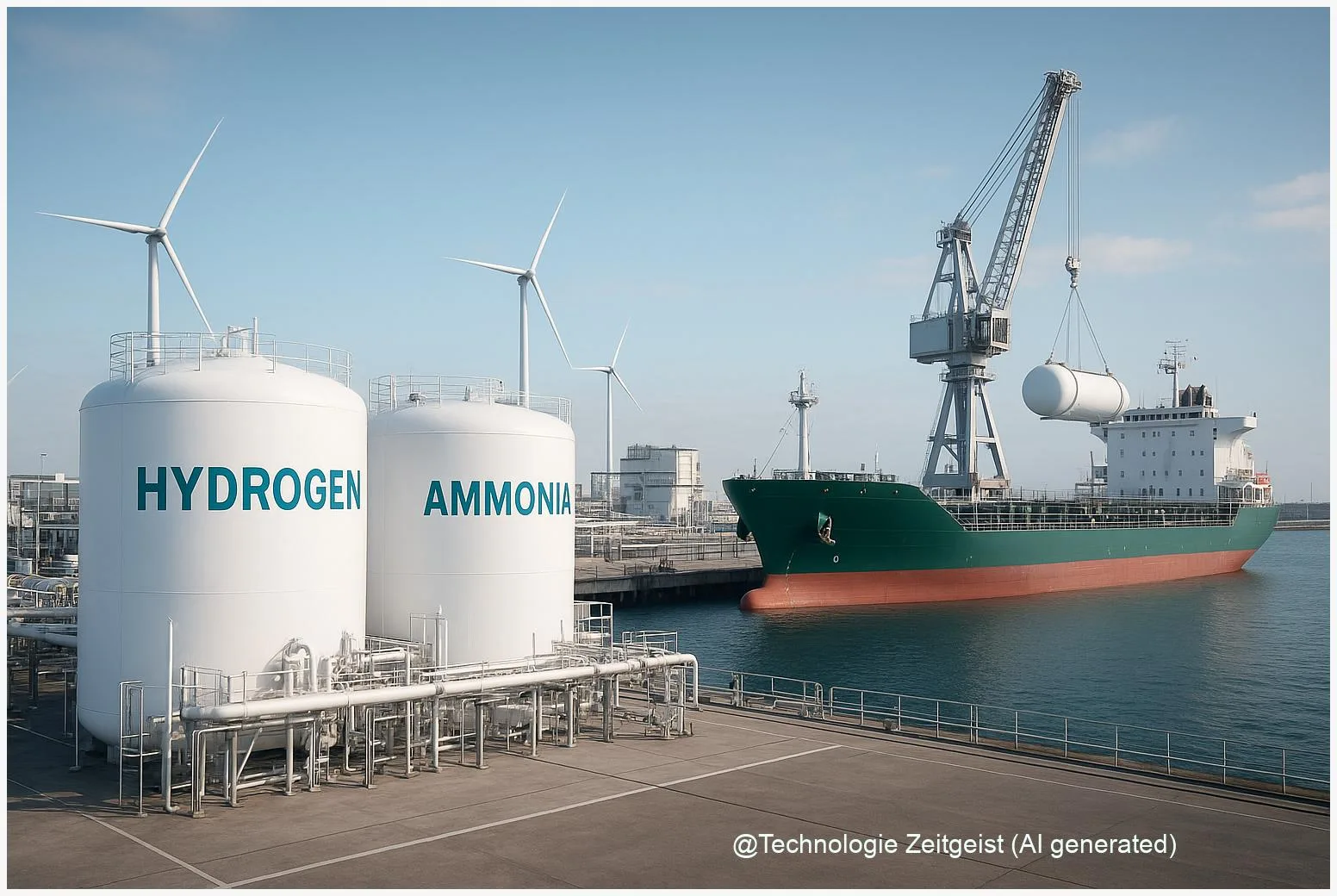
A new transatlantic supply of low-carbon fuels could help heavy industry cut emissions, but logistics and costs will decide how fast that happens. This article looks at how green hydrogen imports Europe from the United States might work in practice, which transport methods industry prefers, and where losses, rules and ports will matter most. The core takeaway: supply can be built, but the path from US renewable electricity to usable hydrogen in European factories is long and technically specific.
Introduction
Decarbonising steel, chemicals and heavy transport needs fuels that release little or no CO2 when used. Green hydrogen — hydrogen produced by splitting water with renewable electricity — is one such fuel. Producing it close to sunny or windy sites often costs less than producing it in regions with higher electricity prices, so trade routes are emerging that link low-cost production to high-demand industrial regions.
For European industry, importing hydrogen or hydrogen carriers from the United States raises practical questions: how is hydrogen turned into a form that survives a long sea voyage, how much energy is lost in the process, and what does the delivered price look like compared with local alternatives? The answers determine whether imports complement domestic efforts or remain niche. This introduction frames the technical steps and the choices industrial buyers face when evaluating transatlantic supply.
How green hydrogen supply chains work
Green hydrogen production starts with electrolysis. An electrolyser uses electricity to split water into hydrogen and oxygen. Electrolysers are modular devices; think of them as large industrial chargers that convert electricity into a gas that stores energy chemically. The efficiency of electrolysis varies with technology and scale, and that affects cost: a less efficient system needs more renewable power per kilogram of hydrogen.
Once produced, hydrogen can move to customers in three main forms: as compressed gas, as liquid hydrogen (LH2), or chemically bound inside another molecule such as ammonia (NH3) or a liquid organic hydrogen carrier (LOHC). Each choice shifts costs and energy losses. Compressing and piping hydrogen works well over short distances and where pipelines exist, but a transatlantic sea route requires forms that survive long shipping legs.
“A trade route is not only about fuel at the ship; it is about how many times the energy is converted, stored and reconverted before it reaches a factory.”
Every conversion step consumes energy and adds cost. Liquefying hydrogen requires low temperatures and equipment that uses electricity; shipping liquid hydrogen also means accepting boil-off losses during transit. Converting hydrogen to ammonia requires energy to synthesise and later to crack ammonia back into hydrogen at the destination. These are not just engineering details: they are the factors that make some routes commercially sensible and others not.
Table 1 compares the three broad approaches in simple terms.
| Feature | Description | Value |
|---|---|---|
| Compressed H2 | High-pressure tanks, good for short haul or pipelines | Low range |
| Liquid H2 (LH2) | Cryogenic shipping, direct H2 at destination | Medium range |
| Ammonia | Stable liquid carrier, needs cracking to regain H2 | Long range |
Transport options and green hydrogen imports Europe
When planners discuss green hydrogen imports Europe, they mean not only the hydrogen molecule but the whole chain from generation to delivery. For a transatlantic corridor the two most discussed carriers are ammonia and liquid hydrogen. Ammonia can be shipped in existing chemical carriers and stored as a liquid at modest pressure, which cuts handling complexity. Liquid hydrogen keeps hydrogen in its original form but demands specialised ships, insulated tanks and careful boil-off management.
Trade models and industry tests published by organisations such as the International Energy Agency (IEA) and maritime engineering groups show a trade-off: ammonia benefits from established logistics and lower short-term transport cost, but reconverting it to hydrogen consumes additional energy and adds capital at the receiving end. Liquid hydrogen avoids the chemical reconversion step but requires more energy up-front for liquefaction and more specialised shipping technology.
For European industry the choice often comes down to customer needs and port capabilities. A chemical plant that can use ammonia directly will favour ammonia shipments; a steelworks that needs pure hydrogen will value LH2 despite higher shipping complexity. Port infrastructure—tank farms, cracking facilities, and pipeline connections—changes the economics dramatically. Ports that add conversion facilities reduce the apparent cost gap between carriers because they lower the number of steps after landing.
Several technical studies from 2023 give empirical numbers for the main losses and energy steps (these studies are therefore more than two years old). They underline that transport choice depends on which losses are counted in the buyer’s price and who pays for port upgrades. In short: raw production cost is only part of the delivered price; shipping mode, conversion losses and local infrastructure can add materially to the final cost per usable kilogram of hydrogen.
Business cases and industrial uses
For industry, hydrogen is valuable where electrification is impractical or would require massive changes to plant design. In steelmaking, hydrogen replaces coke as a reducing agent; in fertiliser production it is already a feedstock; in heavy transport it can serve as fuel or be converted into synthetic fuels. The economic question is straightforward: does imported hydrogen become cheaper than alternatives such as local green hydrogen, hydrogen from natural gas with CO2 capture, or continued fossil fuels plus emissions allowances?
Buyers evaluate delivered cost, reliability, and the carbon accounting rules that define whether an imported kilogram counts as “green” under regulation or corporate standards. Contracts typically specify the locus of responsibility: at what point the buyer takes ownership, who covers losses in shipping, and which guarantees of origin apply. These legal and accounting details affect whether a purchase helps a company meet climate targets.
Practical examples illustrate the range: a chemicals firm that needs steady, high-purity hydrogen may prefer a long-term LH2 supply with a fixed price, because the conversion steps are fewer once the cargo is discharged. A fertiliser producer may accept ammonia imports because it can use ammonia directly and avoid cracking. This diversity of needs creates a market where both carriers can coexist, provided ports and logistics scale to support them.
Cost projections from industry analyses and agency reports indicate that competitiveness depends on learning rates for electrolysers and electrolyser capacity factors. If electrolyser costs fall and US renewable power remains relatively cheap, long-distance supply can be competitive for specific industrial customers by the 2030s under favourable assumptions — though outcomes vary by plant type and regulatory treatment.
Risks, policy levers and realistic timelines
Scaling a transatlantic hydrogen corridor faces technical, regulatory and commercial risks. Technically, safe handling standards for new carrier types and the availability of purpose-built ships and tanks matter. Commercially, buyers require long-term contracts to justify port upgrades and cracking plants. Regulators must agree on rules for greenhouse-gas accounting so that imports counted as low-carbon actually reflect low lifecycle emissions.
Policy levers that accelerate supply include clear certification for renewable electricity used to produce the hydrogen, co-financing or guarantees for port infrastructure, and targeted procurement by public-sector buyers to create an initial demand pool. These levers reduce the risk that private buyers face and speed up investment decisions for conversion plants and specialised shipping fleets.
Timelines are pragmatic rather than optimistic. Pilot shipments and demonstration projects have already taken place, and several port upgrade plans are under study. Widespread commercial flows sufficient to affect heavy-industry decarbonisation at large scale are most likely in the 2030s, assuming policy support and steady falls in renewable-plus-electrolyser costs. If price declines stall or permitting delays persist, the scale-up will be slower and imports will remain a complement to domestic supply rather than the backbone of decarbonisation.
Where this matters to a reader: decisions about local plant upgrades, investments in electrification, or choices in procurement will be shaped by whether a reliable and affordable transatlantic supply emerges within a decade. For many industrial managers the safe approach is to plan modularly: prepare to receive different carriers and sign contracts that allow conversion as market conditions clarify.
Conclusion
Shipping low-carbon fuels from the United States to Europe can lower emissions where local options are costly or limited, but it is not a simple commodity trade. The choice of carrier — ammonia, liquid hydrogen or other forms — shapes energy losses, capital needs at ports, and the business case for buyers. Infrastructure decisions at a handful of ports will determine whether imports scale economically, and regulation on certification will determine whether imports count toward climate targets. For European industry, transatlantic supply is a realistic addition to domestic measures, but its impact depends on coordinated investment, transparent carbon accounting and contractual structures that share conversion risks.
Share your thoughts and practical experiences with industrial hydrogen procurement — conversation helps clarify the practical choices ahead.



Leave a Reply