
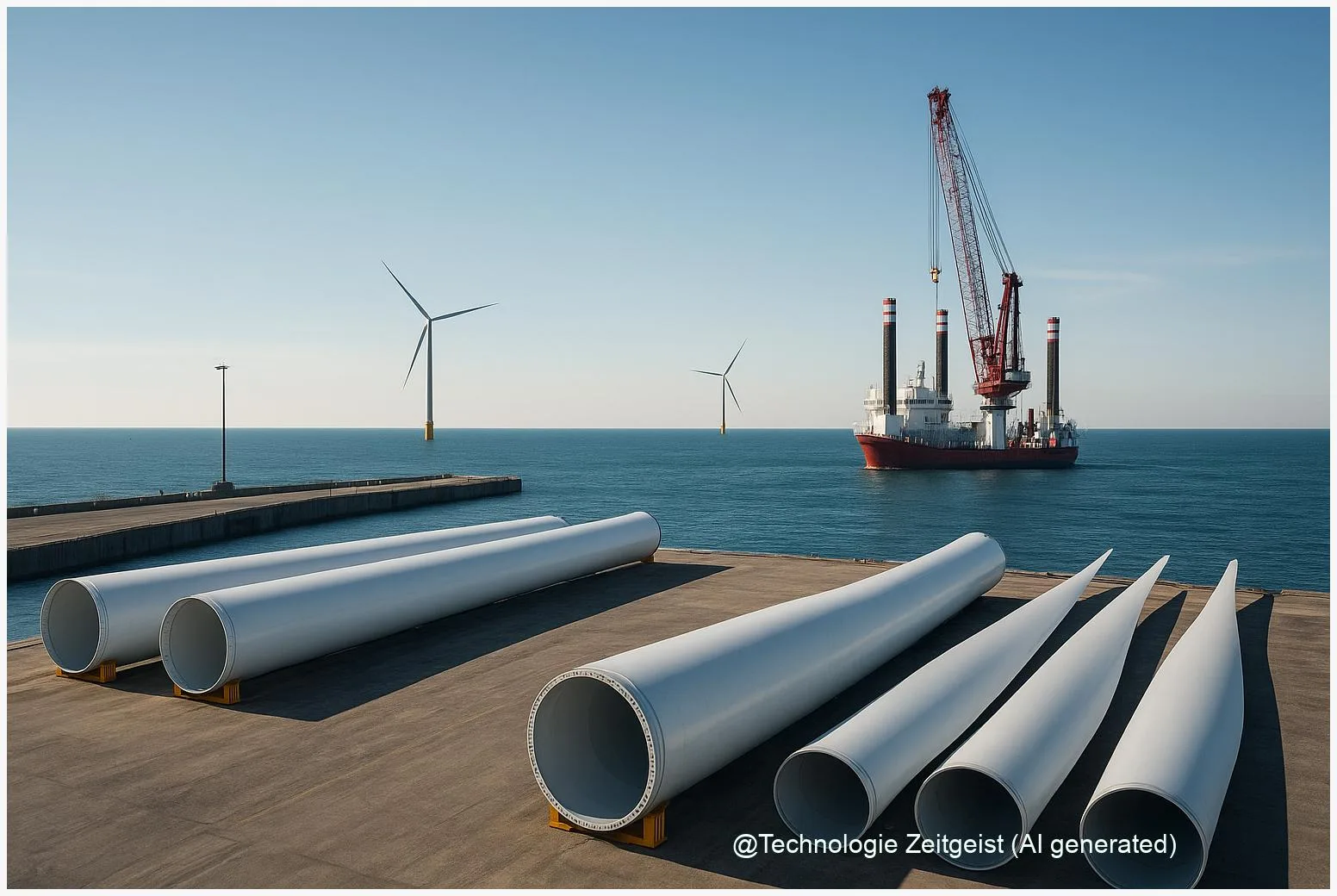
Four northeastern states are asking federal authorities to lift a pause on offshore wind projects that halted construction and deliveries just as several farms began feeding power to the grid. The governors argue the suspension threatens jobs, near-term electricity supplies, and long‑term planning, while federal agencies cite classified national‑security concerns. This article explains what is paused, why the states want work restored, and what a practical path toward reopening construction could look like.
Introduction
The immediate problem for residents and planners is simple: projects that were building turbines and, in at least one case, already supplying power were ordered paused by the federal government for a preliminary review of national‑security concerns. For state leaders, that pause looks like an abrupt threat to local work, supply contracts and winter energy plans. For federal agencies, the pause reflects classified safety assessments that they say require careful review before activities continue.
Offshore wind is not a single technology but a chain of decisions — leases, foundations, cables, turbines, and grid connections — that takes years and large investments. When work stops midstream, costs and practical risks mount quickly. The next sections explain the underlying facts, show concrete effects on jobs and the grid, unpack the technical and legal disputes, and outline realistic routes toward restoring construction while keeping safety under review.
Why states want to restore offshore wind projects
Several governors from northeastern states have formally asked federal officials to lift stop‑work orders on a set of large offshore projects. Their request rests on three related claims: these projects already passed extensive environmental and agency reviews, at least one developer had begun delivering electricity, and abrupt suspension risks jobs and higher near‑term power costs.
The federal pause affects five major projects that together represent a significant portion of the East Coast pipeline of utility‑scale wind capacity. State officials cite thousands of construction and support jobs tied to marine work, ports and component supply chains, and short‑term consumer benefits when additional low‑cost generation reaches the grid.
State leaders argue that an administratively sudden halt to ongoing construction should be justified by clear, verifiable evidence — or work should continue while a targeted review proceeds.
Below is a compact view of the projects commonly named in public statements and reporting. Capacities are rounded and reflect publicly reported project targets rather than final operational figures.
| Project | Developer | Approx. capacity |
|---|---|---|
| Vineyard Wind | Avangrid / CIP (joint venture) | ~572 MW |
| Revolution Wind | Ørsted | ~704 MW |
| Empire Wind | Equinor | ~700 MW |
| Sunrise Wind | Ørsted | ~880 MW |
| Coastal Virginia Offshore Wind (CVOW) | Dominion Energy | ~2,000–2,500 MW |
State requests to lift the pause are not merely political statements. They typically ask for either a classified briefing for state security officials or an evidence‑based explanation that would allow work to continue under specific mitigations. From a practical perspective, states seek time‑limited agreements that preserve construction continuity for components that pose low immediate risk, while higher‑risk activities are reviewed.
How the pause affects supply, jobs and the grid
Stopping construction has direct, near‑term consequences. Port operations may idle, specialized installation vessels face cancellation or rescheduling costs, and thousands of workers can lose income during critical construction seasons. Developers and state administrations cite concrete economic figures — payroll totals, subcontractor bookings and projected regional economic impact — that depend on continued activity.
Beyond local jobs, there are immediate effects on energy supply. At least one project had begun to supply electricity; when generation is paused at the point of construction or cable work, planned deliveries and contractual commitments can be disrupted. Regional grid operators plan for new capacity months to years in advance. A sudden reduction in expected supply can raise short‑term wholesale prices and complicate winter reliability planning.
For households and businesses that benefit from lower wholesale prices when additional wind enters the market, the pause can translate into modest but visible cost effects during peak demand periods. Officials have published short‑term savings estimates that depend on the assumption the farms would have been operational in a specific winter window; those figures are useful as indicators but remain sensitive to market and weather variability.
At the systems level, grid operators also worry about planning certainty. Transmission upgrades, storage scheduling and balancing reserves are coordinated with expected offshore output. Unplanned delays force operators to reallocate resources and can increase reliance on backup fossil generation in winter peaks — an outcome states and regulators generally want to avoid.
The technical and legal tensions behind the pause
The federal pause was justified publicly with references to classified national‑security assessments. In practical terms, authorities most often point to possible interference with coastal radar and other detection systems — technical issues that can sometimes be measured and mitigated, but which in rare cases may require operational constraints or equipment changes.
Radar interference refers to unwanted signals or reflections that make it harder to detect and track objects at sea or in the air. Mitigations used in other contexts include radar software filters, adjusted scanning modes, or changes to turbine layout and lighting. When a concern is classified, independent public evaluation is limited, which raises a transparency problem: states and developers cannot easily test or rebut the underlying technical claim in public.
Legally, the pause opens two intertwined debates. One is administrative: whether the Department of the Interior and its agencies followed required procedures and offered due notice before stopping work. The other is procedural secrecy: courts and states can challenge an administrative pause, but classified evidence complicates litigation. Past cases have shown courts may order resumption of work when procedural errors are found, yet the classified‑evidence issue remains an obstacle to full public scrutiny.
There is also a middle ground: interagency technical work that pairs classified briefings for cleared state and industry representatives with parallel public analyses of mitigations. Such an approach preserves sensitive information while allowing independent technical review of possible fixes and timelines. The practical question is whether classified findings identify problems that existing mitigations cannot solve; public reporting to date does not disclose that level of detail.
What could follow — scenarios and practical options
Several realistic scenarios could follow the pause, ranging from a rapid, evidence‑based lift of stop orders to a lengthy suspension that forces renegotiation of contracts. A constrained, procedural path that balances safety and continuity is most likely to limit economic damage: it would include a classified briefing to state officials, targeted technical tests, and interim work‑allowances for low‑risk activities.
Practically, the steps look like this: first, federal agencies offer a restricted briefing to cleared state and developer representatives so they can assess whether the classified concern is novel or already addressed by previous mitigation plans. Second, an interagency technical team would test specific radar and detection interactions at representative sites and publish a public, redacted summary of findings and recommended mitigations. Third, regulators and courts could allow narrow exemptions — for example, permitting cable landings and onshore construction to continue — while higher‑risk marine operations remain under review.
From a policy perspective, this scenario reduces economic harm while preserving a safety‑first posture. If tests show the problem is soluble with software or operational changes, most work can resume quickly. If the classified assessment identifies a fundamental conflict, then a longer pause or redesign could be necessary; that outcome would require new contracting and compensation plans for suppliers and workers.
For states and local stakeholders, the immediate actions that preserve options are clear: secure access to classified briefings through appropriate clearance channels, document economic harm and contingency needs, and coordinate with grid operators on short‑term reliability plans. These steps keep pressure on agencies to move quickly while preserving legal and technical remedies.
Conclusion
The dispute around the pause of offshore wind projects is a conflict between two legitimate public goods: protecting national security and maintaining predictable energy and economic planning. States pressing to restore work emphasize the economic and grid consequences of an abrupt stop; federal agencies emphasize classified findings that they judge necessary to assess before construction continues. A practicable compromise is available: a fast, structured process that gives cleared state and industry representatives access to classified briefings, runs targeted technical tests, and permits low‑risk activities to continue under clear conditions. That path would limit harm while ensuring safety concerns are reviewed rather than assumed.
Join the conversation: share this article or leave a note on how energy planning in your region could be made more transparent and resilient.



Leave a Reply