
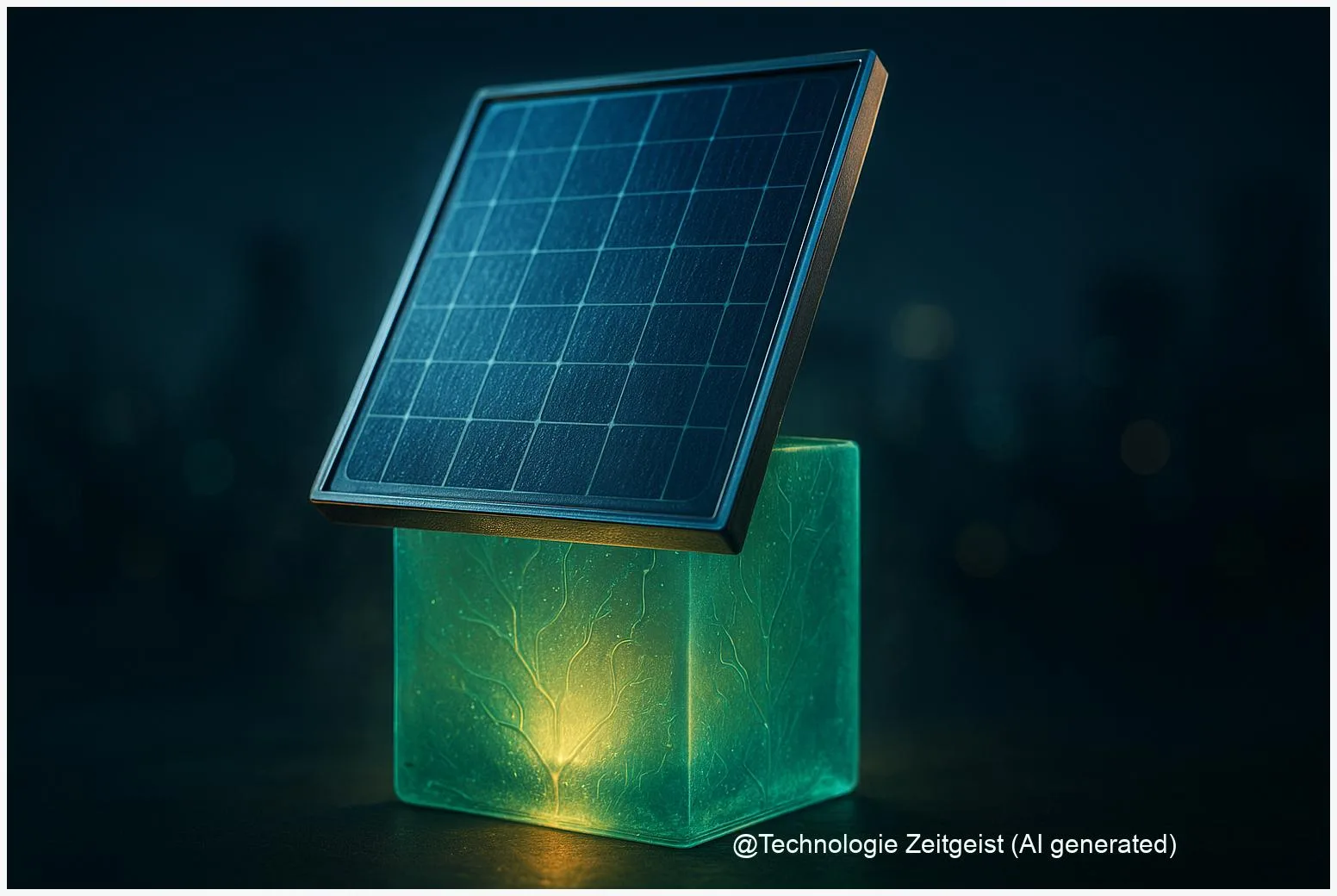
A $500 million private funding package to install rooftop solar and batteries is not just a corporate deal — it is an example of how distributed energy can scale without waiting for government programs. The term distributed energy describes small, local generators and storage — rooftop solar panels and home batteries — that sit at homes and businesses. That local scale changes how power is paid for, who manages the grid, and how resilient neighbourhoods can be during outages.
Introduction
Many readers have seen solar panels on a neighbour’s roof or noticed batteries advertised for home backup. What matters now is who pays for those systems and how they are coordinated. A recent $500 million joint venture announced by established energy investors to fund tens of thousands of home systems shows a clear shift: private capital is moving fast to finance rooftop solar and batteries at scale. That changes the economics for installers and utilities, and it influences which technologies — like virtual power plants that link many homes — become widely available.
This introduction sets the scene: the technology is familiar, but the business and system effects are new. Understanding that difference helps explain why European policymakers and households should watch such deals closely, even if the original transaction is based in the United States.
Distributed energy: what it is and why rooftops matter
Distributed energy refers to electricity generation and storage located close to where energy is used, rather than at large central power plants. Typical examples are rooftop solar panels and small batteries installed at homes or businesses. These systems produce or store electricity at the point of consumption, which reduces transmission needs and can lower local congestion on distribution networks.
A related idea is a virtual power plant (VPP). A VPP is a digital layer that connects many small systems so they act together like a single power plant. When hundreds or thousands of rooftop-battery systems are coordinated, they can shift demand away from peak hours, provide frequency control to a grid operator, or supply power locally during outages. For many grid services, a VPP can be cheaper than building new large plants because it uses existing distributed assets.
Small systems become powerful when they are coordinated: many household batteries together can replace a medium-sized peaking plant for some tasks.
Three practical consequences follow. First, homeowners who install panels and batteries can lower their electricity bills and gain backup power. Second, aggregators and utilities gain a new resource to manage the grid. Third, the finance model — whether customers buy, lease, or subscribe — determines who benefits and who retains control over the device and the data.
How rooftop solar and battery offers actually get built
Deploying rooftop systems at scale requires three ingredients: hardware (panels, inverters, batteries), installation capacity (local crews and logistics), and capital to pay upfront costs. That last piece is the focus of the $500 million example: investors provide funds that installers and platform companies use to buy and install systems, then recover that capital through long-term customer payments or energy services.
The recent joint venture model offers structured equity to finance a large portfolio of residential systems. In public announcements, the partners said the funding target was about $500 million to enable more than 300 MW of distributed capacity and support roughly 40,000 home power systems. Those headline numbers imply an average system size in the mid single-digit kilowatt range per home, which aligns with typical residential PV-plus-battery packages. The primary source for this transaction is the investor announcement and follow-up coverage by industry press and trade magazines (see Sources).
Why does private capital now fund such projects? Interest rates and investor expectations have changed since the era of abundant cheap project finance. Institutional investors now treat distributed energy as infrastructure: predictable cash flows from many contracts add up to a stable return profile. For providers, a large capital pool reduces customer costs by spreading procurement and installation overheads. For customers, offers vary: some pay nothing upfront in exchange for a long-term service contract, others buy the system outright, and some use loans.
If you want to see how national deployment looks in practice, our reporting on Germany’s recent solar expansion gives context about manufacturing, permitting and grid impacts; see the TechZeitGeist piece on Germany’s 2025 additions for regional perspective. Also, manufacturers’ material choices affect costs and scaling — a recent site feature on metallization in solar panels explores one such supply-side constraint.
Opportunities and practical risks
The upside is tangible. Coordinated home systems can reduce peak demand, lowering the need for expensive peaking plants and easing network stress. In emergencies, batteries at homes can supply critical loads and keep telecoms or medical devices running. For local economies, more rooftop work creates installers’ jobs and a secondary market for used batteries or recycling.
Yet several risks and tensions matter for policy and households. First, equity: private financing often targets homeowners with suitable roofs and credit access, leaving renters and lower-income households behind. Second, distribution system operation needs to adapt: many bi-directional flows from rooftop systems require updated interconnection rules and monitoring to avoid voltage or congestion problems. Third, business-model opacity can be an issue: long contracts for energy services need clear terms on maintenance, data rights, and buyout options. Regulators in many countries are still adjusting to how to treat aggregated distributed resources in markets and network planning.
There are also technical trade-offs. A VPP works well for short-term balancing and peak shaving, but longer-duration storage for multi-day wind lulls still requires larger-scale or different battery chemistries. Supply-chain constraints — for example, availability of inverters or certain battery materials — can slow rapid rollout and push prices up temporarily. Monitoring, cybersecurity and firmware updates create ongoing operational responsibilities for providers; failures here can reduce the reliability that the business case assumes.
Where this trend could lead in the next five years
If private investment continues, a few scenarios are likely. First, more homeowners will be offered bundled products: solar, battery, and smart controls combined with a subscription or a finance plan. Those bundles make the service seamless, but they also centralise control of many distributed assets in the hands of a few aggregators. Second, virtual power plants will grow in importance. A well-constructed VPP can bid resources into wholesale markets or local flexibility tenders, increasing the revenues available to households who participate.
Third, electric vehicles will become a complementary asset. Shared charging and vehicle-to-grid services could add substantial flexibility to a VPP, because EV batteries are large and can be managed to charge when renewables are abundant. For grid planners, that possibility changes long-term investment decisions: instead of building more wires or generation, the system can rely more on flexible loads and distributed storage.
For individual readers, the implication is practical: consider not only the upfront cost of a home system but also the contract terms and data access. Ask whether the provider allows you to opt into grid services and whether you keep enough backup capacity for outages. For policymakers, the focus should be fair access, transparent consumer protections, and clear rules that allow aggregators to participate in markets while ensuring network stability.
Conclusion
The $500 million rooftop financing push shows how distributed energy can expand quickly when investors treat residential solar and batteries as deployable infrastructure. The core technology — panels, inverters, batteries, and smart software — is familiar; what changes is who pays, who operates, and how small systems are coordinated to provide grid services. The balance of benefits will depend on contract design, regulation, and whether deployment reaches a broad socioeconomic mix of households. In the coming years, expect more offers that bundle hardware, software and grid services; the outcome will be shaped by policy choices on consumer protection, market access for aggregators, and rules for distribution networks.
Join the conversation: share your experience with rooftop systems or questions about local grid impacts — and pass this article to someone considering a solar offer.

Leave a Reply