
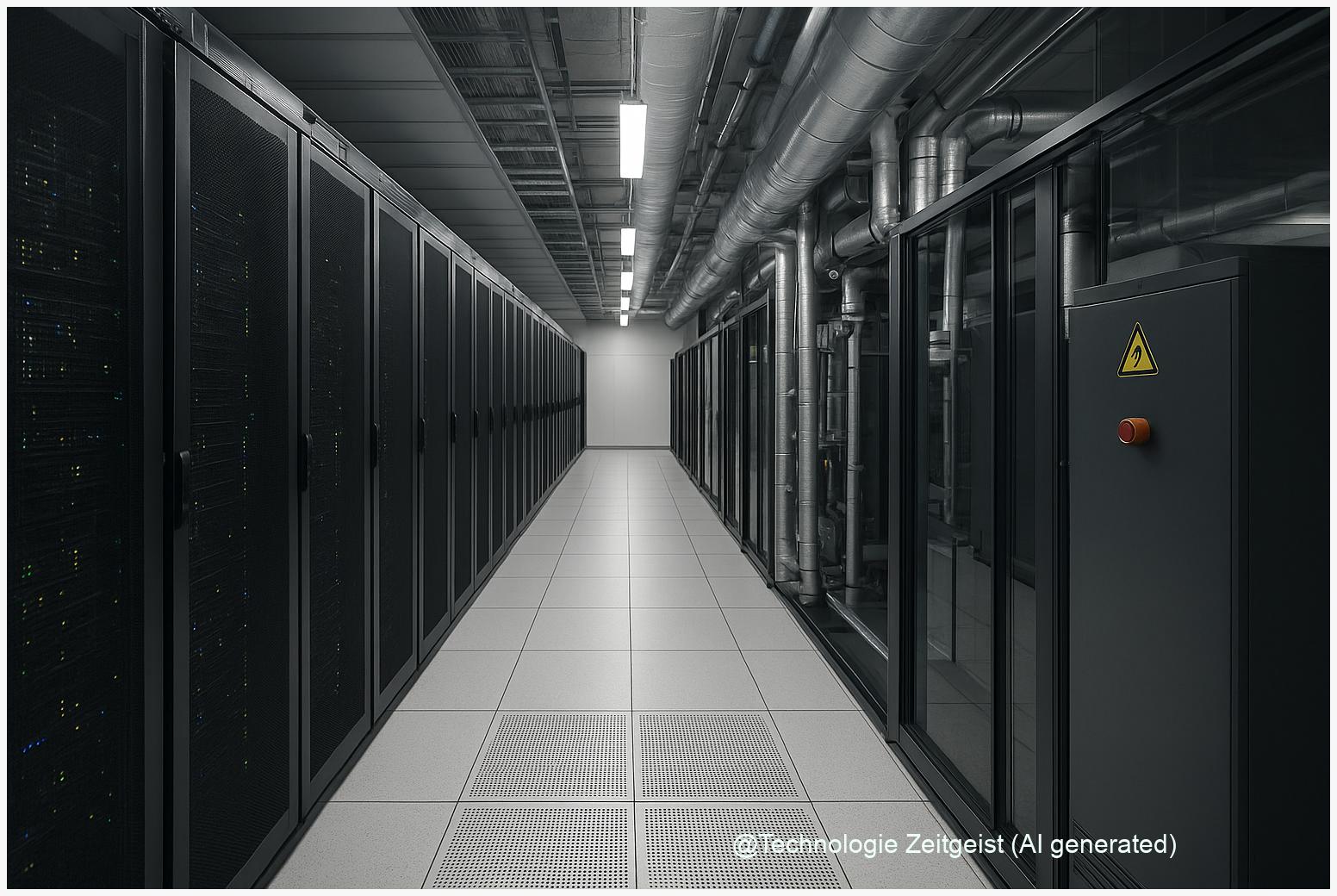
Cooling is often the single biggest non‑IT electricity cost in a server facility, and smarter data center cooling can cut that load significantly. New approaches — from smarter air management and free cooling to liquid systems and heat reuse — can lower overall energy consumption and operating bills while enabling denser computing hardware. This article shows practical trade‑offs and why operators, customers and local communities should pay attention to cooling choices.
Introduction
Every server produces heat when it runs: the processor, memory and storage all convert electrical energy into warmth. That warmth must be removed to keep equipment reliable, and the systems that remove it consume sizable amounts of electricity themselves. For a typical facility the energy used for cooling can be roughly a third to a half of total site power, depending on climate and design. That makes cooling a practical lever for cutting energy use, lowering costs and reducing climate impact.
The most commonly quoted efficiency metric is PUE, short for power usage effectiveness. It is a ratio: total facility energy divided by the energy used by the IT equipment. A PUE of 1.2 means roughly 20 % extra energy for power and cooling overheads beyond the IT load. Because PUE is a ratio, it does not measure computing work per kilowatt‑hour; still, it is useful for comparing infrastructure efficiency and the impact of cooling choices over time.
Data center cooling: the basics and key metrics
Cooling removes heat and maintains safe operating temperatures. The simplest approach is forced‑air cooling: cool air is supplied into racks and warm air is expelled and conditioned. More advanced approaches include chilled‑water loops, direct‑to‑chip liquid cooling and total immersion systems. Each method has different energy characteristics and implications for maintenance, water use and rack density.
PUE is helpful to track progress, but must be paired with absolute energy (kWh) and workload‑based metrics to show the real efficiency of computing.
To give a practical sense of scale, industry benchmarks in recent years show clear differences between facility types. Hyperscale cloud facilities often report PUEs close to 1.08–1.15, while modern colocation and enterprise sites typically fall in the 1.20–1.60 range. Older or small sites can measure above 1.60. These ranges reflect design choices, local climate and the level of investment in efficiency improvements.
If a site’s PUE improves from 1.5 to 1.3, that represents a substantial reduction in infrastructure energy relative to the IT load — the saved energy can be tens to hundreds of megawatt‑hours per year for a medium‑sized data center.
If numbers are presented from older studies, note that climate and technology context matters: some foundational reports on cooling and metrics date from the 2010s and early 2020s, and they remain useful for principles even if specific benchmarks evolve. For example, The Green Grid’s guidance and ASHRAE’s thermal recommendations are older but still form the technical basis for safe operating ranges.
If a compact comparison helps, the table below summarizes typical PUE bands by facility type and what they imply for cooling effort.
| Facility type | Typical PUE | Cooling implication |
|---|---|---|
| Hyperscale cloud | 1.08–1.15 | Extensive free cooling, optimized airflows, heat reuse pilots |
| Modern colocation / enterprise | 1.20–1.60 | Mixed air and water cooling, incremental retrofits possible |
| Legacy or older sites | >1.60 | Often heavy reliance on chilled plant and inefficient airflow |
Cooling technologies that cut energy
Three groups of approaches tend to deliver the largest energy savings: better use of outside air, targeted liquid cooling, and recovering waste heat. Free cooling — also called economizer cooling — uses cold outside air or cold external water instead of mechanical chillers when conditions allow. In cool climates this can reduce cooling energy substantially and has been a main driver behind low PUEs at many hyperscale sites.
Liquid cooling moves heat more efficiently than air because liquids carry more thermal energy per volume. Direct‑to‑chip cooling circulates coolant close to hot components, reducing the load on room‑level chillers. Immersion cooling submerges servers in dielectric fluid; it is compact and can enable much higher power per rack. Industry pilots report PUE improvements from liquid systems that vary widely — roughly from a few hundredths to a few tenths in absolute PUE points — depending on how they integrate with the rest of the infrastructure.
Heat reuse is a different axis: instead of only rejecting warmed coolant to the atmosphere, some sites transfer that energy into heating systems for nearby buildings or industrial processes. When local heat markets exist, this can turn waste into value and lower net emissions. Such projects require local infrastructure and long‑term contracts, so they suit places with district heating or large nearby energy users.
There are trade‑offs. Free cooling depends on climate and adds complexity in filtration and humidity control. Liquid cooling often reduces the need for large chillers but raises questions around leak management, fluid handling and serviceability. Systems that reuse heat must balance temperature levels; many servers produce heat at temperatures that require heat pumps to reach useful heating temperatures, which adds equipment and cost.
Across many studies the cooling share of site energy is commonly given as roughly 30 %–50 % of total facility power, though in cold climates the share can fall below 20 %. These broad ranges come from multiple industry reports and a major IEA analysis from 2021; that report is more than two years old, but it still provides a useful benchmark for relative shares and the role of cooling in overall data center energy use.
Practical trade‑offs and real examples
Many large cloud operators publish efficiency data and pilot results. For example, public reporting from major providers in 2023–2024 shows consistent investment in free cooling and heat recovery programs, and some have begun controlled commercial deployments of liquid cooling for AI‑focused racks. These moves are driven by rising rack power densities and the fact that air cooling becomes inefficient and bulky as per‑rack power increases.
Consider a mid‑sized colocation operator deciding between an air‑only retrofit and selective liquid cooling for a high‑density hall. An air retrofit is usually cheaper up front: better aisle containment, raised‑floor sealing and modern fans can improve PUE immediately. Liquid cooling requires more capital, but it can support higher rack power and may lower lifetime operating costs when electricity prices are high. A careful pilot, with meter‑level data collection, helps reveal real savings and operational trade‑offs.
Water use is also a concern. Some free‑cooling and evaporative systems reduce electricity but increase water consumption, which matters in water‑stressed regions. Choosing between water, electricity and capital costs is a local decision that should be informed by long‑term climate and resource forecasts.
Another practical point is reporting. PUE is useful to show trends, but providers and customers increasingly ask for absolute electricity usage in kWh and workload‑related metrics (for example, energy per inference or per virtual machine hour). That avoids misleading comparisons where a low PUE hides a rapidly growing absolute energy footprint driven by more compute.
Finally, retrofits and new builds differ. New sites can be sited for cold climates, connected to district heating, or designed for liquid cooling. Existing sites often respond best to incremental improvements: airflow fixes, variable‑speed drives for pumps and fans, and gradual trials of rack‑level liquid systems.
Where cooling is headed next
Two trends will shape cooling choices in the coming years. First, continued demand for AI and high‑performance computing increases rack power densities, pushing many operators toward liquid cooling or immersion systems to manage heat in compact footprints. Second, tighter municipal climate and energy policies are creating more opportunities and constraints for waste‑heat reuse and for measuring lifecycle emissions.
Looking at systems, hybrid approaches are likely to become common: free cooling where climate permits, liquid cooling for the densest racks, and smarter controls that shift cooling mode with hourly electricity prices and weather. Controls and measurement matter: fine‑grained metering enables dynamic decisions and a clearer understanding of trade‑offs between electricity, water and capital expense.
Risks include over‑optimistic claims based on partial metrics, and lock‑in to cooling approaches that are hard to change later. For cities and regions, a data center that exports heat into a district network can reduce local emissions, but it requires long horizons and contractual certainty; otherwise, the infrastructure investment may not pay off.
For companies choosing where to host workloads, questions to ask providers will become more specific: request annualized PUE with scope definitions, total site electricity in kWh, whether heat is reused and the site’s water‑use strategy. Those details show how a provider manages both environmental impact and operational risk.
Conclusion
Cooling is not a narrow engineering detail; it shapes how much energy a data center uses, how densely it can pack modern servers, and whether waste heat becomes a local resource or a discarded burden. Practical improvements range from low‑cost airflow fixes that lower energy immediately to larger investments in liquid cooling and heat recovery that pay off where rack densities or local heat markets justify them. Tracking both PUE and absolute energy use helps avoid misleading comparisons, and pilots with careful metering remain the most reliable way to judge new cooling technologies.
Join the conversation: share this article or leave a comment if cooling choices have affected your workplace or community.

Leave a Reply