
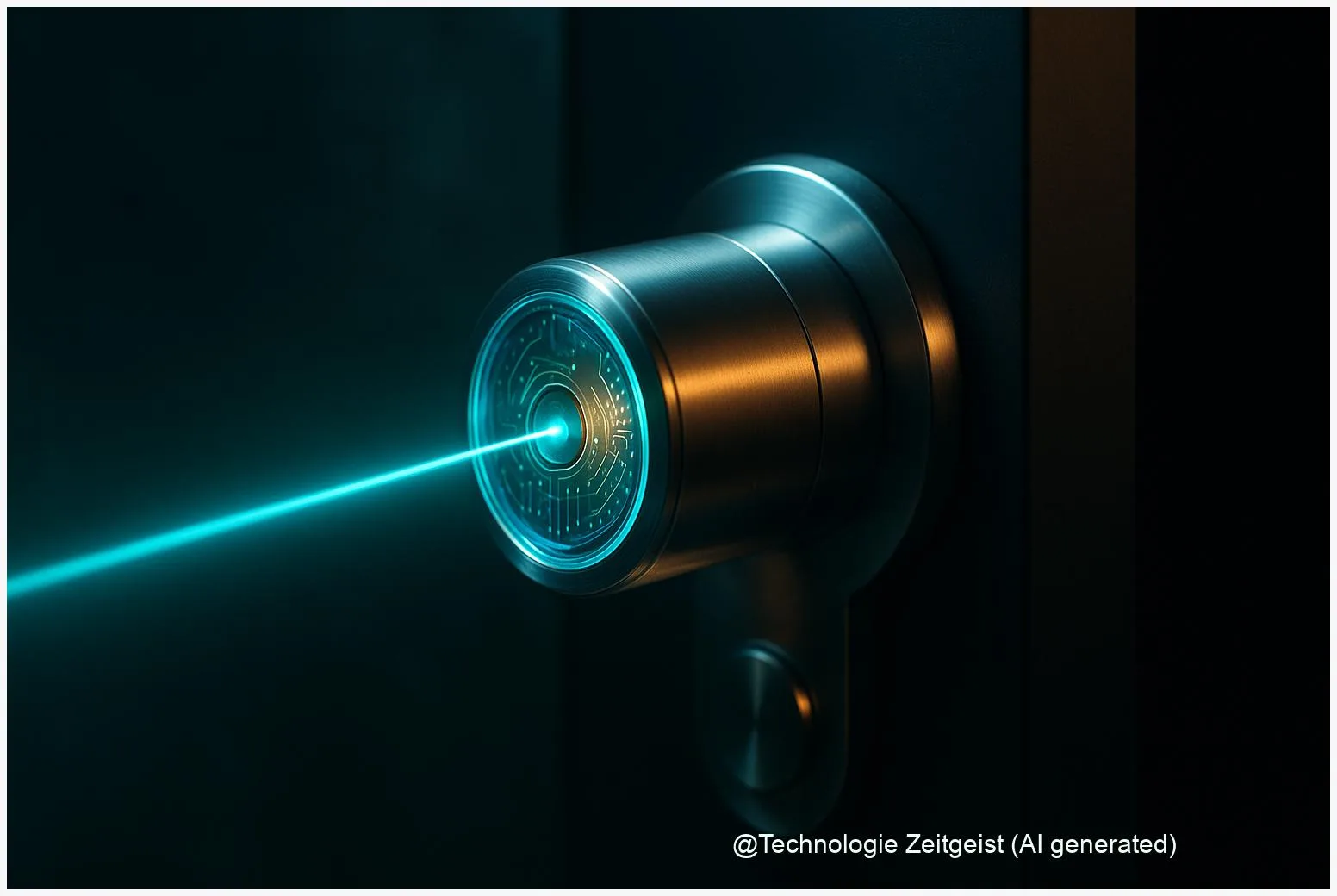
Batteryless smart lock technology promises doors that no longer need routine battery changes. Using focused infrared energy harvesting, some modern locks can draw small amounts of power from a fixed transmitter while remaining operational without frequent recharging. The result is less maintenance for buildings and longer device lifetimes. This article outlines how an infrared approach differs from other batteryless designs and what that means for installation, reliability, and privacy.
Introduction
Most people accept that battery checks are part of owning connected door hardware. The idea that a smart deadbolt might operate without periodic recharging or battery swaps sounds attractive, but it raises practical questions: where does the power come from, how reliable is it, and who pays for the infrastructure? In buildings with many doors the labour and waste from replacing batteries can be significant; manufacturers and system integrators therefore explore ways to supply energy continuously from the environment.
One viable option is infrared (IR) wireless power: a small, wall‑mounted transmitter aims a low‑power IR beam at a receiver inside the lock. Other approaches harvest energy from short interactions (for example, a phone tapping an NFC reader) or use kinetic mechanisms embedded in keys. Each option has different installation needs and user effects. The following sections explain how the infrared approach works, compare alternatives, expose trade‑offs, and point to realistic near‑term scenarios for homes and multi‑unit buildings.
How a batteryless smart lock works
At the core of the infrared approach is a focused optical link that sends energy, not data, from a fixed transmitter to a small receiver inside the lock. The receiver converts the incoming infrared photons into electrical current with a photovoltaic-like element and a power management stage that conditions and stores the energy briefly to drive the lock’s electronics and motor. Because door actuations (turning a deadbolt) need bursts of power but only last a second or two, a modest continuous input can keep a small buffer (a capacitor or tiny rechargeable cell) topped up most of the time.
Focused infrared power supplies small but steady energy so a motorized deadbolt can operate without frequent recharging, provided line‑of‑sight and infrastructure are in place.
Technical components, simplified: the transmitter (mounted near the ceiling or above the frame) contains optics and a diode laser; it must be connected to mains power. The lock contains a receiver panel and simple electronics: a photodiode array or small IR photovoltaic cell, a power‑management IC that boosts and stores energy, and the standard lock controller (microcontroller, radio, and actuator driver). When sufficient energy is stored, the lock performs a turn; when not, it falls back to its onboard reserve or to a mechanical override.
Three common batteryless strategies for doors are shown below. The table emphasises practical differences rather than proprietary claims.
| Approach | When it works | Best for |
|---|---|---|
| Infrared energy harvesting | Line‑of‑sight, continuous transmitter power | Hotels, offices, apartment corridors with fixed infrastructure |
| NFC / inductive harvest | Close contact with a smartphone or tag | Retrofit access with mobile credentials |
| Kinetic / mechanical harvest | Energy produced when key or handle moves | Battery-free retrofit where infrastructure is not possible |
Manufacturers report practical ranges around 10 m line‑of‑sight for IR transmitters and delivered powers on the order of tens to a few hundred milliwatts at the receiver in ideal conditions. Those figures come from company datasheets and press coverage; independent, peer‑reviewed measurements are still limited. The power numbers matter because motor start currents create short, high peaks that the energy buffer and power manager must handle safely and reliably.
Infrared energy harvesting at the door
Infrared wireless‑power systems are now in commercial use with smart locks in some deployments. A visible example is a DIY‑style deadbolt marketed with optional support for infrared charging; the lock includes a small internal battery but can be kept topped up by a dedicated IR transmitter installed near the door. The transmitter must be installed with attention to alignment and unobstructed sightlines.
A key advantage of an IR transmitter is that it can continuously supply small amounts of energy to multiple receivers in its beam area, avoiding the need for frequent manual charging. For buildings with many doors—hotels, student housing, multi‑dwelling units—the labour saved on battery replacement can outweigh the cost of the fixed transmitters. At the same time the system depends on permanent mains power for each transmitter and correct installation to avoid blocked beams from moving furniture or decorations.
Alternative batteryless approaches trade infrastructure for interaction. NFC/inductive harvesting requires the user to present a powered device—typically a smartphone—close to the reader. That is convenient for occasional access and retrofit situations because it needs no fixed transmitter, but it places the interaction burden on the user and may not support autonomous locks that must operate without user devices. Kinetic systems embed a small generator in a key or knob; they work without wiring but produce only the energy available from the mechanical action.
Existing suppliers publish practical guidance: place the transmitter to cover the door’s receiver during typical approach paths, allow for small misalignment, and size the power buffer to handle a motor start. Certification and safety paperwork varies by vendor and region; some companies reference IEC/UL/FCC testing but public, stamped certificates should be requested during procurement. Because much of the available performance data appears in product pages and press articles, buyers should insist on field measurements or a short pilot before committing to large installations.
Practical trade-offs and risks
No power architecture is without trade‑offs. Infrared energy harvesting reduces battery waste and service calls, but it brings new dependencies. The transmitter is infrastructure that must stay powered and serviced; if a transmitter fails or is unplugged many doors can lose their primary energy source simultaneously. That makes robust fallback modes essential: local reserve energy for a few actuations, mechanical override options, and a clear maintenance alarm path.
Line‑of‑sight can be a practical limitation. Doors in narrow corridors or closets usually work well, but heavy decorations, an open moving van, or even seasonal plants can intermittently block the beam. Installers can mitigate this risk by placing transmitters slightly offset from the frame or by using multiple transmitters in larger spaces, but that raises cost and installation complexity.
Security and privacy implications are generally modest from a pure energy‑transfer perspective: an IR beam supplies power but not credentials. Still, system integrators must ensure that the lock’s authentication and radio stack remain secure and that the power link itself cannot be used to infer occupancy patterns when combined with other data. Operational procedures must include incident response for transmitter failure and clear user guidance for manual entry in emergencies.
Regulatory and safety controls for directed optical power differ between countries. Vendors sometimes cite approvals; procurement teams should verify certificates and ask for measured irradiance at receiver locations. Finally, independent lab validation of delivered power and efficiency remains limited; where possible, request field tests that record the real power profile during locking events rather than relying solely on marketing figures.
Where this technology can go next
Over the next few years expect a few parallel developments. First, IR transmitters and receivers will be refined: better optical coupling, improved power‑management ICs, and smarter buffering that smooths motor peaks will make the solution more robust. Second, hybrid approaches will become common—infrared can supply daily baseline power while a small internal cell handles peaks and short transmitter outages. That reduces the consequences of a transmitter fault while still cutting battery replacements.
Third, installers will simplify deployment. Off‑the‑shelf mount kits, ceiling brackets, and planning tools that simulate beam coverage will cut labour time. For owners, the economic case is clearest where many locks are concentrated and battery logistics are expensive. For single‑family homes the cost and visible hardware of a transmitter may not make sense unless bundled with other building services.
Finally, expect standards and independent test reports to appear. As more vendors ship IR‑capable products and larger pilots run, third‑party labs should publish measured delivered power, efficiency numbers, and safety data. That evidence will make it easier to judge when a batteryless smart lock design is appropriate for a particular site, and to compare IR against NFC or kinetic harvesting on equal technical grounds.
Conclusion
Infrared energy harvesting offers a practical path to doors that rarely need user battery changes, especially in buildings with many similar locks and an ability to install transmitters. It is not a universal remedy: line‑of‑sight requirements, infrastructure costs, and the need for verified safety and performance data mean pilots and measured trials are necessary before large rollouts. For retrofit projects, NFC and kinetic harvesting remain useful alternatives where running new infrastructure is difficult. Approaching the decision with pilot measurements, clear fallback modes, and verified certificates reduces risk and helps determine whether an IR‑based, batteryless smart lock makes sense for a given site.
Share your experience with smart locks and energy harvesting — join the conversation and spread this article if you found it useful.

Leave a Reply