
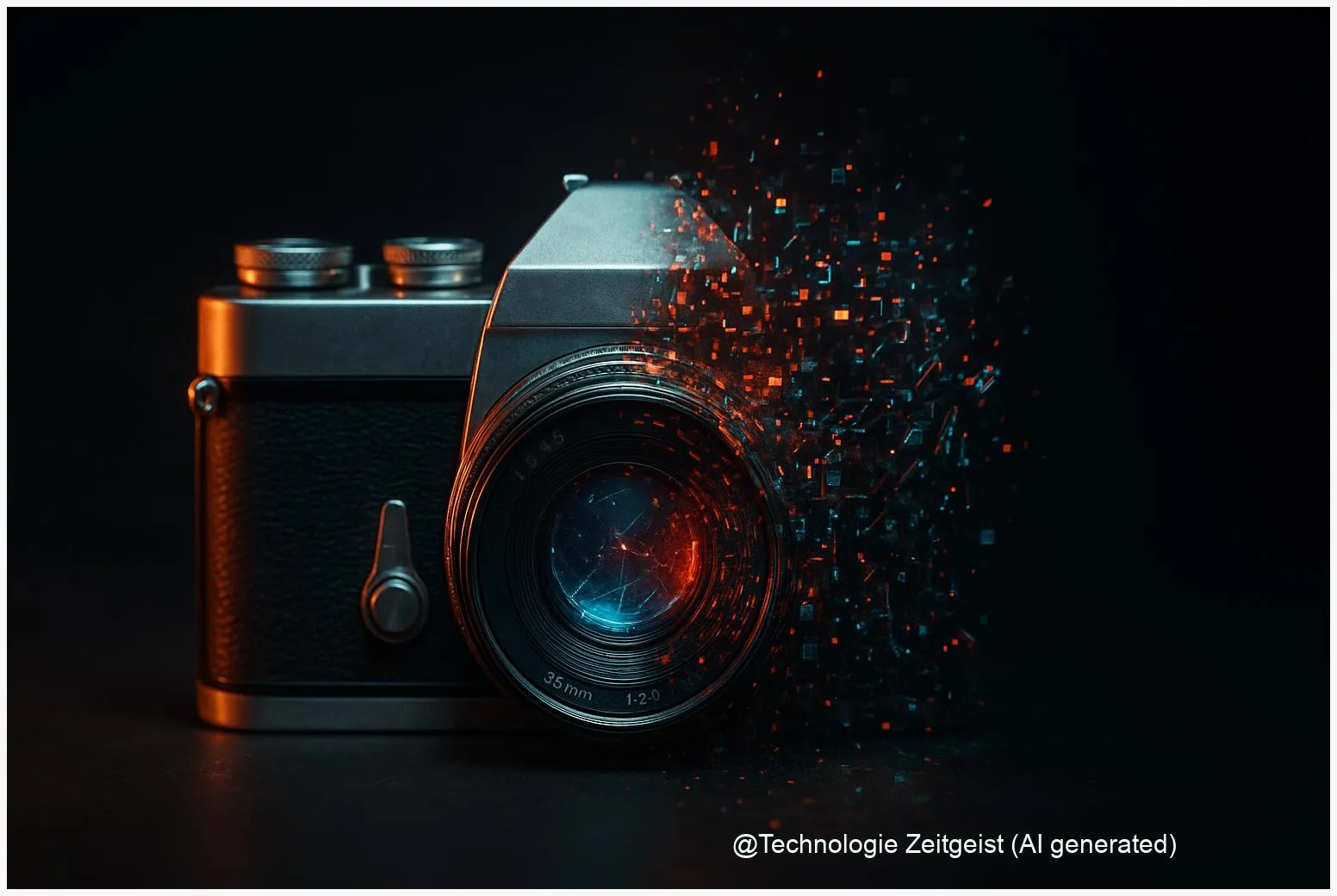
Photos have always carried authority; now that authority can be created by software. That makes it far harder to tell whether a picture shows what its caption claims. The debate over AI-generated images matters because systems for provenance — cryptographic “content credentials” and invisible watermarks — aim to prove a photo’s origin. These approaches change how platforms, journalists and creators assign trust, and they affect what evidence a reader can rely on when deciding if a picture is real.
Introduction
When you scroll past a photo on social media or read an illustrated news item, you want a quick, reliable clue: is this image a factual record or an edit, a staged scene or a machine-made composition? Up to now, readers relied on context — the publication, the caption, the visible cues in the picture. New production methods break those cues. Large image models can produce convincing scenes and faces that never existed. At the same time, initiatives and standards have emerged to attach provenance metadata or detect hidden signals that say where an image originated and whether it was altered.
The practical question for citizens and editors is simple: how much can these technical proofs be trusted? The rest of the article lays out how the underlying technologies work, how they are being used today, their real-world limits, and what to look for when you want to know whether a photo is authentic.
How AI-generated images are created
Most modern image generators use neural networks: software models that learn statistical patterns from many example images. A neural network is a computational model that consists of many simple processing units, or “neurons,” connected in layers; by adjusting the strength of these connections during training, the model learns to produce outputs that match training examples. For image generation, a model learns textures, object shapes and typical lighting from a dataset and then synthesizes new pixels that follow those learned patterns.
There are two broad technical approaches behind today’s models. One uses diffusion methods, which start from visual noise and iteratively remove randomness to form an image; another uses generative adversarial techniques, where two networks compete until the generator produces images the discriminator cannot reliably distinguish from real photos. Both approaches can produce highly detailed pictures that look like photographs but do not record any real scene.
The image looks like evidence, but it may be a construction with no physical origin.
That separation between visual plausibility and real-world origin is what makes provenance systems relevant: a convincing picture is not the same as a verified photo. The growing prevalence of AI-generated images has changed the problem from detection alone to documenting origin at the moment of creation.
Proving a photo’s origin: tools and standards
Two typical technical responses have emerged: embedded provenance metadata and imperceptible watermarks. Metadata and provenance frameworks attach machine-verifiable claims to a file — for example, who created it, which tools touched it, and timestamps. The leading open specification for this is the C2PA (Coalition for Content Provenance and Authenticity) family of standards, which defines Content Credentials: structured manifests that can be cryptographically signed and embedded or stored alongside an image. The C2PA approach aims to be tamper-evident: if the image bytes change, the binding between the manifest and the file will fail validation.
Watermarking follows a different route. Systems such as SynthID (announced by Google DeepMind in 2023) embed faint, specially designed pixel patterns or statistical signals into generated images so that a matching detector can later identify them. SynthID was introduced in 2023 and later extended to text and video in 2024; because the original announcement is from 2023, it is more than two years old and should be read in that historical context. Watermarks are useful when metadata is stripped away, for example after an image is posted to a platform that removes EXIF data, but they require control over the generator that creates the image.
There is also a trust layer: cryptographic signing and trust lists. C2PA specifies how a signer (an authoring tool, a camera, a cloud service) uses certificates to sign a manifest. A validator checks the signature against a configured trust list of accepted signers and can optionally use time-stamping services to extend trust beyond certificate expiry. These choices — which signers count as authoritative — are policy decisions for platforms and publishers.
Technically, these systems are complementary: provenance metadata records the claimed chain of custody; watermarks provide a detection signal when metadata is missing. Both depend on governance: secure key management, clear policies about trusted authorities, and interoperable implementations across devices and apps.
What this means in practice: examples and limits
In practice, provenance checks can help and mislead. For instance, a newsroom that only publishes images accompanied by verified Content Credentials (signed by their own photographers’ keys) gets a strong signal that a file is authentic and unaltered since signing. For stock photography or marketing assets, embedded credentials make attribution and licensing clearer. Some camera manufacturers and authoring tools began shipping Content Credentials support and platforms such as Adobe have integrated verification tools into their workflows.
However, three practical limits show up repeatedly. First, provenance is only as trustworthy as the signers: if a signing key is stolen or if a malicious actor controls an accepted signer, false claims can look genuine. That is why key protection (using hardware security modules or secure elements) and revocation procedures are core operational requirements.
Second, watermarks and detectors are not infallible. Watermarks that resist common edits (crop, resize, compression) still face targeted attacks and research has shown that determined transformations can remove or mask signals. Moreover, detectors can produce false positives, especially when patterns overlap across different protection schemes.
Third, adoption and interoperability remain partial. A standard is only useful if cameras, authoring tools, social platforms and verification services adopt compatible approaches. C2PA specifications and vendor tools exist, and some hardware has implemented embedding, but broad, platform-wide coverage is not yet universal. That means a lack of a single, global “source of truth”—validators may disagree depending on their trust lists and versions of the specification they support.
For readers, the practical takeaway is to treat provenance data as one input among many: a signed manifest or a watermark raises confidence but does not prove absolute truth. Conversely, the absence of metadata or detection does not by itself prove an image is fake; it may simply be untagged or routed through systems that remove metadata.
Where this could lead
Over the next few years, three likely developments will shape public trust. One, toolchains will become more interoperable: authoring tools, camera firmware and content-hosting platforms will increasingly implement shared manifest formats and validators. Standards such as C2PA have released newer versions as recently as 2025, and ongoing specification updates are meant to close interoperability gaps.
Two, platform policies will matter as much as technology. Platforms must decide which signer authorities they trust and how they display provenance to users. If major platforms agree on a common trust model and show clear validity indicators in feeds, readers will gain fast, usable signals. If platforms remain fragmented, validation will be inconsistent and user confusion may grow.
Three, detection and circumvention are in an arms race. Watermarking and signature systems will need continuous review, third‑party audits and public benchmarks to test robustness. Independent evaluations help: vendor claims about robustness are an important start, but third‑party reproducible testing gives a clearer picture of real-world reliability.
For individuals and small organizations, practical steps will be available: browser extensions and verification tools will make it easier to view provenance metadata, and editorial workflows can require credentials for published images. Over time, the social convention of citing provenance could become as natural as citing a source in text.
Conclusion
Proofs of origin for images make an important difference: they shift part of the trust question from whether a photo “looks” real to whether its creation and handling can be verified. Standards-based provenance (cryptographic content credentials) and detection techniques (watermarks) each add value, but neither is a silver bullet. Their effectiveness depends on secure key management, transparent trust policies and broad, interoperable adoption across the tools people use daily. For readers, the most reliable approach is measured skepticism paired with provenance checks when they are available; a signed credential raises confidence, but always consider context, source and independent corroboration.
We welcome respectful discussion and thoughtful sharing of this article with others who care about digital trust.




Leave a Reply