
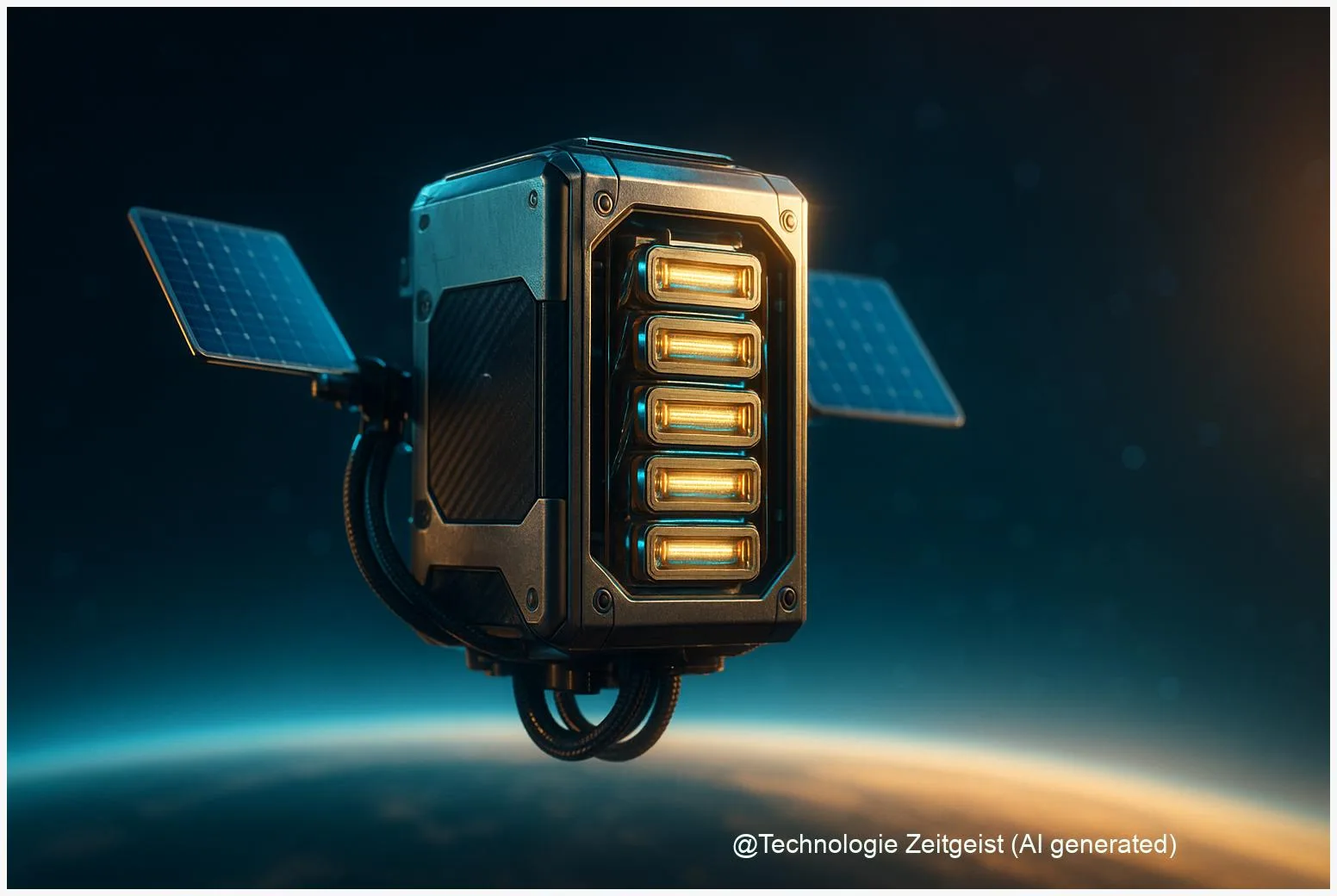
The idea of AI data centers in space promises to move heavy compute out of crowded server farms on Earth and into orbit, where solar power and radiative cooling are abundant. Many technical studies in 2024 found the concept feasible in principle, but they also showed that any climate or energy benefit depends on launch emissions, in-orbit assembly and reliable optical links. This article focuses on the energy and practical constraints behind the AI data centers proposition.
Introduction
Companies and researchers suggest putting servers into orbit to tap uninterrupted sunlight and to cool components by simply radiating heat into space. For everyday users this sounds abstract, but three concrete issues decide whether the idea is sensible: where the energy comes from, how compute talks to Earth, and what the climate footprint of launches and hardware manufacturing will be. Several feasibility studies published in 2024 modelled large orbital arrays and robot-built modules; they show potential advantages but also narrow conditions that must be met before any net benefit appears. The rest of this article explains those conditions step by step, using simple examples and recent, public research so readers can see what would have to change for orbital compute to make environmental and economic sense.
How space-based AI data centers would get energy
The chief attraction is straightforward: a solar panel in low Earth orbit (LEO) or higher gets sunlight for a large fraction of each orbit and can dump waste heat directly to cold space with radiators. That removes the need for grid electricity and large water-based cooling systems used by many terrestrial facilities. But ‘‘getting energy’’ in orbit is a chain of steps, and each step reduces the net advantage. Modules must be launched, mated, and kept pointed so their photovoltaic (PV) arrays face the sun; the power must be converted, conditioned, and distributed across compute racks; and excess heat must be radiated away using large radiator surfaces.
“Solar in orbit plus radiative cooling removes the ongoing water and grid demand, but only if launch and manufacturing emissions are low and power delivery is reliable.”
Recent systems-level studies from the ASCEND project (2024) model a fleet concept with roughly 1.3 GW of solar generation capacity to support more than 1 GW of compute-equivalent service across multiple platforms. These numbers are design targets for a theoretical, industrial-scale system, not near-term deployments. The big engineering constraints are mass and surface area: high-efficiency PV and lightweight structural support are needed to keep mass per kilowatt low, and large radiators are required because vacuum cooling needs broad surface area to achieve the same heat rejection a water loop does on Earth.
A short table clarifies the main physical elements and their rough roles in the energy chain.
| Feature | Description | Practical limit |
|---|---|---|
| Photovoltaic arrays | Convert sunlight to electricity | Area and mass per kW |
| Power conditioning | Inverters, storage, distribution to racks | Efficiency losses ~ a few % |
| Radiators | Dump heat by thermal radiation to space | Large surface area; degradation risk |
| Structural mass | Mounting, deployment, robotic assembly | Drives launch cost and emissions |
In short: energy is abundant above the atmosphere, but turning sunlight into continuously usable, cooled compute capacity requires big surfaces, careful materials choices and repeatable, low-cost launch operations. The ASCEND work also highlights that long-lived PV types and in-orbit servicing are central to keeping lifecycle energy and material costs competitive with terrestrial centers.
How the data would travel: communications and limits
Getting electricity to servers is one side of the coin; getting large AI workloads’ inputs and outputs down to Earth is the other. Optical laser links are the leading candidate because they can carry much higher bandwidth per aperture than radio. Demonstrations in recent years, including NASA/JPL’s DSOC experiments, proved practical deep-space optical links and measured throughput in the 10s to a few 100s of megabits per second in those missions’ profiles. Industry aspirations for orbital feeder links include claims of 100s of gigabits up to terabit-class links for GEO-to-ground paths, but these remain engineering targets rather than field-proven facts for continuous service.
Laser downlinks face three pragmatic limits. First, the atmosphere: clouds, turbulence and aerosols interrupt or degrade optical signals, so networks of ground stations (optical ground stations, OGS) are needed for site diversity. Second, pointing and tracking: narrow optical beams require sub-arcsecond pointing stability on both satellite and ground units. Third, availability: even a high-capacity link does little good if it is unavailable when workloads require low latency. For latency-tolerant batch training or asynchronous backups these limits matter less; for interactive inference (serving a user-facing AI) they matter more.
Practically, a mixed architecture is likely: heavy training jobs could be scheduled to run in orbit where bandwidth windows are available, while latency-sensitive inference remains on Earth or at edge clouds. The industry push toward terabit-scale optical payloads is important because it aims to shrink the windows needed to move large data slices. Yet the operational picture depends on an OGS network, adaptive optics, and realistic link-availability guarantees, not on headline lab rates alone.
Costs, emissions and the trade-offs
The single, decisive question for climate and energy policy is whether orbiting servers produce less greenhouse gas per useful compute operation than running the same job on Earth. Studies in 2024 were explicit: a potential advantage exists only if launch-related lifecycle emissions fall substantially. ASCEND modelled a scenario in which a future launcher with roughly ten times lower lifecycle emissions than current expendable rockets would be in use; under that assumption and with long-lived, reusable orbital hardware, the space option can compare favourably to some terrestrial sites.
Empirical lifecycle assessments for launches remain limited and uncertain. Recent reviews and NASA analyses show that while current launch emissions are small in absolute world terms, they have outsized effects if injected into the upper atmosphere because soot and water vapour there affect radiative forcing and ozone chemistry differently than ground-level emissions. Reuse reduces the per-launch manufacturing share, but the degree of benefit depends on reuse cadence, refurbishment emissions and the fuel chemistry used. In short: lower launch emissions and high reusability are non-negotiable for any credible environmental case.
Economics are equally sensitive. Launch cost per kilogram, in-orbit servicing costs, and the capital cost of building many identical modules determine whether orbital servers are ever cheaper than building more-efficient data centers on Earth. Market studies that project in-orbit data-center revenue in the late 2020s or 2030s are optimistic but rest on assumptions about mass production, low-cost reusable boosters and mature servicing markets. Those are plausible paths, but not yet proven. Policy makers and investors should therefore treat early claims as conditional and require independent lifecycle analyses and small-scale pilots to generate real operational data.
Where the idea could realistically go next
The roadmap to test the concept is straightforward and incremental. First, short orbital demonstrations that prove three core subsystems: compact, high-specific-power PV arrays in space conditions; reliable radiators and thermal control for sustained waste-heat rejection; and high-availability optical feeder links to ground. Second, robotic in-orbit assembly tests that show repeatable, low-cost deployment of modular compute and radiator elements. Third, independent lifecycle assessments that include manufacturing, repeated launches and end-of-life plans for materials.
A realistic near-term use case is not a full cloud replacement but specialised workloads: scheduled, bulk AI training that tolerates delays; archive and cold-storage tasks that require little immediate interaction; or edge offloading for isolated locations where terrestrial power and cooling are expensive. These use cases reduce pressure on link-availability and let engineers measure real energy-per-operation metrics. Successful pilots would publish measured KPIs such as energy per training hour, link availability per month and refurbishment cycles per module.
Regulation and standards matter too. Orbital traffic management, debris mitigation, data sovereignty and a consistent method for launch LCA should be set early. If those governance pieces lag, technical pilots will remain isolated experiments rather than the foundation for a mature industry. For readers watching the space closely, useful signals will be independent LCA reports, field-validated optical link availability numbers, and demonstration missions focused on power and thermal management rather than marketing claims alone.
Conclusion
Orbiting servers are technically feasible: sunlight and cold space provide natural advantages for power and cooling. Yet those physical benefits do not automatically translate into lower emissions or lower cost. The balance hinges on three variables: much-cleaner launch lifecycles, durable in-orbit hardware with servicing, and dependable high-bandwidth links between orbit and ground. Short-term pilots that target batch AI workloads and publish independent lifecycle and availability data are the most credible path to test whether AI data centers in space can deliver their promised benefits. Until then, the idea remains an intriguing possibility that depends on several conditional improvements in launch technology, materials and operations.
Join the conversation: share your thoughts on the trade-offs and the practical signs you would look for.



Leave a Reply