
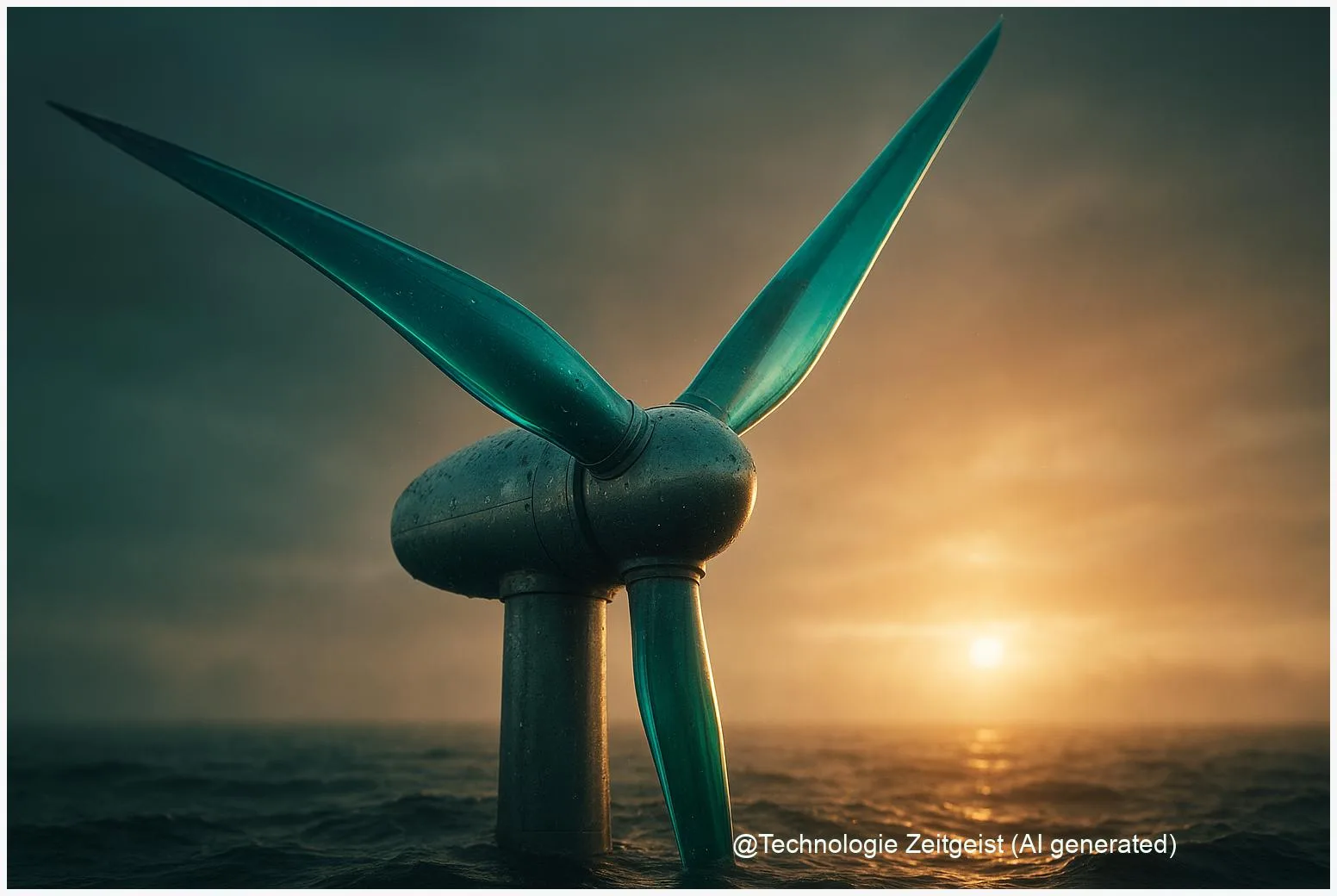
Offshore wind turbines have grown from machines of a few megawatts to modern giants above 15 MW. The shift reduces cost per megawatt-hour by capturing more wind with fewer foundations, but it also creates practical limits in transport, installation and maintenance. This article outlines why offshore wind turbines are getting bigger, what that means for ports, grids and the environment, and which technical and economic trade-offs determine how far size can go.
Introduction
Wind farms further from shore and in stronger wind zones offer much more energy per turbine. To use that advantage, manufacturers put longer blades on larger generators: one machine today can replace several older units. For project planners this means fewer foundations and less seabed work, but larger pieces to move and lift.
When you charge your smartphone, you don’t notice where the electricity comes from. Behind that simple action are choices about how to supply power most cheaply and with the least land use. Offshore wind developers choose larger turbines because, on many sites, they produce more clean electricity per investment. That choice, however, raises new questions about ports, ships, certification, and nature that influence whether upscaling is practical or only theoretical.
Offshore wind turbines: the engineering basics
Two physical facts explain most of the growth in turbine size. First, power captured from wind scales with the swept area—the circle traced by the blades—so doubling the rotor diameter roughly quadruples the area and the potential energy capture. Second, taller hubs place blades in steadier, stronger winds, which increases annual energy production without changing the turbine’s rated power.
Manufacturers combine larger rotors with stronger drivetrains and more efficient generators. That requires advances in materials (longer, lighter composite blades), in drivetrain design (direct‑drive or low‑speed gearboxes), and in nacelle engineering to handle higher loads. At the same time, certification standards and structural safety margins have become more conservative for these large machines, which increases component mass.
“Bigger rotors and higher hub heights are a response to physics: more swept area and steadier winds mean more electricity for each foundation built.”
Scaling is not just a matter of making one part longer. Blade mass, tip speed limits, and aerodynamic loads interact. Engineers must avoid excessive blade tip speeds that cause noise and material stress, and they need to keep natural frequencies of the structure outside wind excitation ranges to prevent resonance. Those constraints drive design choices as size increases.
If numbers help, a short comparison shows the step from earlier models to current large designs.
| Model | Rated power | Rotor diameter | Note |
|---|---|---|---|
| Vestas V236 | 15 MW | 236 m | Commercial 15 MW platform (manufacturer data) |
| Siemens Gamesa SG14-222 | 14 MW (Power‑Boost to ~15) | 222 m | Power‑boosting used to reach higher output |
| GE Haliade-X variants | 14–15.5 MW (tests) | ~220–236 m | Prototype tests for >14 MW |
| IEA reference RWT | 22 MW (research) | 284 m | Research reference turbine used for modelling |
How larger turbines change installation and ports
On paper, larger turbines lower the number of foundations and cables per megawatt. In practice, they increase demands on land and sea logistics. Blades above 100 m, nacelles weighing hundreds of tonnes and towers several tens of metres long need specialised transport, storage and heavy‑lift cranes. Many regional ports were built for smaller components and therefore require upgrades.
Project developers must assess port capacity early. Upgrades can take years: quay reinforcement, larger storage areas, and specialised lifting gear are expensive and require permits. Installation vessels also matter. A single heavy‑lift jack‑up can handle multiple large units, but availability is limited and charter rates can be high. Delays in cranes or vessels quickly erode the cost advantage of fewer foundations.
Transport constraints also shape blade and tower design. Some teams opt for segmented blades or on‑site assembly to bypass road or harbour limits. Others optimise manufacturing and transport routes to match existing infrastructure. The economics are therefore site‑specific: an offshore site near a well‑equipped port will extract more value from larger turbines than one reached via constrained logistics.
Certification and standards add time. Type‑certificates, third‑party tests and grid‑connection studies must account for new load cases introduced by larger rotors and taller hubs. That extends project schedules but reduces long‑term technical risk once certificates are in place.
Costs, grid impact and environmental trade-offs
Larger turbines change both capital and operating costs. Capital expenditure shifts from components counted per turbine (foundation, cable termination) to heavier, more expensive single units. Because each turbine produces more energy, levelised cost of electricity (LCOE) often falls, but only if installation and supply‑chain bottlenecks are managed.
On the operating side, service strategies adapt. Fewer turbines mean fewer scheduled maintenance visits overall, but each outage affects more capacity. Service vessels, crew transfer teams and remote monitoring systems must be tuned to these larger single‑point risks. Fuel use for maintenance vessels and the carbon footprint of large components are part of lifecycle calculations manufacturers now publish.
Grid integration also changes. Fewer connection points can simplify array cabling, yet higher power per turbine requires export cables and substations sized for greater instantaneous flows. Grid operators assess fault‑ride‑through behaviour, voltage support and ramping limits differently for farms made of larger machines, especially if many turbines concentrate generation in a single cluster.
Environmental trade‑offs are mixed. Larger turbines reduce seabed disturbance per MWh because fewer foundations are needed. At the same time, taller structures reach new bird‑migration strata and may have different underwater noise signatures during construction. Environmental assessments therefore need to compare whole‑project footprints rather than single components.
Where turbine size could go next
Research groups and standard bodies use reference designs to explore 20+ MW concepts. The IEA 22 MW reference turbine is a modelling tool; it demonstrates technical feasibility rather than immediate commercial readiness. Key uncertainties for any further increase in size are supply chains for very large composite blades, crane and vessel availability, and certification under realistic load assumptions.
Modular and hybrid approaches may become common. Examples include segmented blades that are joined offshore, multi‑rotor platforms that combine several smaller rotors on a shared support structure, and floating platforms that reduce foundation mass for deep waters. Floating foundations change the calculus: they reduce seabed work but raise platform and mooring complexity and cost.
Policy and market design will influence which path wins. Auction formats that reward reliable annual production rather than peak output favour larger rotors and higher hub heights. Conversely, markets that prioritise fast grid response or local content may limit how quickly the largest designs spread. For stakeholders this implies a mix of technical preparation—ports, certification timelines, and vessel contracts—and regulatory alignment so that permitting and grid rules do not become drag factors.
Conclusion
Upscaling to 14–15 MW and beyond is driven by physics: larger rotors and higher hubs catch more energy per foundation, which can lower the cost of offshore electricity. The benefits are clear where ports, vessels and supply chains can handle the parts. Limits come from real‑world constraints—transport, crane capacity, certification and maintenance risk—that raise project complexity and timing.
The practical result is a balanced picture: larger machines are already commercial in many regions, but each increase in size brings new logistical and regulatory work that must be solved before the cost advantages take full effect. Careful site selection, early port planning and conservative energy forecasts remain the best ways to capture the gains without unexpected delays or costs.
Join the conversation: share this article and tell us which question about large offshore turbines you think planners should ask first.




Leave a Reply