
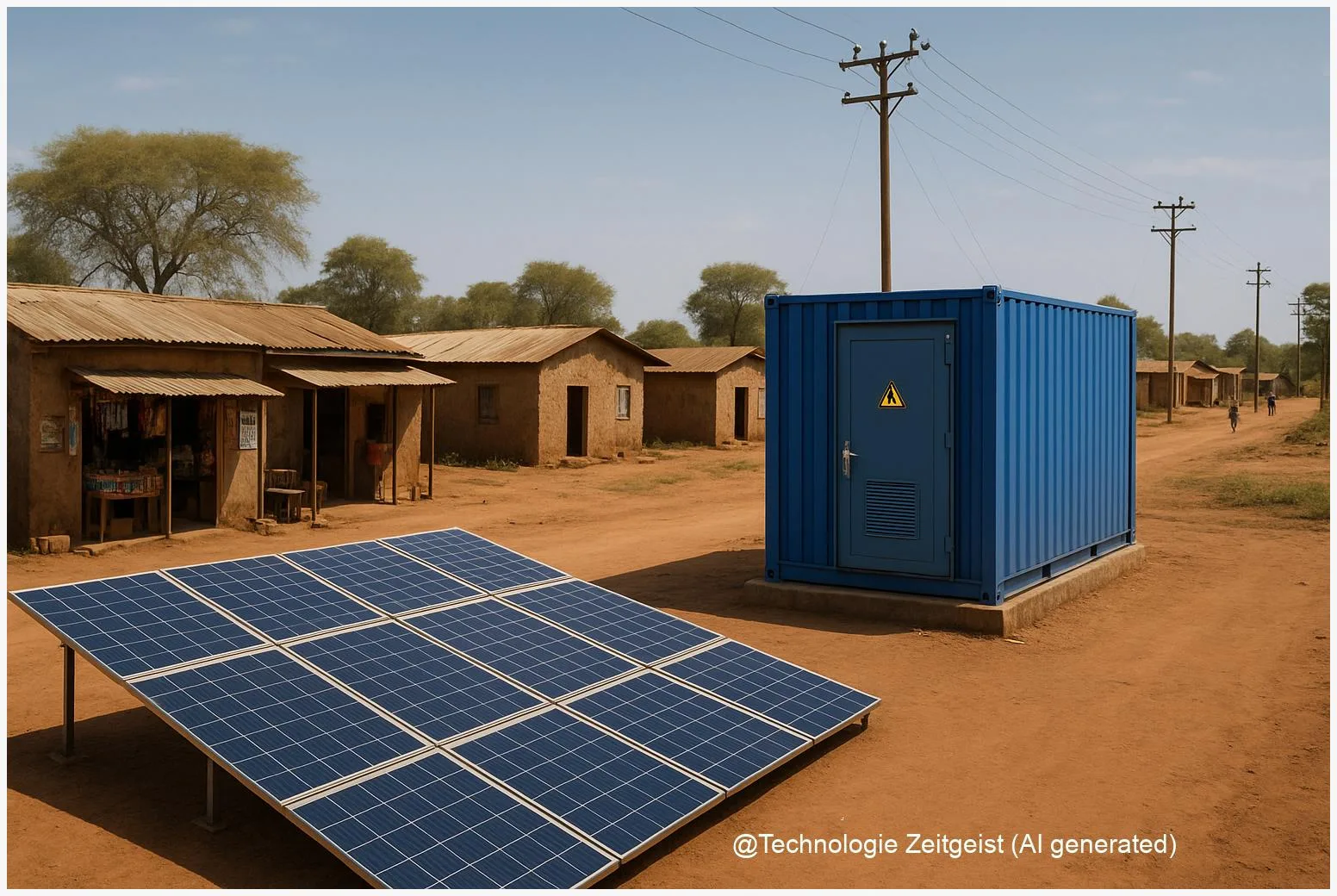
More affordable clean energy access in Africa is possible with the right mix of decentralised technologies and smarter finance. This article looks at how mini‑grids, rooftop and off‑grid solar, and targeted blended finance can expand reliable electricity for households and small businesses while keeping costs down. Practical examples show how regulators, development banks and local entrepreneurs can combine instruments to reach underserved communities.
Introduction
Access to reliable, affordable electricity matters when you charge a phone, run a small shop or keep medicines cold. In many African countries those everyday functions are still fragile: household connections can be intermittent and clean cooking is often unavailable. Two linked problems make progress hard to achieve. First, some communities are far from national grids, so extending lines is expensive. Second, investors see risk from currency swings, uncertain tariffs and limited data on how customers pay over time.
The practical roadmap that follows focuses on tools already proving effective: decentralised renewable systems (mini‑ and microgrids, solar home systems), paired with blended finance and targeted regulation. The aim is to show which combinations lower costs and speed deployment, and how modest policy shifts can unlock private capital without sacrificing service quality or affordability.
How clean energy access in Africa works
Three basic ways reach consumers: the main grid, mini‑ or microgrids, and off‑grid solar for individual homes. A mini‑grid is a small local power network that serves a village or cluster of villages; it looks like a tiny town network with its own generator (usually solar today) and a shared meter. A solar home system (SHS) is a household unit — a panel, a battery and a simple controller — often sold with pay‑as‑you‑go (PAYG) financing so families can pay over months.
These options are complementary. Urban areas typically gain most from grid extensions; remote areas often get power sooner from mini‑grids or SHS. Costs depend on distance to the grid, population density and local spending power. Technology costs have fallen: solar panels and batteries are much cheaper than a decade ago, which makes off‑grid solutions economically viable in many rural contexts.
Reliable access means more than a connection: it means enough power for light, productive use and safe food storage.
Key concepts: reliability (hours per day and voltage quality), affordability (share of household income spent on energy) and usefulness (can a small business operate tools like a fridge or sewing machine). Policy and regulation influence all three: clear tariff rules and standardized interconnection terms make investors more willing to build.
Everyday solutions: microgrids, solar home systems and cooking
On the ground, energy access looks like a shop owner keeping a phone‑charging service open, a clinic running lights at night, or a family that switches from wood smoke to electric or improved cookstoves. Solar home systems often enable phone charging, LED lighting and a small fan. Mini‑grids can power productive appliances — refrigeration for market vendors, milling machines for farmers, or internet points that support small enterprises.
Clean cooking is a separate but related challenge. Many households still use open fires or simple stoves that burn wood or charcoal. Electric cooking requires more power than lighting and phone charging, so expanding electricity access does not automatically deliver clean cooking. Successful programs either subsidize efficient electric or gas stoves, pair electrification with clean‑cooking subsidies, or promote advanced biomass stoves that burn fuel more cleanly.
Practical example: a village served by a solar mini‑grid can power lights and a community freezer. If that project includes a managed tariff structure and a local operator trained in revenue collection, services remain reliable and affordable. If it lacks supports — clear billing systems or maintenance plans — outages and unpaid bills quickly erode viability.
Technical note: PAYG means customers pay for energy in small installments via mobile money, often enabling lower upfront costs but requiring solid systems for remote monitoring and recovery when payments lapse.
Financing what works: blended finance and currency risk
Financing is the gatekeeper. Purely private investors often avoid remote energy projects because revenues are small and local currencies can fall sharply against dollars or euros. Blended finance packages combine grants, concessional loans and private capital to reduce upfront risk. For developers this can lower the cost of capital and make projects bankable.
Blended finance examples include a development bank taking a first‑loss position, a grant to cover initial connection subsidies, or technical assistance funds that build local capacity in billing and maintenance. These instruments are not charity; they change the risk/return profile so commercial investors participate at scale.
Currency risk is a persistent problem. Many developers sell power in local currency but service debts in foreign currency. Without hedging, devaluation can wipe out returns. Practical responses include local‑currency lending by regional banks, partial FX guarantees from multilateral institutions, and regional hedge pools that smooth currency swings across many projects.
Recent market evidence shows increased use of blended finance in mini‑grid and off‑grid sectors, but aggregated figures are fragmented across reports. Broad public sources estimate hundreds of millions of dollars flowed into off‑grid systems in recent years, while precise annual totals for mini‑grids alone vary between reports. This uncertainty underlines the need for standardized reporting of investment flows and outcomes.
Trade‑offs, risks and policy tensions
Scaling access requires balancing trade‑offs. Subsidies can speed rollout but distort markets if not time‑limited and well targeted. Too low a tariff reduces maintenance incentives; too high a tariff undermines affordability. Governments face political pressure to keep prices low, while operators need cost‑recovery to maintain systems.
Another tension is sequencing: should a country prioritise national grid extension or accelerate decentralised renewables? The answer depends on geography and demand density. In dense peri‑urban zones, grid expansion often makes sense. In dispersed rural areas, mini‑grids and SHS typically deliver power faster and cheaper.
Data gaps are an operational risk. Lacking reliable measurements of consumption patterns, systems are either oversized (wasting capital) or undersized (leading to outages). A pragmatic policy is to mandate open data on system performance and collection rates, while protecting personal data and commercial confidentiality where required.
Finally, social considerations matter. Women and small businesses are often most affected by lack of access; inclusive planning that lowers entry costs for female‑led enterprises or supports community ownership models increases both equity and commercial sustainability.
Conclusion
Expanding affordable clean energy access in Africa is a practical, solvable challenge when technology, finance and policy align. Cheaper solar panels and batteries make decentralised systems viable; blended finance structures lower investor risk; and clear regulatory frameworks protect both consumers and providers. Concrete progress comes from realistic targeting: prioritising mini‑grids and SHS where grid extension is uneconomic, pairing electrification with clean cooking solutions, and using concessional funds to crowd in private capital. The result is not only more connections, but dependable power that supports businesses, health services and daily life.
If you found these practical ideas useful, please share and join the discussion with others working on energy access.

Leave a Reply