
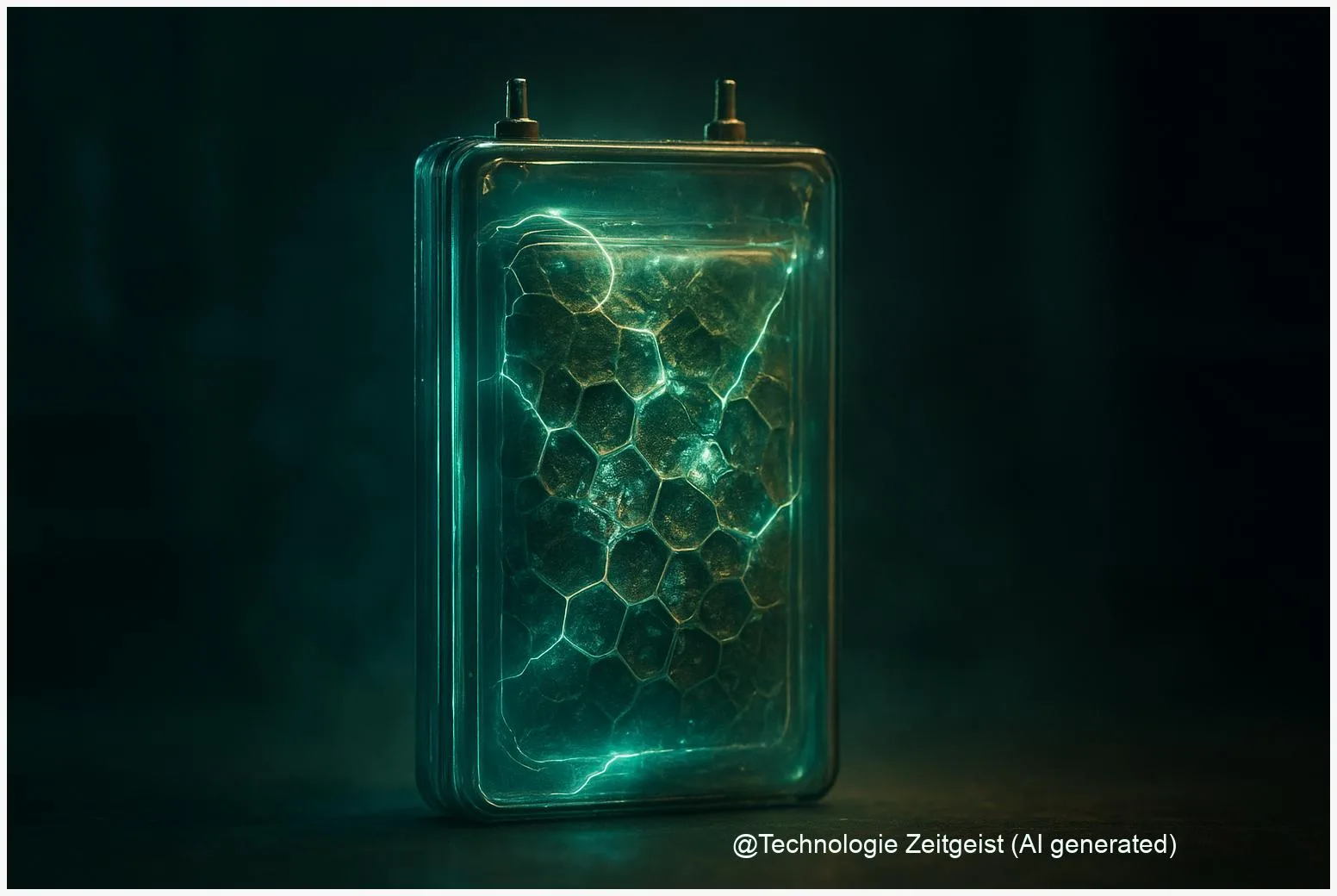
Mobile batteries are getting bigger, and one material keeps appearing in research and pilots: the silicon‑carbon battery. It promises higher energy density in the same space by combining silicon’s large capacity with carbon’s stability. For phones that aim at 20,000 mAh packs, that mix matters because it affects how long a device runs, how fast it can safely charge, and how long the battery lasts under everyday use. This article lays out what silicon‑carbon anodes do, why engineers add them to graphite, and which trade‑offs matter for real smartphone batteries.
Introduction
Smartphones today balance three things: run time per charge, how quickly they refill battery, and how many years the battery keeps reasonable capacity. Pushing pack sizes toward 20,000 mAh seems like a straightforward fix for battery life, but bigger capacity changes the physics inside the cell. A battery that stores more energy in the same volume needs materials with higher capacity per gram; silicon is attractive because, atom for atom, it can hold far more lithium than graphite.
Graphite has been the anode standard for decades because it is stable and cycles well. Silicon stores roughly ten times more lithium by weight, but it expands and contracts a lot as it charges and discharges. Engineers therefore mix silicon with carbon or wrap silicon particles with conductive carbon to combine strength and stability. That hybrid approach appears in many lab reports and in pilot manufacturing, and it is central to whether very large phone batteries can charge quickly and survive thousands of cycles.
Silicon‑carbon battery fundamentals
At a basic level, a lithium‑ion battery stores charge by moving lithium ions between the anode and cathode. The anode is where lithium returns when you charge the phone. Graphite intercalates lithium in layers; silicon, instead, forms alloys with lithium and can store far more of it. The theoretical capacity of silicon is about 4200 mAh·g⁻¹, compared with around 370 mAh·g⁻¹ for graphite. That gap explains the interest in silicon.
But silicon’s practical problem is mechanical. When silicon takes in lithium it can swell by up to roughly 300 %. Repeated swelling and shrinking cracks particles and breaks the protective interphase on the anode surface, called the SEI (solid‑electrolyte interphase). A growing, unstable SEI consumes lithium and reduces the battery’s usable capacity. Engineers try to manage that in several ways: using nanoscale silicon particles, creating a small empty space around silicon particles (a “yolk‑shell”), coating silicon with conductive carbon, and blending silicon with graphite so the electrode keeps structural integrity.
“A modest silicon share often gives most of the energy benefit while keeping cycle life close to graphite.”
To compare materials, labs measure metrics such as gravimetric capacity (mAh·g⁻¹), areal loading (mAh·cm⁻²), and initial coulombic efficiency (ICE). ICE measures how much of the lithium that goes into the anode during the first charge can be taken back out during the first discharge. A low ICE means some of the battery’s lithium is lost to SEI formation early on. For practical smartphone cells, ICE and areal loading are often more decisive than headline capacity numbers reported in low‑mass lab cells.
If a table helps, here are compact reference numbers that researchers and engineers commonly compare:
| Metric | Typical value | Unit | Context |
|---|---|---|---|
| Theoretical capacity (Si) | ≈4200 | mAh·g⁻¹ | Material limit |
| Lab Si–C reversible range | ≈1100–2300 | mAh·g⁻¹ | Half‑cell reports (2024–2025) |
| Commercial Si content | ≈5 – 15 | wt % | Industry practice (pilot scale) |
How silicon‑carbon anodes change everyday phone use
Replacing some graphite with silicon increases how much energy fits in a given cell volume, which can be used in two ways: make the same phone last longer between charges or keep runtime similar while reducing weight or size. For a very large pack such as a 20,000 mAh phone battery, silicon‑carbon anodes help raise energy density without changing the phone’s external dimensions.
Charging speed and lifespan are connected but not identical. Charging faster stresses the anode and makes lithium plating more likely; lithium plating is when metallic lithium forms on the anode surface during fast charging, which reduces capacity and can create safety risks. The silicon content affects how easily plating happens because silicon‑rich electrodes behave differently under the same current density. In practice, phones use a combination of battery chemistry and thermal management to control fast charging. A phone with a silicon‑carbon anode might accept fast charging at the same labeled wattage as a graphite cell, but manufacturers usually tune charge‑control software and thermal design to keep degradation acceptable.
Real examples: many smartphone makers now use graphite anodes with small silicon fractions (single‑digit to low‑teens in weight percent). That range typically gives most of the capacity benefit while keeping the decline in cycle life modest compared with pure graphite. Independent tests have shown that aggressive silicon shares improve runtime but often demand stricter charging profiles to avoid premature capacity loss.
Opportunities, risks and technical tensions
The main opportunity is straightforward: silicon increases specific capacity, so phone makers can push for much larger usable pack capacities without expanding the battery’s dimensions. That helps the user in daily life and reduces the need to carry power banks. But there are trade‑offs.
First, the faster capacity fades when silicon fractions are high. Even with advanced architectures and coatings, silicon can cause faster SEI growth, consuming active lithium and lowering capacity. Second, initial coulombic efficiency can be lower with silicon, which means the first cycles use up more lithium. Manufacturers compensate with prelithiation steps or by adding extra cathode material, but these increase manufacturing complexity and cost.
Third, fast charging is a balancing act. A cell that can hold more energy per gram still needs current paths and heat control that match the charging power. Higher areal loadings and thicker electrodes (needed for high capacity per area) worsen ion transport inside the electrode and make fast, even charging harder. In short: energy per cell and power delivery are different engineering targets.
Finally, there are safety and reproducibility concerns. Many high‑capacity results come from lab half‑cells with low mass loading and optimized test conditions. When researchers move to realistic full‑cells with areal loadings near industry targets (≈2–4 mAh·cm⁻²), performance typically drops. That difference explains why some manufacturer claims of dramatic improvements require careful independent verification.
Where the technology is headed
Progress since 2024 shows steady improvements rather than sudden breakthroughs. Researchers continue to refine yolk‑shell particles, conductive carbon coatings, and binders that tolerate deformation. Electrolyte additives such as fluoroethylene carbonate (FEC) remain important because they help form a stable SEI on silicon surfaces. Industry pilots tend to favour moderate silicon shares (around 10 – 15 % by weight) as a pragmatic path: measurable energy gains with tolerable manufacturing risk.
Near term, expect more phones to use hybrid silicon‑graphite anodes in higher capacity models. Charge‑control firmware will remain central: limiting peak currents when necessary, using staged charging curves, and coupling thermal sensors to charging algorithms. On the manufacturing side, scaling up means solving calendaring and electrode density issues so that areal loading targets and electrode homogeneity are met repeatedly.
In a few years, improvements in binders, prelithiation methods, and cell design could allow higher silicon shares without unacceptable trade‑offs. But independent testing and standardized test protocols will determine how quickly those changes reach consumer devices. For users, the practical implication is simple: phones with larger advertised capacity that use silicon‑carbon anodes may deliver noticeably longer single‑charge life today, but their long‑term retention and charging tolerances depend on the specific cell engineering and software controls behind the battery.
Conclusion
Silicon‑carbon battery technology brings a realistic path to higher phone capacities without increasing device size. The material combines silicon’s high theoretical capacity with carbon’s conductivity and structural support, and hybrid anodes with roughly 10 – 15 % silicon currently look like the pragmatic compromise for large smartphone packs. However, the gains come with technical tensions: initial coulombic efficiency, areal loading, fast‑charge behaviour and manufacturing reproducibility must all be managed. Independent full‑cell tests and transparent performance data remain the best way to judge whether a high‑capacity phone will keep its advantage after a year or two of everyday use.
Join the conversation: share your experience with long‑life phone batteries and charging strategies.




Leave a Reply