
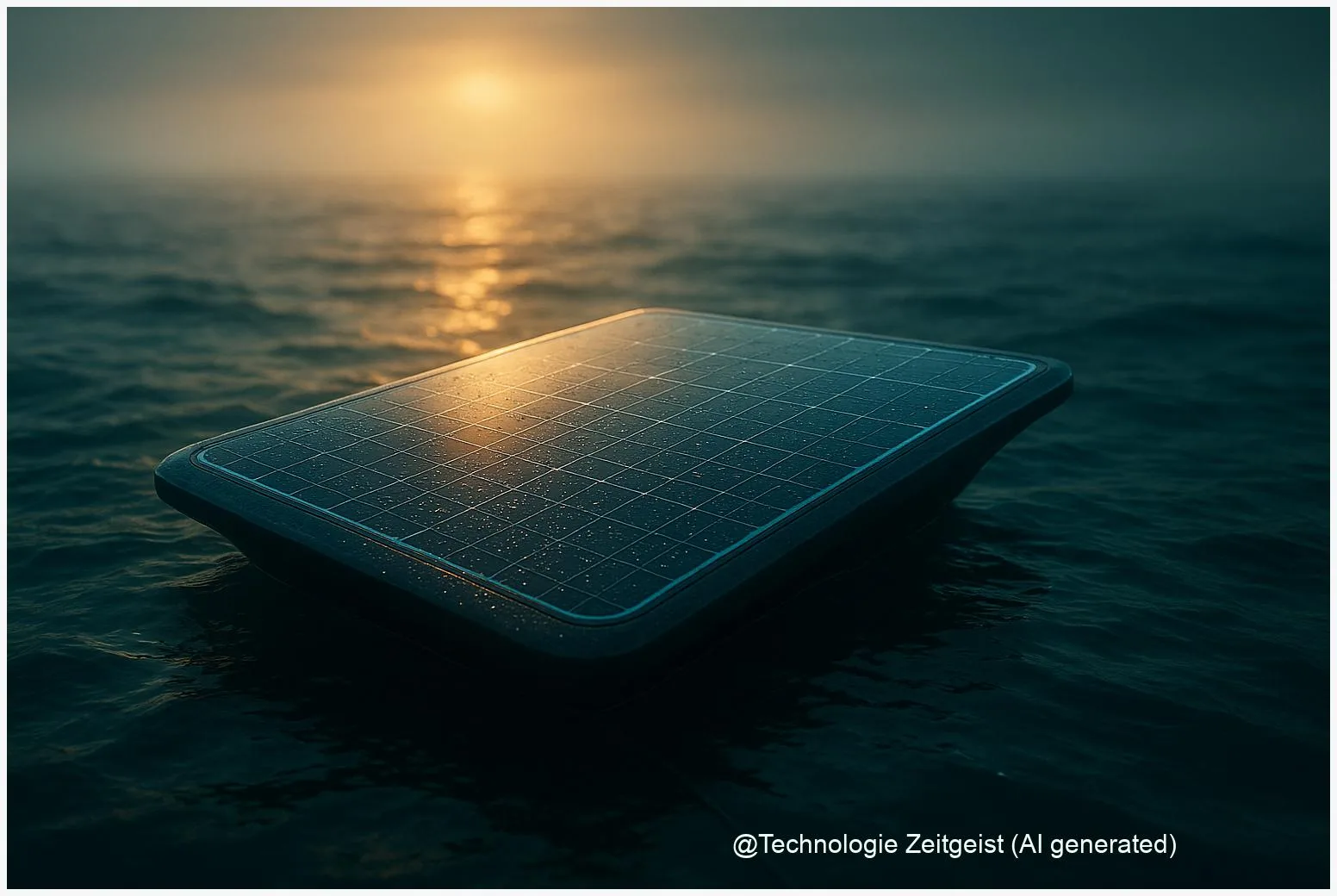
Coastal energy planners and utilities increasingly consider offshore solar power as a way to add clean generation without using scarce land. Floating solar — technically called floating photovoltaic (FPV) — places panels on buoyant platforms on reservoirs or nearshore waters. It often raises output slightly because water cools panels, and it can reduce evaporation on reservoirs. This article examines why developers move panels to water, what works today, and which technical and environmental hurdles still need solving.
Introduction
Countries and cities face three recurring problems: good solar sites on land are limited, coastal demand centers sit near the sea, and competition for farmland or nature protection is rising. Moving panels to water is one practical response. Floating photovoltaic (FPV) systems already sit on lakes and reservoirs; a newer step places larger arrays in nearshore marine zones where waves and salt bring new engineering demands.
The technical idea is simple: mount modules on pontoons or platforms and connect them with cables and anchors to shore. The practical reality is more complex — engineers must tackle corrosion, mooring under waves, maintenance access, and environmental rules. Still, pilots and a few large projects show the concept can work. The question now is which sites and technologies make sense at scale, and what policymakers should require before permitting arrays on coastal waters.
Offshore solar power fundamentals
Floating photovoltaic (FPV) refers to solar panels mounted on floating structures. The term covers three practical types: inland FPV on reservoirs and lakes; nearshore FPV in sheltered coastal waters; and offshore FPV in exposed sea conditions. Each type differs in wave load, salt exposure and anchoring complexity.
“FPV gains come from cooling and from using water surface instead of land, but sea conditions demand much tougher hardware and different maintenance routines.”
Compared with ground-mounted solar, FPV offers several mechanical and electrical differences. Panels sit on pontoons or rigid platforms; electrical arrays typically gather power in DC and feed it via subsea or buried cable to a shore-side inverter or to offshore substations. Mooring systems range from simple anchors in calm reservoirs to complex pile systems or dynamic moorings for the open sea.
If numbers help, the following short table highlights typical contrasts between the three FPV types.
| Feature | Inland FPV | Nearshore/Offshore FPV |
|---|---|---|
| Typical exposure | Calm water, low waves | Waves, tides, salt spray |
| Common capacity range | Hundreds kW to tens of MW | MW demonstrators to GW clusters (emerging) |
| Key challenges | Mooring and ecology | Corrosion, wave loads, grid connection |
Two technical effects often cited: modules on water run a few degrees cooler than on land, which can raise generation by small percentages; and the floating cover reduces evaporation on reservoirs, which is valuable in dry regions. Both benefits depend on local climate and design and therefore vary.
How floating arrays are used in practice
Floating arrays already serve practical purposes beyond pure electricity. Reservoir FPV combines power generation with water management: plants over drinking-water or irrigation reservoirs cut evaporation and can sit near hydropower or distribution points. In several countries large-scale reservoir projects deliver tens of megawatts while freeing agricultural land.
Nearshore projects target coastal demand: building offshore solar in shallow coastal zones lets operators place generation closer to cities and ports that consume the energy. A recent European demonstrator installed a 0.52 MWp pilot on linked platforms in the Dutch North Sea to test mooring strategies and sensors for structural loads. In Asia, industry reports describe larger commercial clusters that connect via subsea cables to coastal grids; these projects show how modular platforms can scale up.
Practical design choices matter. Small pilots use simple, serviceable pontoons and allow boats for maintenance. Larger arrays use standardized platform modules that can be assembled offsite and towed into position. Grid integration is another practical issue: many FPV sites feed shore-side inverters, but if arrays move into deeper water they require higher-voltage subsea cables or offshore substations, similar to some offshore wind configurations.
Operators also test hybrid configurations: co-locating FPV with aquaculture or placing panels above irrigation canals to shield crops (and reduce water loss). These mixed uses create both technical complexity and local economic benefits that sometimes make projects financially viable even when pure electricity sales would not.
Opportunities, risks and trade-offs
The appeal is straightforward: nearshore and offshore arrays can free up land, place power close to coastal consumers, and sometimes increase output through cooler operating temperatures. For water-stressed regions the evaporation saving can be decisive. Yet practical and environmental trade-offs are equally real.
On the technical side, saltwater and waves accelerate wear. Corrosion-resistant materials, special fasteners and regular maintenance raise costs. Early studies and pilots report that floating systems have higher initial capital costs than ground-mounted arrays, though the lifetime cost per kilowatt-hour can be competitive once higher yields, avoided land costs and water benefits are included. Economic outcomes are site-specific and sensitive to financing terms and maintenance regimes.
Environmental concerns deserve careful, site-specific study. Covering surface areas alters light penetration and local water temperature, which can affect aquatic plants and oxygen levels; impacts vary between lakes, reservoirs and coastal ecosystems. Navigation, fishing, and tourism are social considerations: arrays must be located to avoid shipping lanes and to respect local livelihoods. Because evidence is mixed, most experts recommend bespoke ecological monitoring before and after installation.
Regulatory and permitting frameworks lag technology. Offshore arrays intersect marine spatial planning, fisheries regulation and coastal safety rules. For investors this adds uncertainty: permits can take years and require multi-agency coordination. Pilots that share monitoring data and follow standardized testing protocols help regulators create sensible rules; they also reduce perceived risks for lenders and insurers.
What comes next for sea-based solar
Scaling offshore solar power will depend on a few practical developments. First, cost reductions in corrosion-resistant materials and modular platform manufacturing will lower CAPEX. Second, standard mooring designs and certification regimes — similar to those for wind foundations — will reduce engineering uncertainty. Third, shared subsea grid infrastructure close to shore will simplify connections for multiple arrays.
Research and pilots are increasing. Demonstrators in Europe test structural loads and maintenance logistics; larger commercial projects in Asia are beginning to show how GW-scale clusters could be engineered. If these pilots deliver 3–5 years of reliable performance data, financiers will have the evidence they need to underwrite bigger deployments. That pathway is deliberate: small demonstrators, tens of megawatts of clustered arrays, then larger clusters if environmental monitoring confirms negligible long-term harm.
Policy steps will be decisive. Authorities can speed responsible roll-out by mapping zones suitable for arrays, setting clear ecological study requirements, and offering standard contracting models for subsea grid access. For coastal communities the key question will be how arrays are sited in ways that preserve fisheries, recreation and landscape values.
For most readers, the practical takeaway is plain: offshore solar power is not yet a plug-and-play substitute for ground arrays, but it is maturing. Over the next five years expect steady technical progress, a rising number of pilots, and clearer rules that make larger nearshore deployments feasible in selected regions.
Conclusion
Floating solar shifts part of the solar rollout from land to water, responding to land competition, coastal demand and water-management goals. Reservoir FPV is already proven in many climates; nearshore and offshore variants require tougher engineering and stricter environmental checks. The key trade-offs are higher upfront costs and more complex permitting versus land savings, modest yield improvements and potential water benefits.
Where pilots provide multi-year performance and ecological monitoring, regulators and investors gain confidence. That evidence will determine whether sea-based solar becomes a regular element of coastal energy planning or remains a specialized solution for particular sites.
We welcome reasoned comments and links to local pilot studies — feel free to share this article with colleagues who follow energy planning.


Leave a Reply