
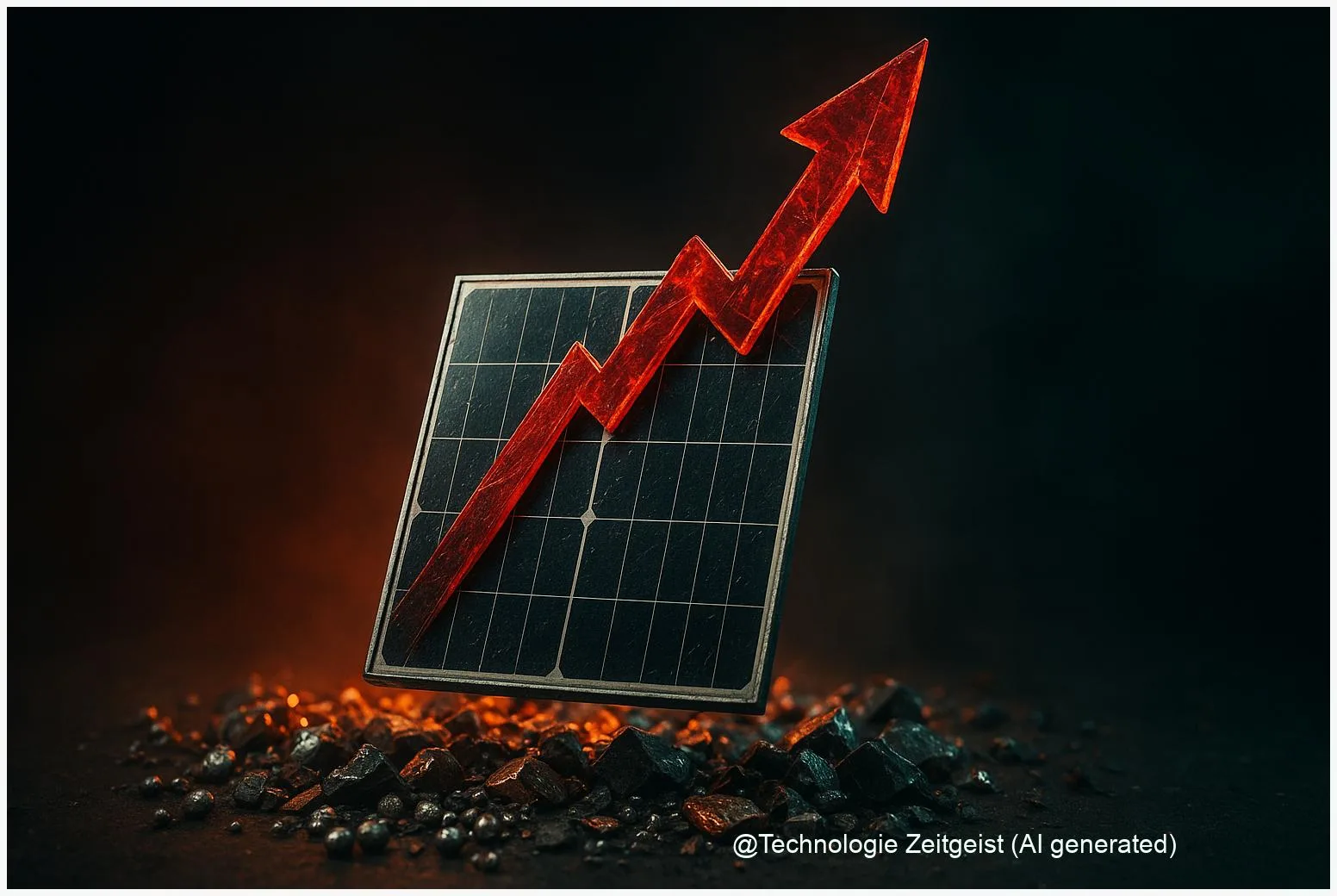
After years of broadly falling costs, Solar panel prices 2026 face new upward pressure from raw‑material moves, supply adjustments and trade rules. This article lays out the supply‑chain steps that connect polysilicon and wafer markets to the price you pay for a rooftop or utility system, shows simple examples of how a small price change affects household and project budgets, and clarifies which scenarios could push prices higher in 2026.
Introduction
Costs for solar equipment fell steeply through much of the 2010s and early 2020s, but that trend is not a single line. In 2024 and 2025, oversupply in parts of the supply chain pushed spot prices down, inventories rose and manufacturers reported losses. At the same time, a mix of production cuts, rising energy costs for manufacturing, and new trade measures introduced uncertainty.
For a homeowner or a project developer, these shifts matter because panel prices make up a large share of the hardware cost. A modest change in module price turns into a concrete sum on the contract: a $0.05 per watt increase adds about $300 to a typical 6 kW rooftop system. That example shows why analysts and buyers now watch polysilicon and wafer markets closely—small moves there can ripple through the whole project cost.
How polysilicon and wafers set the baseline
Solar panels are assembled from several upstream components. Two of the earliest and most price‑sensitive are polysilicon and wafers. Polysilicon is a high‑purity silicon feedstock used to cast ingots. Wafers are thin slices cut from those ingots; they are the physical sheets on which cells are made.
A short explanation: polysilicon is the raw material sold by chemical and metallurgical producers; wafer makers buy polysilicon, make ingots and then slice wafers. Because each step adds cost, sudden changes in polysilicon supply or wafer output quickly affect module pricing downstream.
Market reports in 2025 showed low spot prices but also low trading volumes, a combination analysts described as “quoted prices without much actual trading.”
That pattern matters: a visible published price may not reflect real deal activity. For example, price indices reported mid‑2025 global polysilicon markers near the low tens of dollars per kilogram, while wafer quotes varied by cell type and size. Those indices are useful for monitoring, but buyers must check whether quotes represent real transactions or only list prices.
If a small table helps, here are rounded benchmark points drawn from market assessments in 2025:
| Item | Description | Approx. mid‑2025 level |
|---|---|---|
| Polysilicon (spot) | Market spot indicators | ~US$18/kg |
| Mono wafers (FOB China) | M10 / G12 sizes, indicative quotes | ~US$0.12–0.16 per piece |
| Fixed‑tilt PV LCOE | Global benchmark used by analysts | ~US$35/MWh (end‑2025 forecast) |
Sources for these indicators include industry price bulletins and analyst reports that track spot and contract levels. Indices differ by methodology: some measure small spot deals, others reflect seller quotes or long‑term contracts. That is why cross‑checking multiple indices matters for procurement decisions.
Why Solar panel prices 2026 could climb
Several mechanisms can push prices higher in 2026. First, intentional capacity adjustments by producers. After extended periods of low prices, some manufacturers announced production slowdowns to reduce inventories. If cuts persist while demand recovers, tightness will raise prices.
Second, energy and input costs. Silicon refining and wafer slicing are energy‑intensive. Higher electricity or gas prices at major manufacturing sites increase production costs quickly. Even modest increases in energy costs can add materially to wafer prices because margins in some steps are thin.
Third, trade and regulatory actions. Governments may impose tariffs, export controls or new certification rules aimed at supply‑chain transparency. Such measures can raise costs for importers, add paperwork and create short‑term bottlenecks. Analysts note that protectionist moves can blunt falling global prices in specific markets.
Fourth, technology shifts. New cell types (for example, higher‑efficiency N‑type cells) often command premiums while volumes ramp up. If demand shifts faster than supply for those higher‑efficiency cells, average module prices can rise even if older products stay cheap.
Finally, mismatched timing between inventory cycles and installation schedules can create short windows of scarcity. Large project pipelines that were delayed and then restarted can create spikes in demand for modules and upstream wafers.
These drivers do not guarantee a price rally; they create plausible paths for higher costs. Market indices and analyst forecasts differ in timing and magnitude, so buyers and observers should expect volatility rather than a smooth trend.
What this means for buyers and installers
For homeowners and small installers, short moves in module price produce modest but visible effects on final bills. The earlier example shows how a $0.05/W rise translates to roughly $300 on a 6 kW system. For larger commercial or utility projects, the same per‑watt change scales up: a $0.05/W swing on a 1000 kW project equals $50,000.
Developers and installers can reduce risk by using a few practical measures. One is to stagger purchases: buy some inventory at current prices and keep options open for later buys. Another is to use index‑linked contracts so that only part of the price is fixed while the remainder follows a published market index.
Quality and traceability also matter more when prices fluctuate. Buyers are increasingly asking for documentation on material origins and manufacturing standards. Traceable supply chains can attract premiums but also reduce regulatory risks if certification or anti‑dumping duties appear.
Finally, equipment selection influences sensitivity. Systems that rely on higher‑efficiency panels or advanced cell types will be more exposed to wafer and cell price swings during ramp‑up phases. Simpler, well‑established module choices often give more predictable pricing.
Scenarios ahead and practical choices
Three scenarios are useful to keep in mind. In scenario A, manufacturers successfully cut output and inventories fall while demand recovers moderately; prices rise some months later as real trading picks up. Scenario B assumes no sustained demand recovery, so prices stay low or drift down further. Scenario C mixes policy shocks—like new tariffs or certification rules—that raise local prices despite global softening.
Which scenario plays out depends on demand in key markets, energy costs for manufacturers and the shape of trade policy. Analysts at reputable research houses still expect overall LCOE pressure downward into 2025, but that is compatible with intermittent price rises for specific components like wafers or certain cell types.
What can buyers do today? Monitoring weekly indices from multiple providers gives early warning of real market moves. When contracting, prefer clauses that allow limited volume flexibility and indexation. If you are considering a residential install, compare the near‑term savings from waiting against the small but certain cost of delaying generation and possible increases in retail electricity bills.
For industry planners, diversify sourcing across suppliers and cell types where feasible, keep clear records that document material origin, and stress‑test project budgets for small per‑watt variations. These measures lower exposure to price spikes without forcing hasty decisions.
Conclusion
The supply chain behind panels is complex and sensitive: polysilicon and wafer markets set an early baseline that then moves downstream. In 2026, a mix of production adjustments, energy costs, trade rules and technology shifts could push Solar panel prices 2026 higher in spells, even while long‑term generation costs continue to trend lower. Small per‑watt changes matter in real sums for homeowners and large projects alike, so watching multiple price indices, demanding traceability and using flexible contracting can reduce surprise.
Share your experience or questions about recent panel prices and procurement—comments and tips are welcome.



Leave a Reply