
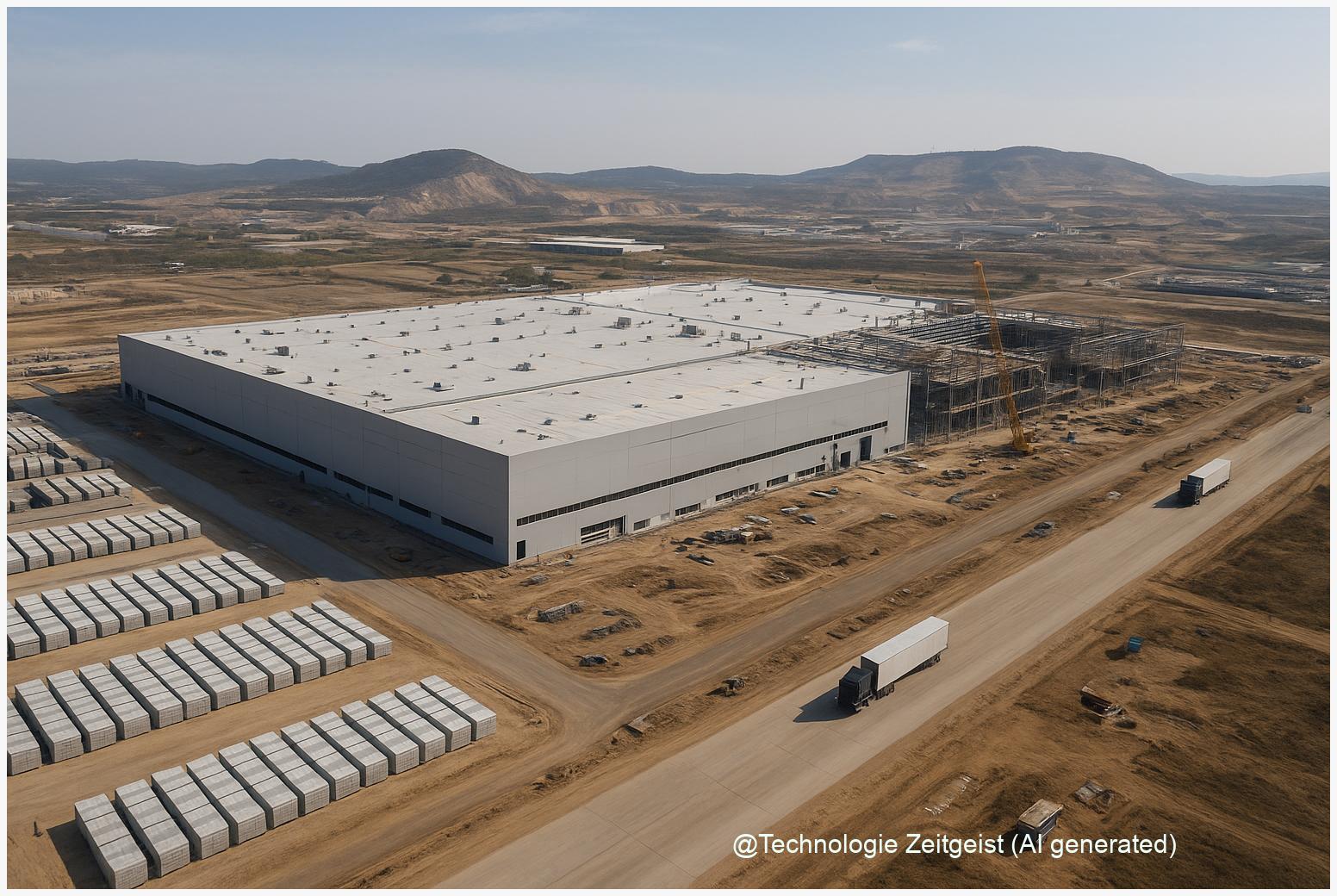
CATL Spain battery factory is a pivotal development for Europe’s electric-vehicle supply, but it will not by itself end dependency on Asian raw materials. The factory brings cell production closer to carmakers and shortens logistics, while large lithium deposits in China — including projects around Yichun in Jiangxi province — remain central to the industry’s raw-material flows. This article clarifies how a plant in Spain and Chinese lithium output interact, and what that means for prices, availability, and European policy.
Introduction
When news appears that a major battery maker is building a production site in Europe, the immediate question is practical: will that make electric cars cheaper and more available where you live? A nearby factory reduces transport time and can lower some costs, but batteries depend on a chain of inputs — from mined lithium to processed cathode materials and specialized equipment. The planned CATL Spain battery factory brings a crucial link closer to European carmakers, yet much of the raw lithium processed into battery chemicals today still originates in China and other regions. This matters because the bottlenecks and price swings in extraction and refining influence what automakers pay for cells, and ultimately what shoppers pay for electric vehicles.
To understand the real effect, it helps to separate three things: where cells are assembled, where active materials are processed, and where raw ore is mined. Each can be in a different country. The rest of the article looks at those levels, gives simple examples from daily life and industry, and outlines likely scenarios for supply and prices over the next few years.
How the CATL Spain battery factory fits into Europe’s supply chain
The phrase CATL Spain battery factory names a cell-manufacturing plant that narrows the distance between battery production and European car assembly. Cell assembly is the stage where electrodes, separators and electrolyte are stacked and sealed into battery cells. A factory on European soil reduces lead times for finished cells, lowers shipping costs for finished modules and makes it easier for carmakers to coordinate production schedules and quality checks.
That shorter path is useful in the same way buying local food can be useful: fresher logistics and fewer long-haul shipments. But the analogy has limits. A factory in Spain still needs active materials — like cathode chemicals and precursor powders — and those often come from international suppliers. If those inputs are produced mainly in Asia, the finished cells benefit from shorter assembly transport, but remain exposed to raw-material constraints and price shifts upstream.
Building local cell lines reduces one important vulnerability — the reliance on long ocean shipping for finished cells — but it does not remove the industry’s dependence on mined and refined lithium.
Two practical points follow. First, European cell production can improve supply flexibility: carmakers can scale up output faster when cells are nearby. Second, industrial policy matters: governments often attach grants, land or fast-track permits to such investments, and that can change which projects are economically viable.
Note on terminology: a “gigafactory” is an industry term for a very large battery plant, typically producing tens to hundreds of gigawatt-hours (GWh) of cells per year. A “cell” is the smallest sealed electrochemical unit; several cells make a module, and modules form a battery pack in a vehicle.
Why lithium mines in China still shape EV battery costs
Lithium is the raw element that makes modern lithium-ion batteries possible. It is extracted either as brine from salt flats or as spodumene ore from hard-rock mines. Processing ore into battery-grade chemicals requires several steps and specialized plants. Large deposits and refining capacity in China — including projects around areas such as Yichun in Jiangxi province — play a big role because they supply processed lithium compounds used worldwide.
To understand influence, think of a factory that makes coffee pods but depends on a few processors for roasted coffee. If those roasters raise prices or slow deliveries, pod-makers everywhere feel the effect even if they operate nearby. Similarly, if lithium ore or refined lithium compounds are constrained in China, factories assembling cells in Spain or Germany still face higher input costs.
Practical features of the Chinese supply chain that matter globally:
- Scale: China hosts many refineries and chemical converters that turn ore into battery-grade salts.
- Integration: Chinese companies often combine mining, refining and chemical conversion in large groups, which shortens their internal logistics.
- Price influence: because of scale and market share, shifts in Chinese output or export policy can move global prices.
These structural features mean that even with new European cell plants, the price of batteries will remain sensitive to developments in Chinese mining and refining for the foreseeable future. That connection explains why automakers follow both factory openings in Europe and mine developments in China when they plan procurement and product pricing.
Everyday impacts: what drivers and manufacturers will notice
For buyers and drivers, the effects are indirect and gradual. A nearby cell factory can reduce the time it takes for a new car model to reach dealers, and it can lower some costs tied to finished-cell logistics. That could mean slightly faster availability of popular models or fewer import delays for replacement battery packs.
For carmakers, the benefits are more concrete. Local cell capacity helps coordinate production runs and testing, reduces currency and transport exposure, and makes it easier to meet regional content rules used in some policy frameworks. If a factory in Spain signs supply agreements with European OEMs, it may shorten negotiation times and make supply contracts simpler.
However, manufacturers will still negotiate for raw-material security. Suppliers may offer fixed-price contracts for cathode precursors or lithium salts, but when supply tightens — for example because a large mine has regulatory delays — those contracts can be renegotiated or priced to reflect scarcity. In practice, that means margins and retail prices are affected not only by where cells are assembled but also by where and how lithium is mined and processed.
For consumers this translates into two watch points: first, availability of models in showrooms can improve as regional production capacity increases; second, battery-related component prices remain linked to global commodity dynamics, so sharp swings in raw-material markets can still influence used-car prices and repair costs.
Tensions and opportunities: supply security, regulation and recycling
The arrival of cell factories in Europe is a supply-security measure, but it creates new tensions. One is the mismatch between manufacturing capacity and upstream feedstock: Europe can build many cell lines rapidly, yet developing local mines and chemical converters is slower and faces environmental and permitting hurdles. That mismatch keeps a degree of dependence on overseas raw materials.
Another tension is geopolitical and regulatory: governments want resilient supply chains and may offer subsidies or local-content rules to encourage domestic processing. These incentives can accelerate investment in factories, but they can also raise trade frictions if they are perceived as protectionist. Industry actors therefore balance near-term production benefits against medium-term negotiation and trade risks.
There are also clear opportunities. Investments in European battery manufacturing increase technical know-how and create demand for recycling and second-life markets. Recycling batteries recovers lithium, cobalt and other valuable materials; over time, a larger pool of end-of-life packs in Europe could reduce dependence on primary lithium. Developing efficient recycling plants and regulations that support battery collection can therefore lessen pressure on raw-material imports.
Finally, improved transparency and longer-term contracts between miners, refiners and manufacturers can reduce price volatility. Where possible, integrated supply agreements or joint ventures across stages of the chain — from mine to cell — are one practical way companies try to reduce risk.
Conclusion
A CATL Spain battery factory strengthens Europe’s manufacturing layer by bringing cell assembly closer to carmakers and shortening logistical chains. Yet Chinese lithium mines and refineries, including developments around Yichun and other sites, remain decisive for the availability and price of battery inputs. In short: local production eases some vulnerabilities but does not by itself remove dependence on global raw-material markets. Effective supply security therefore requires parallel efforts at local processing, recycling, and reliable long-term sourcing agreements.
Share your thoughts and experiences with EV ownership or battery supply questions — the conversation helps clarify real-world impacts.

Leave a Reply