
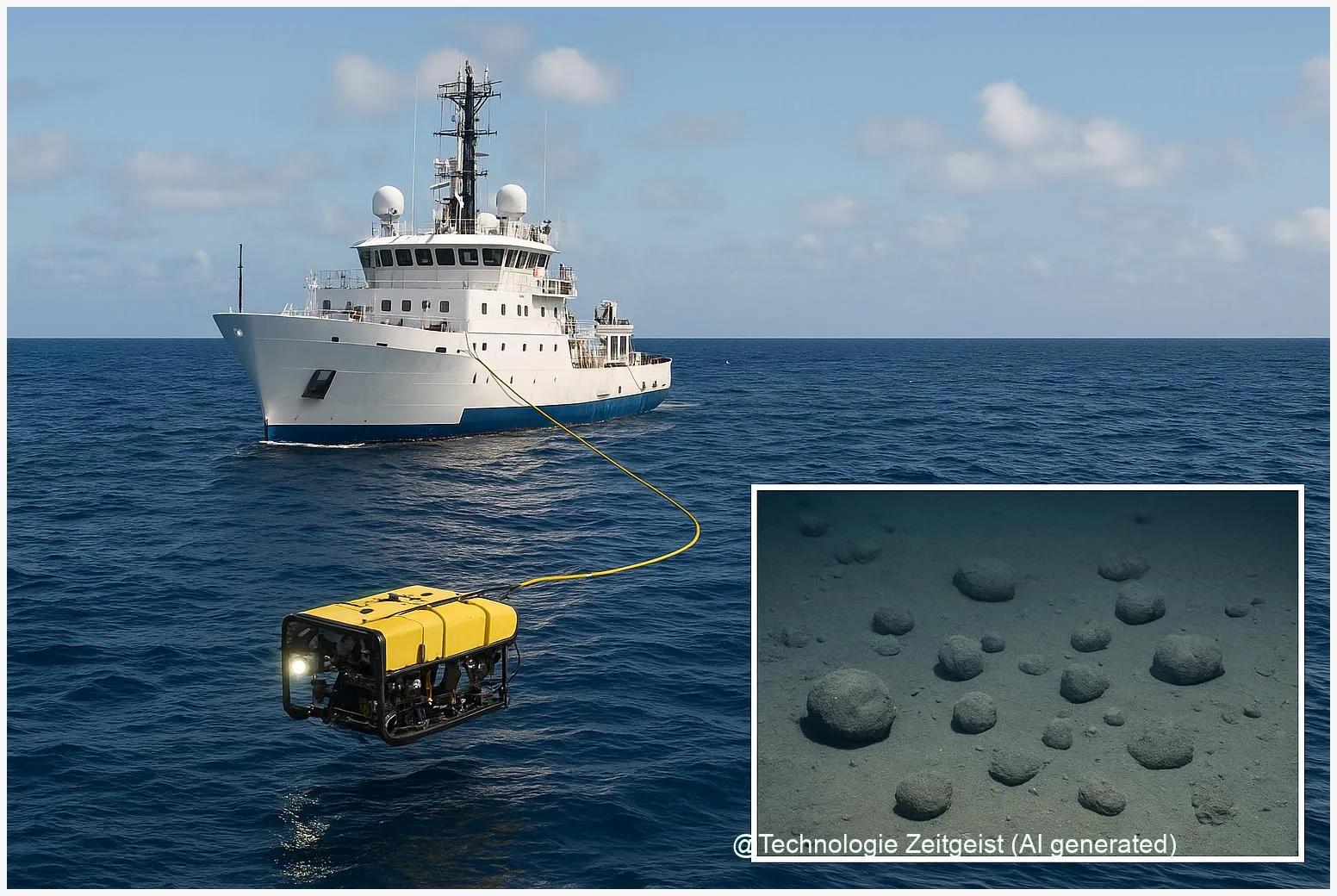
As U.S. agencies consider whether to allow commercial activity on the deep seafloor, the question many readers face is: what authority exists, and what would change if approval moves forward? This article places the U.S. position in the international regulatory context and outlines likely consequences for ecosystems, industry planning, and supply chains.
Introduction
Decisions about seabed mining matter because renewable and digital technologies rely on metals such as nickel, cobalt and rare earths. For governments and companies, the core question is how to secure supplies without causing lasting environmental harm. The U.S. conversation adds another layer: national agencies can regulate activities in U.S. waters, but most mineral-rich areas on the high seas are governed by an international body, creating legal and strategic complexity.
U.S. seabed mining decision explained: legal and regulatory basics
The “Area” in ocean law refers to the international seabed beyond national jurisdiction, regulated by the International Seabed Authority (ISA). Coastal states manage their exclusive economic zones (EEZs), normally up to 200 nautical miles, under national law.
The United States is not a party to the UN Convention on the Law of the Sea (UNCLOS), which provides the legal basis for the ISA. U.S. federal agencies can set rules for U.S. waters and for U.S. vessels and companies to an extent, but long-term authorizations for commercial exploitation in the Area depend on ISA regulations and sponsoring-state arrangements.
The regulatory picture is two-tiered: national rules inside EEZs and international rules for the Area.
How seabed mining would work in practice
Operations target three common deep-sea deposit types: polymetallic nodules, polymetallic sulphides and cobalt-rich ferromanganese crusts. Nodules are collected from the sediment surface, sulphides are often attached to hydrothermal structures, and crusts occur on seamounts.
Disturbance creates sediment plumes: suspended fine particles that can travel with currents and settle on organisms away from the extraction site. Plume behaviour is site-specific, depending on particle size, currents and depth, making environmental outcomes variable.
Typical commercial plans include staged exploration, environmental assessments, monitoring and then possible exploitation permits. Costs and logistics — distance to shore, deposit concentration, and extraction complexity — determine competitiveness with land mining and recycling.
Opportunities and risks for people and supply chains
Industry highlights new metal sources that might diversify supply for batteries and electric vehicles. But ocean-sourced metals are not automatically cheaper or greener: operational costs, insurance and regulatory requirements can be high.
Environmental risks include slow recovery of deep-sea habitats, unique species with limited distributions, and potential local extinctions. Social and governance risks include contested operations, reputational exposure for companies, and investment uncertainty if permit regimes change.
Strong, independent monitoring and adaptive regulation can reduce uncertainty but increase costs. Proposed safeguards include baseline surveys, real-time plume tracking, conservative impact thresholds and financial guarantees for remediation.
What to watch next: possible developments and implied choices
Near-term scenarios include: (1) strict, science-first pathways delaying large-scale exploitation; (2) targeted conditional permits with strict safeguards; and (3) faster approvals relying on industry mitigation. Each path affects markets, investment and ecosystems differently.
Policymakers must decide where to place the burden of proof: require strong evidence of negligible long-term harm, or allow controlled pilots with staged permissions and financial bonds tied to independent monitoring.
Conclusion
Seabed mining decisions hinge on law, science and values. U.S. agencies can regulate national activity and influence U.S. companies, but ISA rules will shape what is permitted on the high seas. The issue is a sequence of legal, technical and environmental choices with long horizons. Watch for final regulatory texts, environmental impact statements and independent monitoring results — those will determine whether and how seabed mining proceeds.




Leave a Reply