
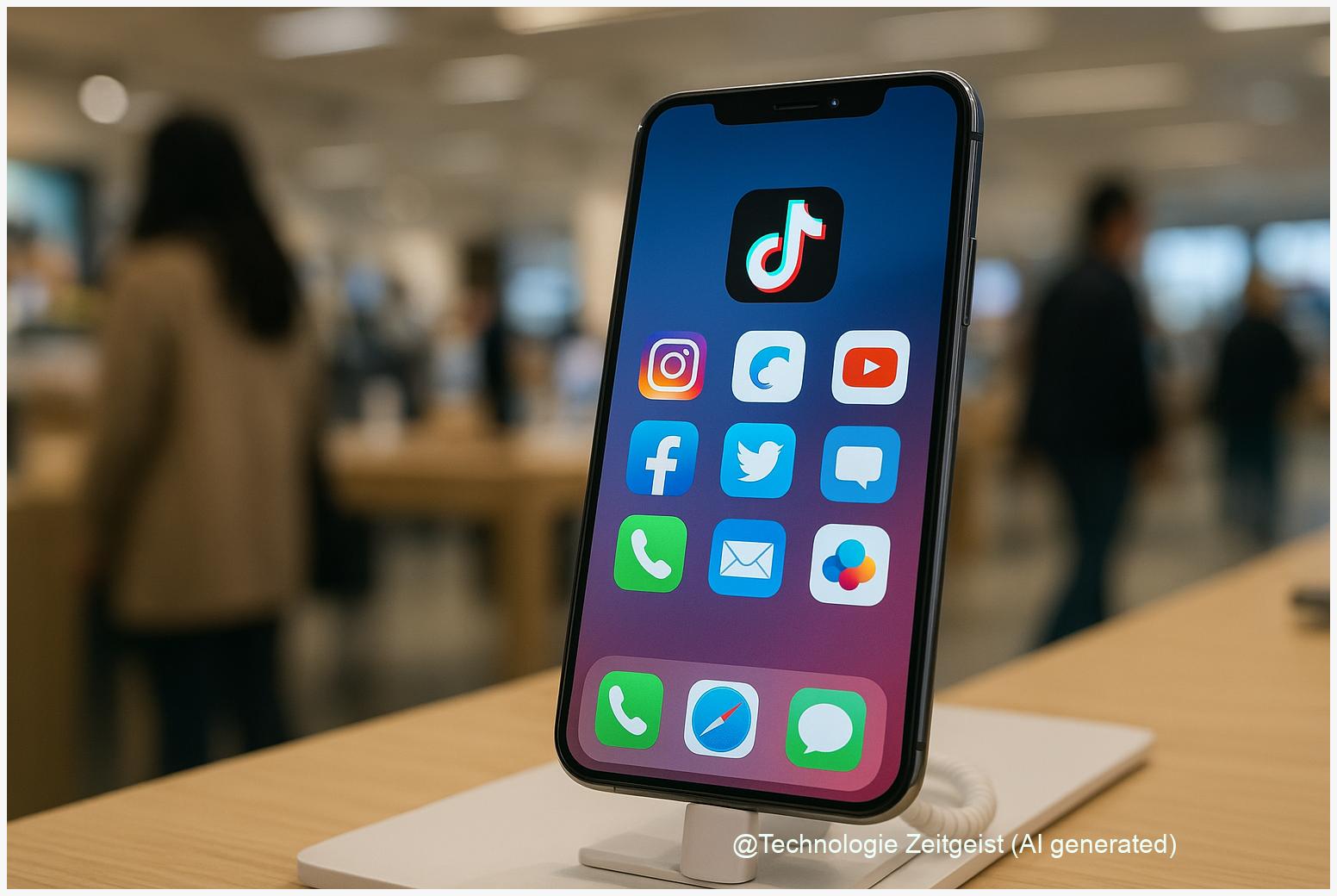
A sale or major re‑structuring of TikTok could change where advertisers spend and how phone makers and carriers promote devices. The phrase TikTok deal smartphone market 2026 captures the idea: ownership or regulatory conditions for the app affect ad budgets, preinstallation and marketing partnerships that help drive smartphone demand. This article lays out the likely chains of effect, what is uncertain, and which signals to watch for companies and consumers in North America.
Introduction
Consumer choice about which phone to buy rarely depends on a single app. Price, operating system, battery life and trade‑in offers still matter most. Yet in North America a popular app can steer attention, advertising and short‑term sales promotions in measurable ways. If a large streaming or social platform changes ownership, faces new regulatory conditions, or shifts how it sells advertising, the ripple effects can reach device vendors and carriers within months.
Two types of links matter: first, marketing links — when handset makers pay to put apps on home screens or run co‑branded campaigns; second, the advertising marketplace — where platforms buy and sell ad inventory and set prices. Both affect which phones are visible in shops, which campaigns are profitable for advertisers, and how much value carriers see in specific handset models. For readers trying to understand why a TikTok outcome might matter for phone competition in 2026, the next sections unpack mechanisms, examples, and practical signals to follow.
TikTok deal smartphone market 2026: the context
TikTok is a leading short‑form video platform with very high engagement in North America. Technical shorthand like DAU (daily active users) and MAU (monthly active users) measure that intensity; DAU counts the number of distinct users who open the app on a given day. Estimates for regional DAU vary by source and methodology, so treat single figures cautiously — independent app‑measurement firms publish ranges rather than single exact numbers.
Why ownership or regulatory change matters: authorities or new owners can require data separation, local governance, or operational guarantees. Those measures can raise running costs for the app, change its feature set in specific markets, or alter the terms under which it sells ads. Any of those outcomes changes where advertisers put budget and how handset makers negotiate preinstallation and marketing partnerships.
Regulatory conditions and transfer of control mainly change the business environment around the app; direct effects on hardware sales are indirect but can be meaningful through marketing channels.
Put simply, this is not primarily about whether people want a particular phone because an app exists. It is about how that app helps phone makers reach customers, and how ad money flows through the mobile ecosystem. Historical M&A and regulatory cases show that a platform’s ownership structure often determines the flexibility of marketing partnerships and the cost of customer acquisition for device makers and carriers.
If numbers help, an analyst range for TikTok’s North American DAU commonly cited in industry discussion in 2025 runs in the tens of millions — exact estimates depend on method and are marked as approximations below in the sources. Where data is older than two years it is noted as such in the source list.
If a table clarifies the actors, a short reference table is helpful:
| Feature | Description | Value |
|---|---|---|
| DAU/MAU | Measures of active use; key for advertiser interest | Platform‑dependent (range estimates) |
| Preinstall & homescreen placement | Commercial deals between OEMs/carriers and apps | Often part of marketing packages |
How daily use, promotion and preinstall deals shape demand
To see the mechanism in everyday terms: advertisers pay platforms to reach users. Platforms that deliver many daily impressions or that make ad buying predictable attract larger budgets. When a platform’s ownership changes or when regulators attach conditions, two things often happen quickly. First, advertisers re‑evaluate whether their campaigns will reach the same audience. Second, phone makers and carriers reassess marketing deals tied to that platform.
Preinstallation and placement deals look mundane but matter. A carrier promotion that advertises a handset “with the top apps preinstalled and optimised” reduces friction for buyers: fewer setup steps, immediate access to familiar services, plus co‑branded ads in carrier stores. If a major short‑form video app is suddenly absent from such packages — or if its ad products change — the perceived value proposition for that handset can fall, especially for younger users who treat social features as essential.
Example: a mid‑range phone promoted to young buyers may rely on influencer partnerships and platform‑specific ad formats to drive sales. If those formats move to competitors or become more expensive, the net cost of customer acquisition for the maker increases. Makers can respond by lowering prices, boosting trade‑in credits, or redirecting marketing to other channels. All these moves shift competitive dynamics among brands in a given quarter.
It is important to stress scale: handset purchases are usually decisions about money, ecosystem and service deals. An app’s status influences those decisions indirectly through promotion, not by changing technical compatibility. That indirect path is why analysts expect an effect on marketing and ad spend first, and only a small direct change in total handset volume — though that small change can be decisive in tight segments or during major promotions.
Opportunities and risks for OEMs, carriers and advertisers
For original equipment manufacturers (OEMs) the main opportunity from a change in platform ownership is renegotiation. If a new owner wants to grow the app’s device footprint, OEMs may obtain better placement or co‑marketing terms. That can temporarily advantage the OEMs that secure the best deals and amplify their visibility in retail channels.
Carriers face both risk and leverage. A carrier that once used an app as a hook to sell data plans could lose that hook if the app’s reach narrows. Conversely, carriers with deep retail presence can demand compensation to restore visibility or to sponsor exclusive content promotions on replacement platforms. In short, bargaining power shifts and with it the economics of handset subsidies and installment offers.
Advertisers see immediate budget allocation choices. Large campaigns are often platform‑agnostic in objective but platform‑specific in execution. If a short‑form video provider’s ad inventory declines or its prices rise due to operational constraints, some spending may flow to competitors’ short‑form feeds or to streaming video. That shift raises costs on some channels and reduces them on others, changing return‑on‑ad‑spend calculations for product launches tied to hardware.
There are tensions to manage. Regulators may impose data‑localization or oversight requirements that increase compliance costs; new owners might change monetization models; advertisers may pause campaigns until metrics stabilise. Those frictions reduce short‑term predictability. The upside for the market is greater competition among platforms: advertisers and phone makers that diversify their partnerships can find cheaper or more efficient channels and therefore offer more competitive handset pricing or promotions.
How the smartphone market could evolve into 2026 and beyond
Several plausible scenarios matter for 2026. A soft outcome — ownership transfer with few operational limits — would mainly shift who controls ad inventory and partnership terms. A stricter outcome — heavy oversight or data‑localization requirements — could change ad formats or slow feature rollouts in North America. In the soft scenario, advertisers and OEMs reallocate budgets with modest disruption; in the stricter scenario, the ecosystem faces higher costs and more pronounced short‑term shifts.
What should industry watchers and interested readers monitor? Key signals are:
- DAU/MAU trends for the app in North America and sudden shifts to competitors’ short‑form feeds.
- Ad pricing signals such as CPMs for short‑form video in Q1–Q2 following any deal announcement.
- Changes in OEM/carrier preinstall and homescreen agreements disclosed in quarterly filings or press releases.
- Regulatory filings or public conditions attached to a sale (these set operational limits and compliance costs).
For consumers, the practical implications may be subtle: a different set of recommended apps when a phone is set up out of the box, or a shift in which apps are highlighted in carrier stores. For the industry, the implications are strategic: firms that diversify marketing channels and negotiate flexible promotional clauses reduce exposure to platform‑specific shocks.
Finally, remember that device competition is multi‑dimensional. The presence or absence of a single app is rarely decisive by itself, but it can tilt close contests in the premium or youth segments — precisely the areas where marketing and influencer momentum matter most.
Conclusion
A TikTok sale or similar deal will most likely reshape marketing flows and advertising budgets in North America rather than directly change consumer preferences for one phone brand over another. The strongest and fastest effects appear in ad spend, preinstallation and co‑marketing deals — and those are the channels through which small but meaningful shifts in sales can occur. Tracking DAU/MAU, ad pricing, and changes to OEM/carrier agreements provides the clearest early warning system. For companies, the sensible response is scenario planning and contract flexibility; for consumers the changes will be visible mainly as different app suggestions and promotional bundles when buying a phone.
Share your views and questions below — constructive discussion helps clarify the likely market moves.

Leave a Reply