
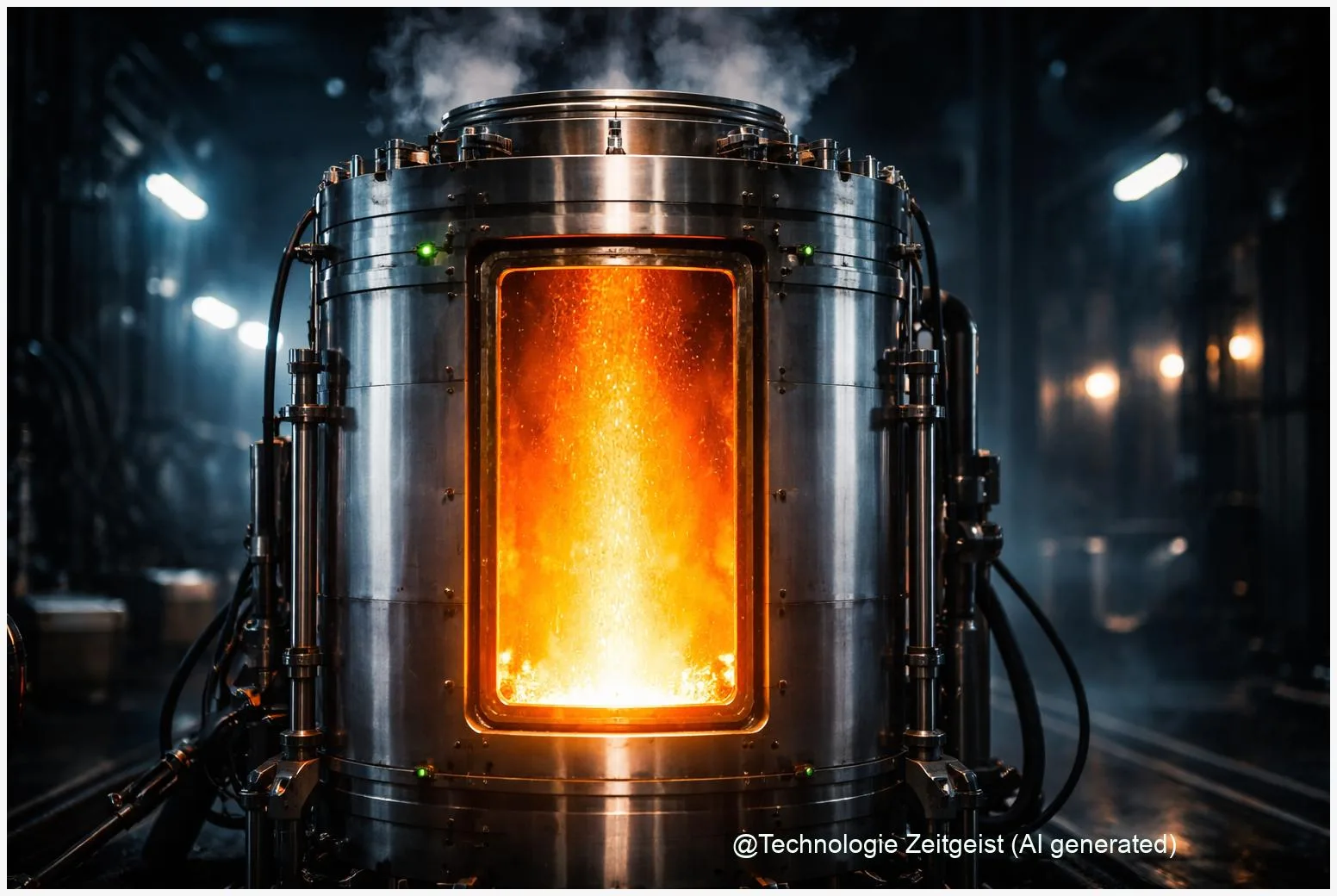
Utility‑scale storage that keeps electricity as heat — often called a thermal battery — stores surplus renewable power at very high temperatures, commonly around 560 °C, and releases it later as heat to drive turbines or heat processes. This approach uses inexpensive working media (molten nitrate salts or other solids) and established industrial parts, offering long calendar life and large capacity at lower material cost than many electrochemical batteries. For grids that need multi‑hour reserves, thermal batteries can be an affordable, durable option to back up wind and solar.
Introduction
Large shares of wind and solar create times when electricity is abundant and times when it is scarce. Batteries based on lithium cells are excellent for short, frequent cycles, but storing very large amounts of energy for many hours remains expensive with that chemistry. Thermal energy storage stores electricity as heat and then converts that heat back to electricity when needed. The idea of a “thermal battery” is not new: concentrated solar power (CSP) plants already use molten salts to store midday heat for evening generation. New projects and “Carnot battery” concepts adapt that approach to act as a grid‑scale electricity buffer that can hold energy for many hours at comparatively low cost.
At about 560 °C a familiar set of engineering trade‑offs appears: higher temperatures increase conversion efficiency when heat is turned back into power, yet they also push the limits of salt chemistry and materials. This article explains the basic physics and components, shows typical use cases and economics, lays out the main technical tensions, and points to where pilots and utility planners should focus their attention.
How a thermal battery stores electricity as heat
In its simplest form a thermal battery stores electrical energy by heating a material and later using that stored heat to run a power conversion stage (usually a steam or an advanced Brayton / supercritical CO2 cycle). The most common design for high‑temperature, multi‑hour storage is two‑tank sensible heat storage using molten salts. One tank holds the hot salt (the store); the other holds cold salt. Charging means running electric heaters or a solar receiver to raise salt temperature; discharging means sending hot salt through a heat exchanger to make steam or heat a working fluid.
Why 560 °C? Two linked reasons: thermodynamics and chemistry. Thermodynamically, conversion efficiency increases with higher temperature: the hotter the heat source, the more work a heat engine can extract for a given amount of heat. Practically, many widely used nitrate salt mixtures (so‑called solar salt, roughly 60% NaNO3 / 40% KNO3) are stable and technically usable up to about the mid‑500s °C. Above roughly 600 °C these salts risk decomposition; below ~290 °C they begin to gel or freeze, which requires operational countermeasures. The 560 °C window is therefore an engineering sweet spot for sensible salt stores that aim for improved conversion without stepping into exotic materials.
Key components and what they do:
- Receiver or electric heaters — where electricity becomes heat and warms the salt.
- Hot and cold tanks — insulated vessels that store the salt at two temperature levels (for example ~270–300 °C cold and ~560 °C hot).
- Pumps, piping and heat exchangers — move the salt and extract heat to the power block.
- Power block (steam, s‑CO2) — converts heat back into electricity; its efficiency depends strongly on the highest temperature available.
One practical metric: round‑trip electric efficiency (electric→heat→electric) for sensible heat storage coupled to a steam cycle typically ranges from about 35–55 % depending on the power block type and how well off‑design losses are handled. That is lower than direct electrical battery round‑trip efficiency, but thermal stores win on cost per stored kWh for long durations and on calendar life.
Practical uses: where 560 °C fits in the system
Thermal batteries are best when the grid needs many hours of energy rather than instantaneous power for minutes. Their natural roles include shifting large solar or wind surpluses into evening peaks, supplying process heat to industry, and providing seasonal or multi‑hour backup where long duration is prioritized over sub‑second response.
Concrete deployment examples:
- Utility‑scale firming of solar parks. A solar farm can charge molten salt during sunny hours and drive a steam or s‑CO2 generator in the evening. Higher hot‑tank temperature (for example around 560 °C) improves net electrical output per stored megajoule.
- Industrial heat substitution. Plants that require 400–500 °C heat can draw directly from high‑temperature thermal stores, cutting fossil fuel use without an intermediate electricity conversion step.
- Hybrid Carnot battery projects. A Carnot battery stores electrical energy as heat intentionally to reconvert to electricity later; designers can place these systems near renewable clusters to reduce transmission or co‑locate them with thermal loads.
What makes the 560 °C point practical is the balance between reasonably high conversion efficiency and the use of well‑characterised salts and steels. From an engineering procurement standpoint, many vendors already size tanks, pumps and heat exchangers for salt systems with hot temperatures near 565 °C; the industry knowledge base and existing component supply lines lower development risk compared with entirely novel chemistries.
Costs and sizing: sensible salt stores have modest material costs but significant civil and balance‑of‑plant expense (large tanks, foundations, insulation). Industry papers and blueprints indicate CAPEX sensitivity to tank insulation, site civil works and the chosen power block. For system economics, the key variables are conversion efficiency, storage hours (4–12+ hours), and dispatch value of the stored energy in local markets.
Opportunities, risks and tensions
Opportunities are straightforward: long retention times, low self‑discharge, long calendar life measured in decades, and the possibility to reuse industrial‑grade parts at scale. For grids with large seasonal or diurnal mismatches, thermal batteries can reduce costly curtailment and defer transmission upgrades.
But the 560 °C approach carries clear tensions that must be engineered away:
- Materials and corrosion. Nitrate salts at high temperature are oxidising. Hot‑side components commonly require higher‑grade stainless steels (for example 347H) and careful impurity control to limit corrosion. Design and inspection regimes must be rigorous.
- Chemistry limits. Many nitrate salts show decomposition risk approaching ~600 °C. That leaves little margin at 560 °C for local hot spots; conservative receiver design and flux control are essential.
- Freeze management. Typical solar salts freeze between about 120–240 °C. Systems need reliable freeze‑protection: trace heating, drainable piping and well‑practiced melt procedures.
- Off‑design efficiency. Power blocks (steam or s‑CO2) lose efficiency away from design point operation; universities and modeling groups show round‑trip LCOS and exergy are sensitive to partial‑load operation and cycling patterns.
- Maintenance and operational complexity. Hot pumps, high‑temperature seals, and tank foundation stresses add maintenance requirements that differ from battery racks.
Risk management paths are clear: keep maximum local surface temperatures well below salt decomposition thresholds; use FEM and fatigue analysis for receivers and tanks; include instrumentation for chemistry monitoring; design freeze‑protection for local climates; and combine salt stores with operational orchestration (market signals, firm schedules) to avoid unnecessary off‑design cycling.
Crucially, market design matters. Thermal batteries are most attractive when systems are paid for multi‑hour capacity or for the avoided cost of curtailment. Where markets value only fast response, short‑cycle electrochemical batteries may still dominate. For planners, the right question is which mix of technologies minimizes total system cost given local demand patterns and renewable profiles.
Where the technology could go next
Near‑term developments are pragmatic: more pilot plants that combine molten‑salt stores with improved power blocks (e.g., s‑CO2), tighter materials testing and open reporting of operating data. Demonstration projects that publish hourly charge/discharge logs, degradation observations and unvarnished LCOS metrics will be especially valuable for grid planners.
Longer term, new storage media and hybrid architectures may broaden operating windows. Alternatives to nitrate salts — higher temperature salts, metal alloys, or solid ceramic stores — can push hot‑side temperatures up and thus conversion efficiency, but these options change costs and safety profiles and often need exotic materials and stricter controls.
What should engineers and planners do now? First, measure: map local renewable surpluses, expected duration of events, and where the value of many‑hour storage is highest. Second, run candid pilots sized to local needs rather than hypothetical maximums. Third, require open, audited test data from vendors (material lifetimes, heat loss/day, freeze procedures). Fourth, consider hybrid operations: combine thermal stores for long duration with electrochemical batteries for very fast response and smoothing. That layered approach keeps the grid resilient while letting each technology play to its strengths.
Finally, policymakers can help by recognizing long‑duration value in auctions and capacity markets and by funding commissioning and monitoring work that reduces first‑of‑a‑kind risk for utilities.
Conclusion
Thermal battery concepts that operate near 560 °C sit at a practical intersection of thermodynamic gain and known engineering practice. They do not replace fast electrochemical batteries but complement them: thermal stores deliver cost‑effective, long‑duration capacity while batteries handle sub‑minute response. The crucial work ahead is not a single material breakthrough; it is careful system design, transparent pilot data, and market structures that reward multi‑hour value. For many grids balancing large shares of wind and solar, that combination could provide reliable back‑up with lower lifecycle cost than alternatives.
Share your questions or experiences with long‑duration storage — useful field data and civil engineering lessons help the sector move forward.



Leave a Reply